



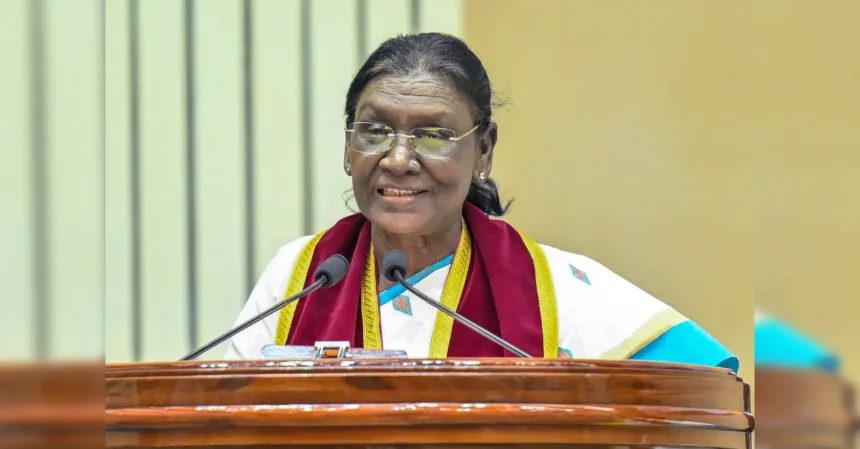
President Droupadi Murmu visited the Ropuiliani Tribal Freedom Fighters’ Museum at Kelsih and Falkawn Zokhua, a typical Mizo village near Aizawl, on November 29, 2026. During her visit, she planted saplings and witnessed a Living Museum cultural performance, highlighting Mizoram’s tribal heritage, history and traditional way of life.
Assam Goods Train Derailment Strands 194 Mizoram-Bound Schoolchildren
President Murmu Explores Mizoram’s Tribal Heritage
President Droupadi Murmu’s visit to the Ropuiliani Tribal Freedom Fighters’ Museum and Falkawn Zokhua formed an important part of her three-day tour of Mizoram. The President arrived in the state on November 28 and began a series of official, cultural and academic engagements.
On November 29, she travelled to Kelsih to visit the Ropuiliani Tribal Freedom Fighters’ Museum. She then proceeded to Falkawn Zokhua, where she experienced a traditional Mizo village setting and watched a cultural presentation at the Living Museum.
The programme offered an opportunity to showcase Mizoram’s rich cultural identity and honour the contribution of tribal communities to India’s freedom struggle.
According to the Mizoram Lok Bhavan, the President’s itinerary included both locations, along with sapling plantation activities. The visit also formed part of the state’s efforts to highlight its history, traditions and cultural heritage before national audiences.
Ropuiliani Tribal Freedom Fighters’ Museum at Kelsih
The Ropuiliani Tribal Freedom Fighters’ Museum honours the legacy of Ropuiliani, a prominent Mizo chieftainess who resisted British colonial rule in the erstwhile Lushai Hills.
Her story represents an important chapter in the history of resistance in the Northeast. Therefore, the museum provides a dedicated space to recognise the role of tribal leaders and communities in the struggle against colonial authority.
The museum stands at the Tribal Research Institute in Kelsih. It aims to preserve historical accounts and introduce visitors to the region’s freedom fighters and indigenous heritage.
The facility also forms part of a broader effort to strengthen awareness of tribal contributions to India’s history. As a result, it can serve as an educational destination for students, researchers and visitors interested in Mizoram’s past.
According to Mizoram Today, the Union Ministry of Tribal Affairs developed the museum at a cost of approximately ₹25.59 crore. The complex includes a museum building, an open-air theatre, a traditional tribal hut and a heritage walk, among other facilities.
President Murmu’s visit brought national attention to this important cultural institution. Moreover, her sapling plantation activity added an environmental element to the programme.
Visit to Falkawn Zokhua Highlights Traditional Mizo Life
After visiting the museum at Kelsih, President Murmu travelled to Falkawn Zokhua, a typical Mizo village near Aizawl.
The village offers visitors an opportunity to understand traditional Mizo architecture, customs and community life. Unlike a conventional museum display, a village setting can present cultural heritage through physical spaces, everyday practices and community performances.
During the visit, the President witnessed a Living Museum cultural performance. The presentation showcased elements of Mizo tradition and offered a glimpse into the community’s cultural expressions.
She also planted a sapling at the village. Consequently, both stops combined cultural appreciation with a message of environmental awareness.
The visit highlighted the importance of preserving indigenous traditions while introducing younger generations and visitors to the region’s distinctive identity.
President Murmu’s Three-Day Visit to Mizoram
President Murmu arrived at Lengpui Airport on November 28, 2026, for a three-day visit to Mizoram. Governor General (Dr) Vijay Kumar Singh, Chief Minister Lalduhoma, Higher and Technical Education Minister Vanlalthlana, Chief Secretary Khilli Ram Meena, DGP Sharad Agarwal and other senior officials received her.
She subsequently travelled to Lok Bhavan in Aizawl. Her programme included an exhibition featuring government departments and a state banquet with a cultural programme hosted in her honour.
The visit also carries academic significance. On November 30, President Murmu is scheduled to attend the 21st Convocation of Mizoram University and the closing ceremony of its Silver Jubilee celebrations.
During the university programme, she will address graduating students and confer awards on meritorious students. She is also scheduled to unveil the university’s Silver Jubilee Park and release a souvenir.
The President will then travel to Nagaland to attend the inaugural ceremony of the 27th Hornbill Festival at Kisama on December 1, according to the President’s official tour programme.
Security and Traffic Arrangements During the Presidential Visit
Authorities introduced additional security and traffic arrangements across Aizawl ahead of the President’s engagements.
The Aizawl Deputy Commissioner issued prohibitory orders restricting the use of drones and related equipment within the Aizawl Municipal Corporation area. The restrictions covered important locations connected with the presidential programme, including Lok Bhavan, Kelsih, Falkawn and Mizoram University.
Authorities also restricted parking along designated routes used for the President’s movement. In addition, petrol pumps located along these routes received instructions to close temporarily during her movement.
The Aizawl Municipal Corporation also asked vegetable vendors near the Tennis Court, Aizawl Post Office and Aizawl Venbuk to suspend their activities temporarily.
These measures aimed to ensure smooth movement and maintain security throughout the high-profile visit.
A Visit Celebrating Mizoram’s History and Cultural Identity
President Droupadi Murmu’s visit to Kelsih and Falkawn placed Mizoram’s indigenous heritage in the national spotlight. The Ropuiliani Tribal Freedom Fighters’ Museum recognises the contribution of a prominent Mizo leader to resistance against British rule. Meanwhile, Falkawn Zokhua offers a closer look at traditional Mizo culture and community life.
Furthermore, the Living Museum performance provided a platform to showcase cultural traditions through artistic expression. The sapling plantation activities also connected the programme with environmental awareness.
Overall, the visit highlighted the importance of preserving tribal history, supporting cultural institutions and passing indigenous traditions on to future generations.
Frequently Asked Questions
1. When did President Droupadi Murmu visit Mizoram?
President Droupadi Murmu arrived in Mizoram on November 28, 2026, for a three-day official visit.
2. Which tribal museum did President Murmu visit in Mizoram?
She visited the Ropuiliani Tribal Freedom Fighters’ Museum at Kelsih, located at the Tribal Research Institute.
3. Who was Ropuiliani?
Ropuiliani was a prominent Mizo chieftainess who resisted British colonial rule in the erstwhile Lushai Hills.
4. What is Falkawn Zokhua?
Falkawn Zokhua is a typical Mizo village near Aizawl that showcases aspects of traditional Mizo culture and community life.
5. What cultural programme did President Murmu witness at Falkawn?
She witnessed a Living Museum cultural performance showcasing elements of Mizo tradition.
6. What is President Murmu scheduled to attend at Mizoram University?
On November 30, she is scheduled to attend the university’s 21st Convocation and the closing ceremony of its Silver Jubilee celebrations.