



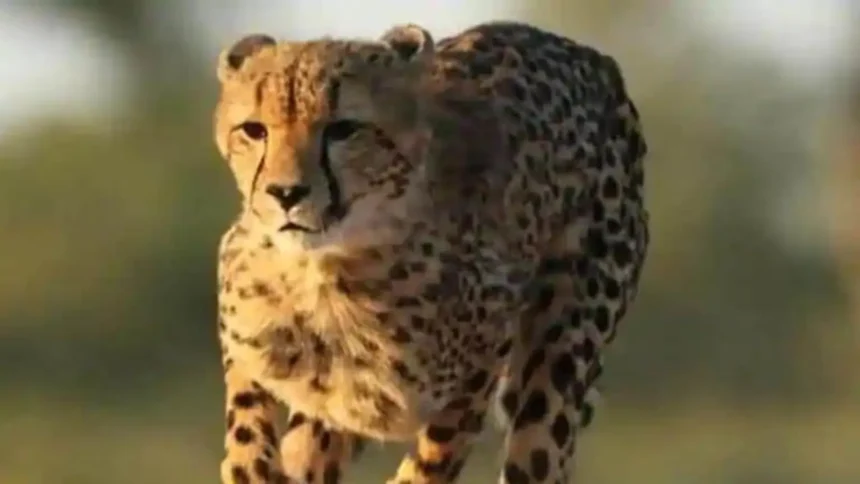
In a tragic turn of events, the ambitious cheetah population revival program in India has suffered a setback with the untimely deaths of three India-born cheetah cubs at Kuno National Park (KNP) in Madhya Pradesh. The park, which recently witnessed the birth of four cheetah cubs, now mourns the loss of three siblings, while the fourth cub’s health remains stable.
Jwala, formerly known as Siyaya, gave birth to four cubs in late March after being translocated from Namibia in September of the previous year. However, the scorching heat prevailing at KNP proved fatal for the three young cheetahs, who succumbed to dehydration. The cubs were born during an unfavorable time of the year in terms of temperature, as cheetahs in Namibia typically give birth during the rainy season, followed by winter.
The KNP director, Uttam Sharma, acknowledged the challenges of predicting the survival of any ailing animal but reassured that the fourth cub’s condition remains stable. Efforts are underway to provide the best possible care and support. Fortunately, the current weather at KNP is pleasant due to overnight rains, offering respite from the extreme heat.
The unfortunate demise of the three cheetah cubs occurred on May 23, a day when the mercury soared above 45 degrees Celsius. An official from the forest department attributed their deaths to the sweltering heat and emphasized that their birth coincided with an unfavorable time for temperature conditions.
Following the death of the first cub, the forest department’s monitoring team closely observed the remaining three cubs, eventually deciding to rescue them for treatment due to their deteriorating health. Tragically, despite efforts to rehydrate and provide medical attention, two of the cubs could not be saved.
This recent loss adds to the concern surrounding the cheetah population revival program, as three adult cheetahs translocated from South Africa and Namibia have also died at KNP. Sasha, a Namibian cheetah, passed away in March due to kidney-related issues, while Uday, from South Africa, succumbed to an ailment in April. Additionally, Daksha, a cheetah brought from South Africa, lost her life during a violent interaction with a male cheetah during a mating attempt in May.
The four cubs born to Siyaya/Jwala were particularly significant as they were the first cheetahs to be born in the wild on Indian soil since the species was declared extinct in the country in 1952. The revival program saw the translocation of five female and three male cheetahs from Namibia in September 2022, followed by the introduction of 12 cheetahs from South Africa in February 2023.
The recent setbacks have raised questions about the future of the highly anticipated large carnivorous revival program in India. While efforts are being made to protect and nurture the remaining cheetahs, the loss of the cubs and adult cheetahs underscores the challenges involved in reestablishing a viable cheetah population in the country.
The authorities continue to investigate the circumstances surrounding the deaths of the cheetahs and are exploring measures to mitigate the impact of extreme weather conditions. The hope remains that with improved understanding and conservation strategies, India’s cheetah revival program can overcome these setbacks and ultimately succeed in reintroducing this magnificent species into the wild.