





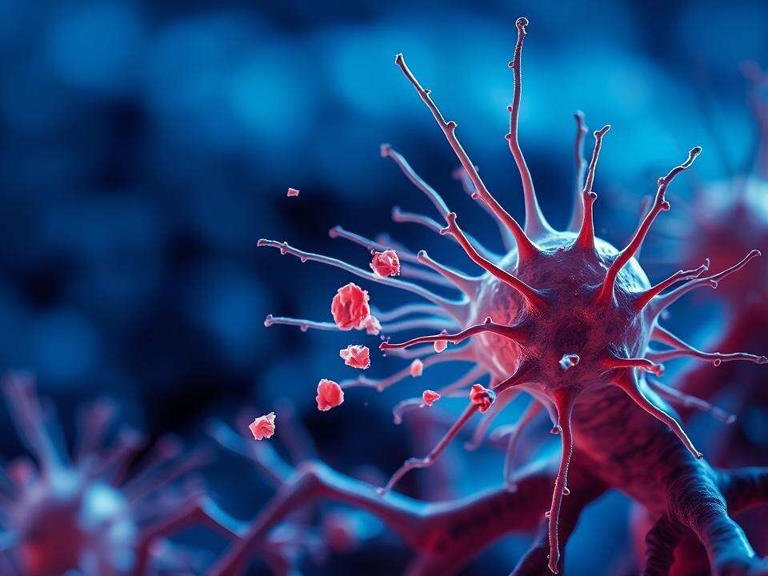
Did you know your brain constantly “eats” itself through a process called phagocytosis? Although it sounds alarming, this process is not harmful. In fact, it is essential for brain health. When the brain eats itself through phagocytosis, it clears waste, removes damaged cells, and keeps neural connections efficient. Without this self-cleaning mechanism, the brain would struggle to function properly.
Many people imagine the brain as a fixed organ that only processes thoughts and memories. However, the brain remains highly active at a cellular level. Every day, it repairs itself, reshapes connections, and removes debris. Therefore, the idea that the brain eats itself through phagocytosis actually describes a survival strategy, not a defect.
Read More: World Cancer Day Observed in Morigaon, Assam
What does it mean when the brain eats itself
When scientists say the brain eats itself through phagocytosis, they refer to specialised brain cells that consume waste material. Phagocytosis literally means “cell eating.” In the brain, immune cells called microglia perform this task.
Microglia act as caretakers. They constantly scan the brain for damaged neurons, dead cells, or unused connections. Once they find debris, they engulf and digest it. As a result, the brain stays clean and efficient.
Importantly, this process does not damage healthy brain tissue. Instead, it protects neurons by preventing the buildup of toxic material.
Why phagocytosis is essential for brain health
The brain eats itself through phagocytosis because neurons generate waste just like other cells. Over time, proteins break down, synapses weaken, and cells age. If the brain did not remove this waste, harmful substances would accumulate.
Phagocytosis prevents this problem. By clearing damaged components, the brain maintains healthy communication between neurons. Therefore, learning, memory, and emotional regulation remain stable.
Moreover, phagocytosis supports brain plasticity. When unnecessary connections disappear, stronger and more useful pathways take their place. This constant renewal allows the brain to adapt to new experiences.
Role of microglia in brain self-cleaning
Microglia play the central role when the brain eats itself through phagocytosis. These cells act like both immune defenders and maintenance workers. They respond to injury, infection, and everyday wear and tear.
During normal functioning, microglia prune unused synapses. This process, called synaptic pruning, helps refine neural circuits. For example, during childhood and adolescence, pruning shapes learning ability and behaviour.
Even in adulthood, microglia remain active. They continue removing damaged cells and reorganising networks. Therefore, brain health depends heavily on balanced microglial activity.
Phagocytosis during sleep
Interestingly, the brain eats itself through phagocytosis more efficiently during sleep. While you rest, the brain activates its cleaning systems. Waste products built up during the day move out of brain tissue more easily.
This explains why sleep deprivation affects memory, mood, and focus. Without proper sleep, the brain’s cleaning processes slow down. As a result, toxins accumulate and neural performance declines.
Therefore, regular sleep supports healthy phagocytosis and long-term brain function.
When phagocytosis goes wrong
Although the brain eats itself through phagocytosis for protection, problems arise when the process becomes unbalanced. Excessive phagocytosis may damage healthy neurons. On the other hand, insufficient phagocytosis allows waste to build up.
Researchers link abnormal phagocytosis to neurological disorders. Conditions such as Alzheimer’s disease, Parkinson’s disease, and multiple sclerosis involve disruptions in how microglia clean the brain.
In these cases, microglia may become overactive or underactive. Consequently, inflammation increases, and brain cells suffer damage. Scientists continue studying how to regulate this process safely.
Is the brain really “eating itself”?
The phrase “brain eats itself through phagocytosis” can sound frightening. However, the process resembles recycling more than destruction. The brain breaks down old or damaged components so it can reuse materials efficiently.
Think of it as a renovation process. Walls that no longer serve a purpose come down, making room for better structures. Similarly, phagocytosis removes what the brain no longer needs.
Therefore, this process supports growth, learning, and mental resilience rather than harming the brain.
How lifestyle affects brain phagocytosis
Lifestyle choices influence how effectively the brain eats itself through phagocytosis. Sleep, nutrition, exercise, and stress levels all matter.
Regular physical activity supports healthy microglial function. Exercise improves blood flow and reduces inflammation, which helps phagocytosis work smoothly. Similarly, balanced nutrition provides antioxidants that protect brain cells.
Chronic stress, however, disrupts microglial balance. Prolonged inflammation can interfere with proper waste removal. Therefore, stress management plays a key role in brain health.
Phagocytosis and learning
Learning depends on the brain’s ability to change. When the brain eats itself through phagocytosis, it removes weak connections so stronger ones can form. This process sharpens skills and improves memory.
For example, when you practise a new skill repeatedly, useful neural pathways strengthen. At the same time, unused pathways disappear through phagocytosis. As a result, the brain becomes more efficient.
This explains why practice and repetition lead to mastery at both mental and physical levels.
What scientists are discovering
Scientists continue exploring how phagocytosis shapes brain development and ageing. New research suggests that fine-tuning microglial activity may help prevent neurodegenerative diseases.
Researchers are also studying how diet, sleep, and mental stimulation influence this self-cleaning process. These discoveries may lead to future therapies that support brain health naturally.
Understanding that the brain eats itself through phagocytosis helps shift how we view brain maintenance. It is not static. It is dynamic and constantly renewing itself.
A fascinating reminder about brain health
The fact that your brain eats itself through phagocytosis may sound strange, but it highlights the brain’s intelligence at a cellular level. This process keeps your thoughts clear, emotions balanced, and memories intact.
Rather than fearing it, we should appreciate phagocytosis as a sign of a healthy brain. By sleeping well, staying active, managing stress, and nourishing the body, you support this essential self-cleaning system.
In the end, your brain’s ability to “eat itself” is one of the reasons it continues to protect you, adapt, and function throughout your life.
Read More: President’s Rule Lifted in Manipur After Nearly a Year