





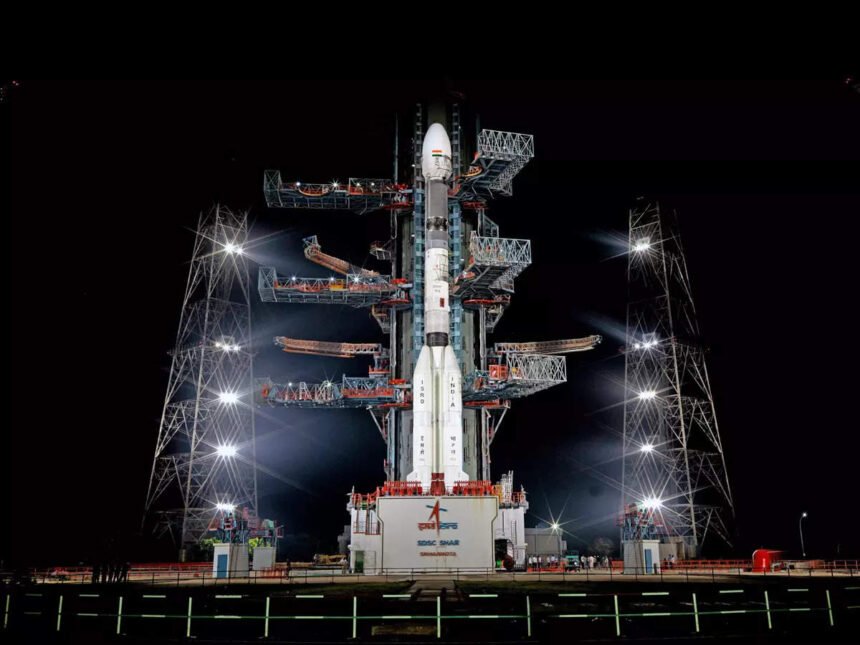
The Indian Space Research Organisation (ISRO) achieved yet another milestone on Monday with the successful launch of the Geosynchronous Satellite Launch Vehicle (GSLV) carrying the Navigation with Indian Constellation (NavIC) satellite, NVS-01. This launch aims to enhance the continuity and reliability of India’s indigenous navigation system, NavIC.
The GSLV rocket, standing at an impressive height of 51.7 meters, gracefully took off from the second launch pad at the Sriharikota spaceport. Sriharikota is situated approximately 130 kilometers from Chennai and has been the primary site for India’s space launches.
The NavIC satellite plays a crucial role in India’s navigation system, which is designed to provide accurate and reliable positioning information to users in the country and the surrounding regions. With the launch of NVS-01, ISRO aims to augment the existing NavIC services and ensure the continuous availability of navigation data.
NavIC, also known as the Indian Regional Navigation Satellite System (IRNSS), consists of a constellation of satellites in geosynchronous and geostationary orbits. These satellites work in harmony to deliver precise positioning, navigation, and timing services to a wide range of users, including the military, maritime, aviation, and civilian sectors. By reducing dependency on foreign navigation systems, NavIC strengthens India’s strategic autonomy and enhances national security.
The GSLV rocket, known for its reliability and robust performance, has been a workhorse for ISRO’s space missions. This latest launch adds to its impressive track record, further establishing India’s prowess in the field of space technology. The successful liftoff marks another step forward in the country’s ambitious space exploration endeavors.
The GSLV is a three-stage launch vehicle powered by a combination of solid, liquid, and cryogenic propulsion systems. It has been instrumental in deploying various satellites, including communication, weather, and navigation satellites, into space. The intricate engineering and meticulous planning behind each GSLV mission showcase the exceptional capabilities of ISRO’s scientists and engineers.
The NVS-01 satellite, weighing approximately 1,425 kilograms, is equipped with advanced navigation payloads that ensure precise positioning and timing services. It will join the existing constellation of NavIC satellites and strengthen the overall performance and coverage of the navigation system. The satellite’s successful deployment is a testament to the dedication and technical expertise of the ISRO team.
The NavIC system provides positioning accuracy of up to 20 meters in the primary service area and up to 150 meters in the secondary service area. This level of accuracy is achieved through a combination of satellite signals and ground-based augmentation systems. The services offered by NavIC have proven to be instrumental in various sectors, including transportation, disaster management, surveying, and mapping.
ISRO’s continuous efforts to improve and expand the NavIC system have been driven by the goal of achieving self-reliance in the field of navigation technology. By reducing dependency on foreign systems, India can strengthen its position as a global leader in space technology and enhance its capabilities in critical areas such as defense and disaster management.
The successful launch of GSLV carrying the NVS-01 satellite sets the stage for further advancements in India’s space program. ISRO’s vision extends beyond Earth’s orbit, with plans for lunar missions, Mars exploration, and even a manned mission in the future. The dedication and determination of ISRO’s scientists, coupled with the support of the Indian government and the nation’s citizens, continue to propel the country towards new frontiers of space exploration.
The launch of the GSLV rocket carrying the NavIC navigation satellite, NVS-01, signifies a significant achievement for ISRO and India’s space program.