


By using this site, you agree to the Privacy Policy and Terms of Use.
Accept
Hindustan PioneerHindustan Pioneer
  • Home
  • Business
  • News
  • Education
  • Entertainment
  • Lifestyle
  • Travel
  • Web Stories
Reading: Nepalese Politicians Criticize Prime Minister Prachanda’s Visit to Pashupatinath Temple
Share
Notification Show More
Latest News
US Supreme Court Strikes Down Trump’s Emergency Tariffs, Sparks $133 Billion Refund Debate
February 21, 2026
Man Allegedly Shoots Estranged Wife Dead in Faridabad
February 21, 2026
Prem Singh Tamang Criticises Congress Over Disruptions at Global AI Summit
February 21, 2026
NSF Opposes Centre’s Directive on Vande Mataram in Nagaland
February 21, 2026
Amit Shah Attends CRPF Annual Day in Guwahati, Lays Foundation for New Police Battalion Campus
February 21, 2026
Aa
Aa
Hindustan PioneerHindustan Pioneer
  • Home
  • Business
  • News
  • Education
  • Entertainment
  • Lifestyle
  • Travel
  • Web Stories
Follow US
  • Advertise
  • Editorial Policy
  • Contact Us
© 2022 Foxiz News Network. Ruby Design Company. All Rights Reserved.
Home » Blog » Nepalese Politicians Criticize Prime Minister Prachanda’s Visit to Pashupatinath Temple
Misc

Nepalese Politicians Criticize Prime Minister Prachanda’s Visit to Pashupatinath Temple

Sweta Jha
By Sweta Jha 3 Min Read Published June 12, 2023
Share
Controversy over Prachanda's Visit to Pashupatinath Temple in Nepal
SHARE

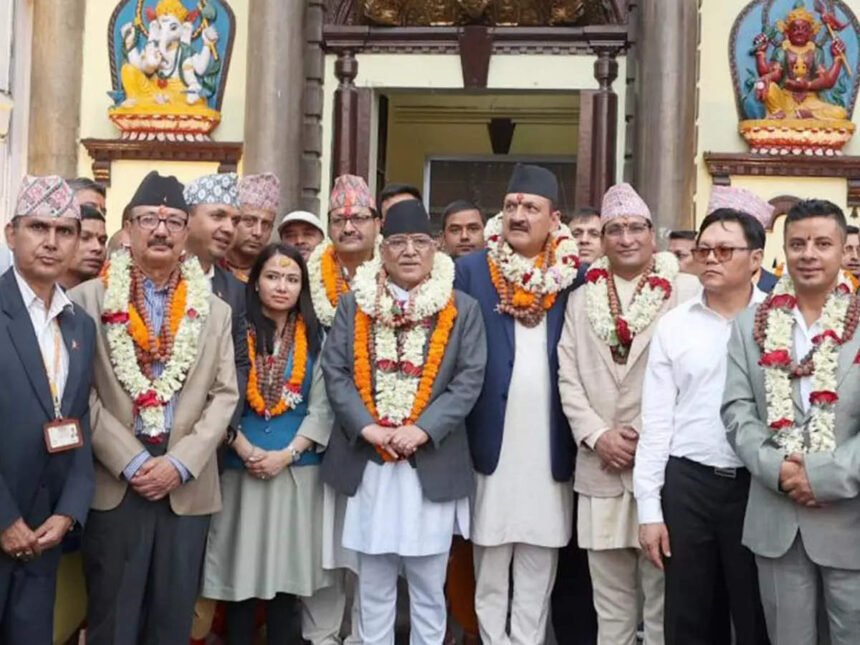
Senior Nepalese politicians expressed their discontent on Sunday regarding Prime Minister Pushpa Kamal Dahal “Prachanda’s” recent visit to the renowned Pashupatinath Temple in Kathmandu. They deemed the visit as politically motivated, raising concerns about the leader’s intentions. Accompanied by several cabinet ministers, including Finance Minister Prakash Sharan Mahat and Foreign Minister NP Saud, Prachanda paid a visit to the temple on Saturday.

The Pashupatinath Temple, located on the banks of the Bagmati River, holds great cultural and religious significance for the people of Nepal. As a UNESCO World Heritage site, it attracts numerous devotees and tourists from around the world.

Prachanda’s visit to the temple stirred controversy as it marked his first appearance at the premises. Being a radical Communist leader at the age of 68, his sudden interest in visiting such a revered religious site raised eyebrows among his political counterparts.

Critics argued that Prachanda’s visit was driven by political motives rather than genuine religious devotion. They accused him of attempting to manipulate public sentiment and gain political mileage by associating himself with the sacred temple. Such a move, they claimed, was a calculated strategy to sway public opinion and project himself as a leader who upholds the country’s cultural and religious heritage.

The politicians who voiced their objections believed that the Prime Minister’s visit to Pashupatinath Temple was an insincere gesture, aimed at garnering support and diverting attention from pressing issues facing the nation. They accused him of exploiting religious sentiments for personal and political gain, rather than addressing the more significant challenges that Nepal currently faces.

While the temple visit may have generated attention and media coverage, critics remained unconvinced of the Prime Minister’s intentions. They called for a more transparent and accountable approach to governance, urging Prachanda to prioritize the nation’s welfare over political theatrics.

It is not uncommon for politicians to engage in symbolic acts to cultivate a positive image among the public. However, in the case of Prachanda’s visit to Pashupatinath Temple, many felt that it lacked authenticity and was purely driven by political considerations.

As Nepal continues to grapple with various socio-economic and political issues, citizens and politicians alike are looking for concrete solutions and effective governance. The criticism surrounding Prachanda’s temple visit highlights the need for politicians to focus on substantive policies and actions that address the country’s challenges rather than resorting to symbolism for personal or political gain.

It is the responsibility of political leaders to work towards the betterment of the nation and its citizens, steering clear of actions that are perceived as politically motivated. Only through sincere efforts and a genuine commitment to serving the people can Nepal achieve progress and overcome its pressing issues.


You Might Also Like

Himanta Says Remarks Target ‘Bangladeshi Infiltrators’, Not Muslims

Tribal Body Leader Slams Kuki-Zo MLAs for Joining Govt

‘PM Modi skipped house out of fear’: Congress women MPs write to Lok Sabha speaker on absence

Pak Daily Slams Shehbaz Govt as India, US Seal Trade Deal

Maoist Issue Not Linked to Development: Amit Shah in Chhattisgarh

TAGGED: Hindustan Pioneer, Hindustanpioneer, Nepalese, WorldNews
Sweta Jha June 12, 2023
Share this Article
Facebook Twitter Whatsapp Whatsapp LinkedIn Copy Link
Posted by Sweta Jha
She is a content writer who is passionate about writing and loves to listen music in her free time.
Previous Article arrested in investigation into SNP funding and finances Former Scottish First Minister Nicola Sturgeon Arrested in Ongoing Investigation into SNP Funding and Finances
Next Article First shipment of discounted Russian crude oil arrives in Pakistan, easing inflation Pakistan Receives First Shipment of Discounted Russian Crude Oil to Ease Inflation Woes
Leave a comment

Leave a Reply Cancel reply

You must be logged in to post a comment.

Stay Connected

- Advertisement -

Latest News

US Supreme Court Strikes Down Trump’s Emergency Tariffs, Sparks $133 Billion Refund Debate
News
Man Allegedly Shoots Estranged Wife Dead in Faridabad
News
Prem Singh Tamang Criticises Congress Over Disruptions at Global AI Summit
News
NSF Opposes Centre’s Directive on Vande Mataram in Nagaland
News

© 2022-2025 Hindustan Pioneer. All Rights Reserved.

  • About Us
  • Editorial Policy
  • Our Team
  • Contact Us

Removed from reading list

Undo
Welcome Back!

Sign in to your account

Lost your password?