



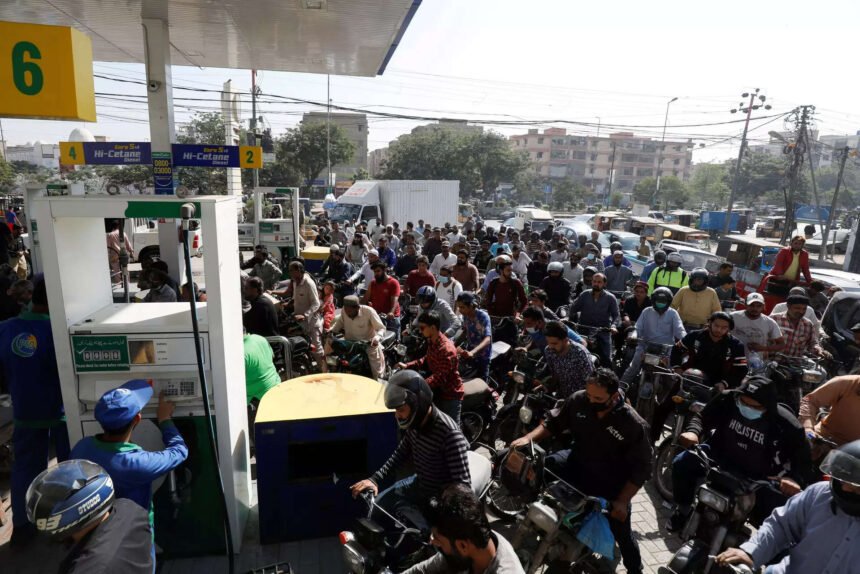
Pakistan’s Prime Minister, Shehbaz Sharif, has announced the arrival of the first shipment of discounted Russian crude oil in the port city of Karachi. This development is expected to provide much-needed relief to the people who have been severely impacted by skyrocketing inflation. With high external debt and a weak local currency, Pakistan hopes that procuring crude oil at discounted rates from Russia will help stabilize oil prices within the country.
The current cost of petrol in Pakistan stands at Rs 262 per litre, which has had a significant impact on the population’s daily lives. The soaring inflation rates have placed a heavy burden on households, making it increasingly challenging for them to meet their basic needs. Recognizing the urgency of the situation, Prime Minister Shehbaz Sharif initiated efforts to secure discounted crude oil from Russia to alleviate the financial strain on the people.
The arrival of the first shipment marks a significant milestone in Pakistan’s pursuit of economic stability. By acquiring discounted crude oil from Russia, the country aims to address the root cause of rising inflation. The move is expected to provide relief to consumers and subsequently lower the prices of essential goods and services, leading to an improved standard of living.
The collaboration between Pakistan and Russia in the oil sector is mutually beneficial. Pakistan, being a consumer of oil, will benefit from the cost savings achieved through discounted rates, while Russia will secure a market for its crude oil exports. This partnership is also a testament to the growing diplomatic and economic relations between the two countries, as they seek to explore further avenues of cooperation.
The decision to procure oil from Russia aligns with Pakistan’s broader strategy to diversify its energy sources and reduce dependence on traditional suppliers. The country has historically relied on imports from the Middle East, but this move towards Russian crude oil opens up new possibilities and enhances energy security. By expanding its supplier base, Pakistan can mitigate the impact of geopolitical uncertainties and fluctuations in global oil prices.
Moreover, the availability of discounted Russian crude oil will not only benefit the general public but also support various industries and sectors within Pakistan. Industries heavily reliant on oil, such as transportation, manufacturing, and agriculture, will experience a reduction in production costs. This, in turn, can lead to increased economic activity, job creation, and overall growth.
To ensure the smooth implementation of this initiative, Pakistan will need to establish a robust infrastructure and logistical framework. Adequate storage facilities, transportation networks, and distribution mechanisms must be put in place to efficiently manage the influx of crude oil. The government, in collaboration with relevant stakeholders, should also devise a pricing mechanism that translates the benefits of discounted crude oil to the end consumers, ensuring a fair and equitable distribution of cost savings.
While the arrival of the first shipment is undoubtedly a positive step forward, it is important to recognize that addressing inflation requires a comprehensive approach. Pakistan must continue to focus on strengthening its economy, diversifying its revenue streams, and implementing effective fiscal policies to combat inflation in the long run. The government should also explore sustainable solutions such as promoting renewable energy sources and investing in domestic oil exploration and production.
The arrival of the first shipment of discounted Russian crude oil in Pakistan offers hope for the nation grappling with high inflation rates. This strategic move is expected to stabilize oil prices, provide relief to the people, and stimulate economic growth. However, it is crucial for Pakistan to view this development as a catalyst for broader reforms aimed at achieving long-term economic stability and reducing reliance on imported energy.