





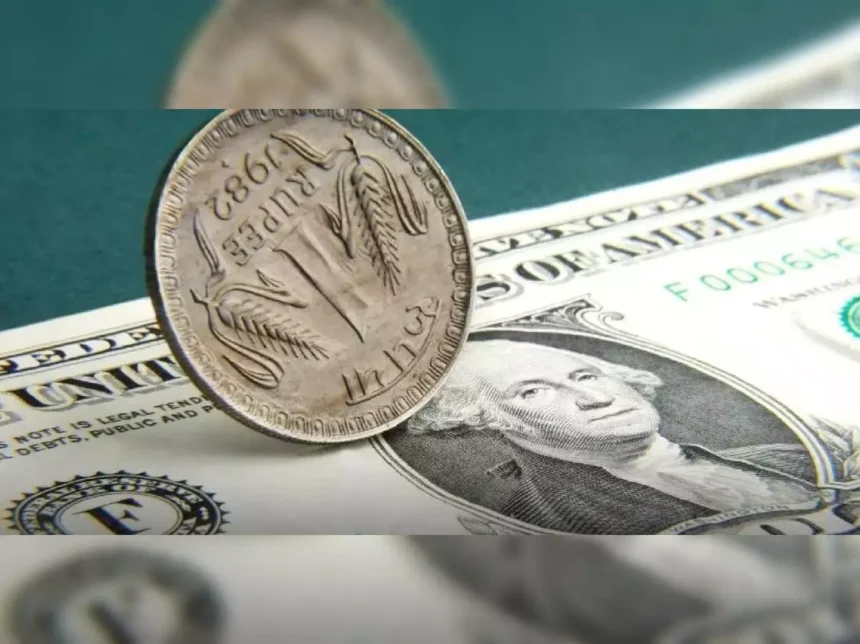
The Indian rupee displayed resilience on Wednesday as it gained 15 paise to settle at 82.10 (provisional) against the US dollar. This upward trend was supported by robust macro fundamentals, foreign institutional investor (FII) inflows, and a weakened US dollar against major global currencies.
At the interbank foreign exchange market, the rupee commenced trading at 82.28 against the US dollar. However, it steadily climbed throughout the day and closed at 82.10 (provisional), representing a 15 paise increase compared to its previous closing rate. The positive trajectory of the domestic equities market contributed to the rupee’s upward movement.
The Indian rupee experienced an intra-day high of 82.08 and a low of 82.32 against the US dollar. Despite the minor fluctuations, the overall performance of the rupee remained positive, reflecting its strength against the US currency.
Several factors contributed to the rupee’s gains. First and foremost, India’s robust macro fundamentals played a significant role. The country’s economic indicators, such as GDP growth, inflation, and fiscal stability, have been favorable, instilling confidence in investors and strengthening the value of the rupee.
Additionally, foreign institutional investors (FIIs) continued to show interest in the Indian market, resulting in increased capital inflows. The inflow of foreign funds positively impacts the demand for the rupee, contributing to its appreciation.
Furthermore, the US dollar’s weakness against major global currencies provided further support for the rupee. The greenback, which serves as the world’s primary reserve currency, experienced a decline against other major currencies, making the rupee relatively more attractive.
The strengthening of the rupee against the US dollar bodes well for the Indian economy. It enhances the purchasing power of Indian businesses and individuals, making imports more affordable. A strong rupee also reduces the cost of servicing foreign debt, benefiting companies with overseas obligations.
The positive trend in the currency market aligns with the overall optimism surrounding India’s economic recovery. The country has been making significant strides in various sectors, including manufacturing, services, and technology. The government’s focus on economic reforms and initiatives to attract foreign investments has bolstered investor confidence and contributed to the rupee’s upward trajectory.
However, it is crucial to note that currency markets are influenced by various factors, including geopolitical events, global economic trends, and monetary policies. Therefore, while the rupee’s recent gains are encouraging, future movements may be subject to volatility.
The Indian rupee displayed strength against the US dollar, gaining 15 paise to settle at 82.10 (provisional). This upward movement was driven by robust macro fundamentals, foreign institutional investor inflows, and a weakened US dollar against major global currencies. The positive trend in the currency market aligns with India’s overall economic recovery and reflects growing investor confidence. Nonetheless, it is essential to monitor market dynamics and external factors that may impact the rupee’s future performance.