





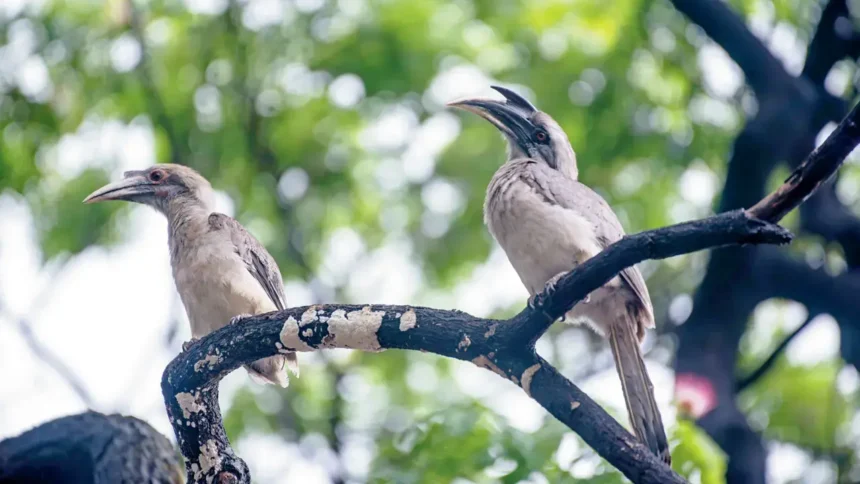
Wildlife enthusiasts and birdwatchers have expressed excitement after a rare hornbill species was recently sighted in Arunachal Pradesh. The unusual sighting has attracted attention from conservationists, researchers, and nature lovers because hornbills are considered ecologically significant birds within Northeast India’s forest ecosystems.
Officials and birdwatchers stated that the discovery highlights the rich biodiversity of Arunachal Pradesh, which remains one of India’s most important wildlife habitats. The sighting has also renewed discussions regarding forest conservation and protection of rare species in the region.
Experts believe such observations help strengthen awareness about biodiversity preservation and ecological research in Northeast India.
Bhupen Hazarika Documentary: Unseen 1999 Tapes Reveal Intimate Moments
Mokokchung Fortified Food Awareness: Food Safety Department Holds Public Camps
Birdwatchers Celebrate Arunachal Hornbill Sighting
Nature enthusiasts reported the sighting of the rare hornbill in a forested area of Arunachal Pradesh, a region widely known for its rich wildlife diversity.
Birdwatchers described the moment as significant because sightings of rare hornbill species are relatively uncommon and often attract major interest within wildlife communities.
The Arunachal Hornbill Sighting quickly gained attention among conservation groups and bird photography enthusiasts across the country.
Wildlife experts noted that hornbills are considered important indicators of healthy forest ecosystems because they rely heavily on mature forest habitats.
Arunachal Pradesh Known for Rich Biodiversity
Arunachal Pradesh is internationally recognized for its diverse wildlife, dense forests, and ecological significance within the Eastern Himalayan region.
The state provides habitat for numerous rare bird species, mammals, reptiles, and plant life because of its unique geographical and climatic conditions.
The Arunachal Hornbill Sighting has once again highlighted the ecological importance of preserving forest landscapes in the region.
Environmental researchers stated that Northeast India remains one of the country’s most biodiverse zones and continues attracting scientific interest globally.
Hornbills Hold Ecological Importance
Hornbills play a major ecological role because they assist in seed dispersal and forest regeneration.
Experts explained that these birds contribute significantly to maintaining healthy tropical forest ecosystems by spreading seeds across large areas.
The Arunachal Hornbill Sighting therefore carries importance beyond birdwatching interest because it reflects the condition of forest habitats within the region.
Conservationists emphasized that protecting hornbill populations also supports broader biodiversity conservation efforts.
Rare Bird Sightings Boost Eco-Tourism Interest
Birdwatching tourism has grown steadily in Northeast India due to the region’s extraordinary avian diversity and scenic landscapes.
Wildlife enthusiasts often travel to Arunachal Pradesh specifically to observe rare and exotic bird species within natural habitats.
The Arunachal Hornbill Sighting may therefore contribute to increased interest in eco-tourism and wildlife photography in the state.
Tourism experts noted that responsible eco-tourism can support both conservation awareness and local economic activity when managed sustainably.
Conservationists Stress Habitat Protection
Following the recent sighting, environmental groups reiterated the importance of protecting forest ecosystems from habitat destruction and illegal activities.
Experts warned that deforestation, infrastructure expansion, and environmental degradation can threaten sensitive bird populations and biodiversity.
The Arunachal Hornbill Sighting has consequently renewed calls for stronger conservation initiatives and sustainable forest management policies.
Researchers stated that maintaining large, undisturbed forest areas remains essential for protecting hornbill species and other wildlife.
Birdwatching Community Reacts Enthusiastically
Birdwatchers and wildlife photographers across India reacted enthusiastically after news of the sighting emerged.
Social media platforms witnessed increased discussion regarding hornbill species, Northeast biodiversity, and wildlife conservation.
The Arunachal Hornbill Sighting became a widely discussed topic among ornithology enthusiasts and environmental communities.
Observers noted that rare wildlife sightings often help raise broader public interest in conservation and ecological awareness.
Scientific Research Opportunities Highlighted
Researchers indicated that such sightings provide valuable opportunities for wildlife documentation and ecological study.
Scientists often rely on field observations to better understand species distribution, migration patterns, and habitat conditions.
The Arunachal Hornbill Sighting may therefore contribute to future biodiversity research and conservation planning within the region.
Environmental experts emphasized the importance of collaboration between local communities, researchers, and conservation agencies.
Northeast India Emerging as Wildlife Destination
Northeast India continues gaining recognition as one of the country’s leading destinations for wildlife tourism and ecological exploration.
States such as Arunachal Pradesh attract birdwatchers, trekkers, and researchers because of their rich natural heritage.
The Arunachal Hornbill Sighting reflects the region’s growing importance within India’s wildlife and conservation landscape.
Tourism observers believe increased awareness regarding biodiversity could support long-term environmental protection efforts.
Importance of Community Participation in Conservation
Conservation experts highlighted that local communities play an essential role in protecting wildlife habitats and reporting rare sightings responsibly.
Awareness programmes and community-based conservation initiatives have become increasingly important in biodiversity-rich regions.
The Arunachal Hornbill Sighting also demonstrates how public interest in wildlife can encourage stronger environmental stewardship.
Experts stated that conservation success often depends on balancing ecological protection with sustainable local development.
Conclusion
The recent sighting of a rare hornbill species in Arunachal Pradesh has generated excitement among birdwatchers, conservationists, and wildlife enthusiasts across the country.
The Arunachal Hornbill Sighting highlights the extraordinary biodiversity of Northeast India while reinforcing the importance of forest conservation and habitat protection. As interest in wildlife tourism and ecological research continues growing, such discoveries are expected to strengthen awareness regarding the need to preserve fragile natural ecosystems.
FAQs
Where was the rare hornbill sighted?
The hornbill was recently sighted in Arunachal Pradesh.
Why is the sighting important?
Rare hornbill sightings are uncommon and indicate healthy forest ecosystems.
Why are hornbills ecologically important?
Hornbills help with seed dispersal and support forest regeneration.
Why is Arunachal Pradesh important for biodiversity?
The state is known for dense forests and diverse wildlife species in the Eastern Himalayan region.
Can such sightings boost tourism?
Yes, rare wildlife sightings often attract birdwatchers and eco-tourists.
Why is the Arunachal Hornbill Sighting significant?
The sighting highlights the ecological richness of Northeast India and the importance of conservation efforts.