





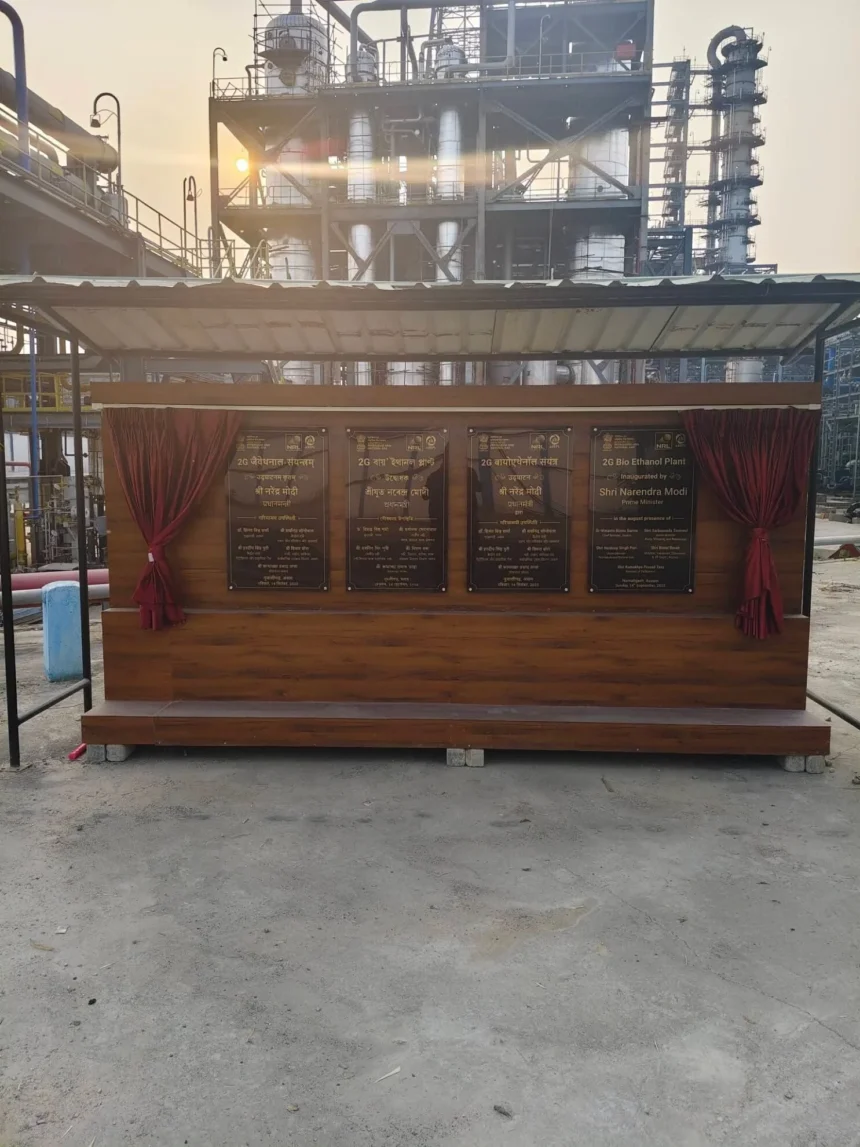
Assam Bio Ethanol Pvt Ltd (ABEPL) will partner with over 30,000 farmers across the Northeast in the next three years. The farmers will supply bamboo to the company’s second-generation bioethanol plant at Numaligarh in Assam’s Golaghat district.
Prime Minister Narendra Modi inaugurated the Rs 4,930-crore facility in September 2025. The refinery is the world’s first commercial 2G bioethanol plant that uses bamboo as feedstock. It can produce 49,000 metric tonnes per annum (MTPA) of ethanol.
Read More: Himanta Says Remarks Target ‘Bangladeshi Infiltrators’, Not Muslims – Hindustan Pioneer
Plant to Reach Full Capacity Soon
ABEPL CEO Rupjyoti Hazarika said the plant is in its start-up phase. Limited raw material supply has slowed operations. He expects the unit to stabilise next week. The company will then scale up production in phases.
The Numaligarh plant uses bamboo instead of food crops like sugarcane and maize. This approach avoids pressure on food supply. The company designed the facility as a zero-waste unit. During trial runs, engineers produced ethanol with 99.7 per cent purity. The industry standard stands at 99.5 per cent.
Multiple Products and Green Power
The refinery will also manufacture 19,000 tonnes of furfural each year. It will produce 11,000 tonnes of acetic acid and 32,000 tonnes of liquid carbon dioxide. The plant will also generate 25 megawatts of green power annually.
The 43-acre facility needs 5 lakh MTPA of green bamboo to run at full capacity. Farmers will grow bamboo on nearly 12,500 hectares of land. The company plans to plant around 60 lakh saplings to meet demand.
Farmers Across Four States Join Initiative
More than 4,200 farmers have already registered within a 300-kilometre radius of the refinery. The coverage includes 16 districts in Assam, four in Arunachal Pradesh, five in Nagaland, and one in Meghalaya.
The company has paid Rs 2.4 crore directly to farmers so far. It has also distributed one lakh bamboo saplings. Many tea estates now use up to five per cent of their land for bamboo cultivation. They treat it as a diversification effort.
Farmers currently grow bamboo on around 300 hectares of barren and non-agricultural land. ABEPL plans to expand this area steadily over the next three years.
Boost to Rural Economy
The project operates as a joint venture between Numaligarh Refinery Limited, Fortum 3 BV, and Chempolis Oy.
The company expects the project to add nearly Rs 200 crore each year to Assam’s rural economy. It will generate income through bamboo cultivation, logistics, and processing activities.
Once it reaches full capacity, the plant aims to achieve carbon neutrality. It also seeks to become the largest bamboo consumer in the Northeast.
By linking thousands of farmers to a renewable energy value chain, ABEPL is reshaping bamboo cultivation in the region. The initiative supports clean fuel production and strengthens rural livelihoods at the same time.
Also Read: Manik Sarkar Denied Dak Bungalow Stay in Kanchanpur.