



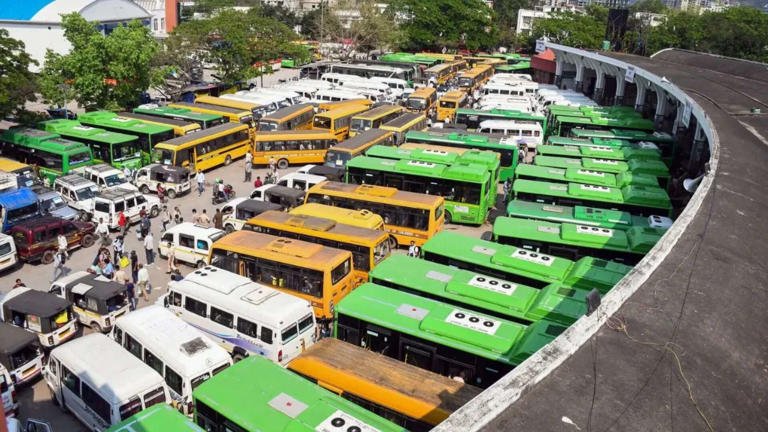
Assam voters transport issues polls have emerged as a significant concern on voting day, as many residents reported paying extra to reach polling stations after buses were taken off regular routes for election duty. The situation has highlighted logistical challenges faced by voters despite extensive arrangements by the Election Commission of India.
Across several constituencies, public transport services were disrupted as buses were requisitioned for poll-related work. As a result, voters had to rely on alternative means, often at higher costs. This unexpected burden has sparked discussions on accessibility during elections.
Read More: Pradyot Debbarma Confident of Tipra Motha Win in TTAADC Polls
Buses Taken Off Roads for Poll Duty
A large number of buses were deployed for election purposes, including transporting polling personnel and equipment. Consequently, regular services were reduced or suspended in many areas.
Authorities prioritised smooth conduct of elections. Therefore, they diverted vehicles to ensure timely movement of election staff. However, this decision affected daily commuters and voters.
In several regions, especially rural areas, buses are the primary mode of transport. Their absence created difficulties for residents. As a result, many had to seek alternative options.
Voters Forced to Pay Extra
Due to limited transport availability, voters turned to private vehicles, auto-rickshaws, and shared taxis. These options often came at a higher cost. Therefore, many people paid a premium to reach polling stations.
Some voters reported spending significantly more than usual. This added financial strain, particularly for those from low-income groups. Consequently, the issue raised concerns about equal access to voting.
Despite the inconvenience, many voters remained determined. They chose to cast their ballots regardless of the challenges. As a result, turnout remained steady in several areas.
Impact on Rural and Remote Areas
The transport issue was more pronounced in rural and remote regions. These areas depend heavily on limited public transport. Therefore, the withdrawal of buses had a greater impact.
In some cases, voters had to walk long distances. Others relied on informal transport arrangements. As a result, reaching polling stations became time-consuming.
Local communities also stepped in to help. Residents organised shared rides and coordinated travel. Therefore, community support played a crucial role.
Election Commission’s Arrangements
The Election Commission of India had made extensive preparations for the polls. It ensured deployment of staff and security forces. However, the transport issue highlighted gaps in planning.
Officials stated that requisitioning vehicles is necessary for conducting elections. It ensures timely movement of personnel and materials. Therefore, it remains a standard practice.
At the same time, authorities acknowledged the inconvenience caused. They emphasised the need to balance logistics with public convenience. Consequently, future planning may consider alternative solutions.
Voter Determination Despite Challenges
Despite facing transport issues, voters showed strong commitment. Many travelled long distances and paid extra to participate. This reflects the importance people place on voting.
In urban areas, some voters managed with alternative transport options. In rural regions, community efforts helped overcome challenges. Therefore, participation remained encouraging.
Observers noted that such determination strengthens democracy. It shows that citizens value their right to vote. Consequently, their efforts deserve recognition.
Political Reactions to the Issue
Political parties have reacted to the transport challenges. Some opposition leaders criticised the arrangements. They argued that better planning could have prevented inconvenience.
On the other hand, ruling party leaders highlighted the successful conduct of polling. They emphasised that logistical requirements are essential for smooth elections. Therefore, they defended the decisions.
The issue has become part of the broader election narrative. It reflects the complexities of managing large-scale polls. As a result, it has drawn attention.
Need for Better Planning
The situation underscores the need for improved planning. Authorities may need to explore alternative arrangements. These could include dedicated transport for voters.
Ensuring accessibility is crucial for fair elections. Therefore, addressing such challenges is important. It can help improve voter experience.
Experts suggest that coordination with transport services could help. This would minimise disruptions. Consequently, future elections may benefit from such measures.
What Lies Ahead
As polling concludes, attention will shift to results. However, the transport issue will remain a topic of discussion. Authorities may review the situation to identify improvements.
The Assam voters transport issues polls highlight the challenges faced during large-scale elections. While the process remains robust, logistical concerns need attention.
Ultimately, the determination of voters stands out. Despite difficulties, they exercised their democratic rights. Therefore, their participation remains the most significant aspect of the election.
Read More: Assam Polls: Jay Panda Visits Kamakhya, Calls Drizzle Auspicious