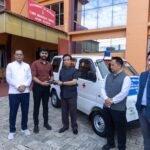
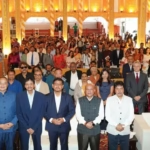
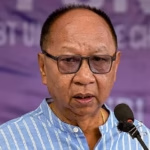
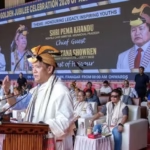


Arunachal Malaria Elimination Mission has gained renewed momentum as Chief Minister Pema Khandu urged a collective push to eliminate malaria in the state by 2030, emphasizing coordinated efforts across communities and health systems.
Big Breakthrough in Assam Heroin Bust Case Worth ₹7 Crore
CM Calls for Collective Action
Chief Minister Pema Khandu has urged all stakeholders to work together to achieve the ambitious health target. He emphasized that government agencies, healthcare workers, and citizens must collaborate effectively. Moreover, he highlighted that community participation plays a crucial role in disease prevention. Therefore, the Malaria Elimination Mission depends on united and sustained efforts.
Target to Eliminate Malaria by 2030
The state government has aligned its goals with national and global malaria elimination targets. Authorities aim to completely eliminate malaria cases by 2030. Furthermore, officials have outlined strategic plans to strengthen surveillance and treatment systems. As a result, the Arunachal Malaria Elimination Mission sets a clear and time-bound objective.
Strengthening Healthcare Infrastructure
The government continues to improve healthcare facilities across Arunachal Pradesh. It has increased access to diagnostic tools, medicines, and trained personnel in remote areas. In addition, mobile health units help reach vulnerable populations. Consequently, the Arunachal Malaria Elimination Mission benefits from stronger healthcare delivery systems.
Focus on Awareness and Prevention
Awareness campaigns remain a key component of malaria elimination efforts. Health authorities actively educate communities about preventive measures such as using mosquito nets and maintaining hygiene. Moreover, early detection and timely treatment reduce transmission rates. Therefore, the Arunachal Malaria Elimination Mission emphasizes prevention as much as cure.
Role of Technology and Surveillance
Advanced surveillance systems help track malaria cases and identify high-risk areas. Authorities use data-driven strategies to respond quickly to outbreaks. Furthermore, digital tools improve reporting and coordination among health departments. As a result, the Arunachal Malaria Elimination Mission becomes more efficient and targeted.
Community Participation Drives Success
Local communities play a vital role in achieving the elimination goal. Volunteers and health workers work closely with residents to spread awareness and monitor cases. Additionally, community engagement builds trust and encourages proactive behavior. Consequently, the Arunachal Malaria Elimination Mission gains strength at the grassroots level.
Government Partnerships and Support
The state government collaborates with national programs and international organizations to strengthen its efforts. These partnerships provide technical expertise, funding, and resources. Moreover, coordinated action ensures consistent progress toward the goal. Therefore, the Arunachal Malaria Elimination Mission reflects a well-supported initiative.
Challenges and Way Forward
Despite progress, challenges such as remote geography and limited accessibility remain. However, continuous innovation and commitment can overcome these barriers. Authorities plan to enhance outreach and improve infrastructure further. As a result, the Arunachal Malaria Elimination Mission continues to move forward with determination.
FAQs
What is the target year for malaria elimination in Arunachal Pradesh?
The state aims to eliminate malaria completely by 2030.
Who announced the malaria elimination mission?
Chief Minister Pema Khandu called for a collective push to achieve the goal.
What strategies support malaria elimination?
Key strategies include awareness campaigns, improved healthcare access, and advanced surveillance systems.
Why is community participation important?
Community involvement helps spread awareness and ensures early detection and prevention.
What challenges does the mission face?
Remote locations and limited accessibility pose challenges, but ongoing efforts aim to address them.