





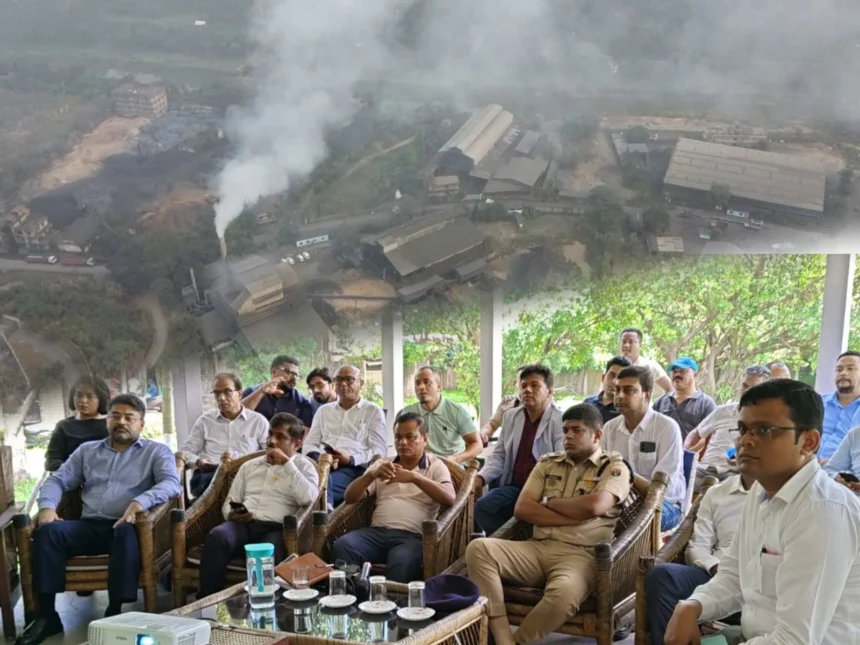
The Byrnihat Pollution Joint Panel has been established by the Meghalaya Government to accelerate action against heavy industrial pollution in Byrnihat. The newly formed fast-track panel aims to strengthen coordination among departments, improve environmental monitoring, and address pollution concerns affecting the industrial region. Moreover, the initiative reflects the state’s commitment to protecting public health and ensuring sustainable industrial development. Consequently, the move has become a significant step in Meghalaya’s environmental governance efforts.
Sikkim Eco-Tourism Guidelines Revised to Strengthen Plastic Waste Management
Byrnihat Pollution Joint Panel Created to Strengthen Environmental Action
The Byrnihat Pollution Joint Panel was constituted to facilitate quicker decision-making and coordinated action against industrial pollution in Byrnihat. Furthermore, the fast-track mechanism is expected to bring together relevant government agencies to improve environmental oversight and regulatory enforcement.
Byrnihat is one of the region’s major industrial hubs, making environmental monitoring an important administrative responsibility. Consequently, authorities have prioritized coordinated efforts to address pollution-related challenges more efficiently.
Moreover, the creation of a dedicated panel demonstrates the government’s intent to strengthen institutional coordination. Therefore, officials expect the initiative to support faster implementation of pollution control measures.
Additionally, regular monitoring and timely intervention remain essential for maintaining environmental quality. Thus, the panel will play an important role in overseeing pollution management efforts.
Fast-Track Mechanism Aims to Improve Pollution Monitoring
The Byrnihat Pollution Joint Panel is designed to improve coordination between departments responsible for environmental regulation and industrial compliance. Furthermore, the panel is expected to facilitate quicker responses to pollution-related issues through streamlined administrative processes.
Environmental monitoring requires continuous assessment of industrial activities and compliance with applicable regulations. Consequently, coordinated inspections and data collection are essential for effective pollution management.
Moreover, timely sharing of information among government agencies can improve regulatory efficiency. Therefore, the fast-track panel seeks to enhance communication and decision-making.
Similarly, periodic environmental assessments help authorities identify emerging concerns before they escalate. Additionally, stronger coordination supports better implementation of pollution control policies.
Industrial Growth and Environmental Protection Must Progress Together
The Byrnihat Pollution Joint Panel highlights the importance of balancing industrial development with environmental sustainability. Furthermore, governments increasingly emphasize responsible industrial practices that minimize environmental impact while supporting economic growth.
Industrial regions require effective environmental safeguards to protect air quality, water resources, and surrounding communities. Consequently, pollution control remains a critical aspect of sustainable development planning.
Moreover, regulatory oversight encourages industries to comply with environmental standards and adopt cleaner operational practices. Therefore, strengthened monitoring mechanisms contribute to long-term ecological protection.
Similarly, collaboration between industries and regulatory authorities can support practical and effective environmental solutions. Additionally, sustainable industrial growth depends on consistent compliance with environmental norms.
Joint Coordination Expected to Support Long-Term Environmental Governance
The Byrnihat Pollution Joint Panel represents an important administrative initiative aimed at strengthening environmental governance in Meghalaya. Furthermore, coordinated action among departments can improve enforcement, transparency, and accountability.
Environmental challenges often require multidisciplinary approaches involving regulatory agencies, technical experts, and local administrations. Consequently, the joint panel is expected to facilitate more comprehensive responses to pollution concerns.
Moreover, regular reviews and coordinated planning can improve the effectiveness of pollution mitigation strategies. Therefore, the panel may contribute to stronger environmental management over the long term.
Similarly, continued monitoring and policy evaluation help governments adapt to changing environmental conditions. Additionally, institutional cooperation strengthens public confidence in environmental protection efforts.
Conclusion
The Byrnihat Pollution Joint Panel marks an important step in Meghalaya’s efforts to address industrial pollution through coordinated and fast-track administrative action. Moreover, the initiative demonstrates the government’s commitment to improving environmental monitoring and strengthening regulatory oversight.
Furthermore, enhanced coordination among departments is expected to support more efficient implementation of pollution control measures while promoting sustainable industrial development. Consequently, the panel can play a significant role in improving environmental governance in Byrnihat.
Looking ahead, continuous monitoring, inter-agency cooperation, and effective regulatory enforcement will remain essential for reducing industrial pollution and protecting public health. Therefore, the Byrnihat Pollution Joint Panel represents a meaningful initiative toward long-term environmental sustainability in Meghalaya.
FAQs
1. What is the Byrnihat Pollution Joint Panel?
It is a fast-track panel established by the Meghalaya Government to coordinate action against heavy industrial pollution in Byrnihat.
2. Why was the panel created?
The panel was formed to improve coordination, strengthen environmental monitoring, and accelerate pollution control measures.
3. What issues will the panel address?
It will focus on industrial pollution, environmental compliance, monitoring, and coordinated regulatory action in Byrnihat.
4. Why is Byrnihat important in this context?
Byrnihat is a major industrial area where effective environmental management is essential to balance economic activity with ecological protection.
5. Why is the Byrnihat Pollution Joint Panel significant?
The panel strengthens Meghalaya’s environmental governance by promoting faster coordination, better monitoring, and more effective pollution control.