




The long-standing debate over tribal identity in Assam reached a critical turning point this week. On Tuesday, January 6, 2026, the Consultative Group of the Coordination Committee of Tribal Organisations of Assam (CCTOA) submitted its formal recommendations. The group explicitly rejects the proposal to grant Scheduled Tribe (ST) status to six prominent communities. This move directly challenges the findings of the state-appointed Group of Ministers (GoM).
Read More: Chabimura Eco-Tourism Makeover: Tripura’s Hidden Gem Goes Global
Formal Submission to GoM Chairperson
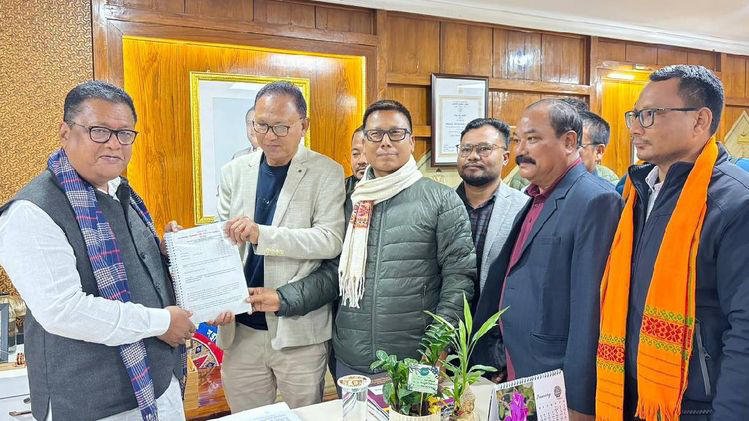
A high-level delegation, led by human rights activist Suhas Chakma, met with GoM Chairperson Dr. Ranoj Pegu in Guwahati. They handed over a detailed report at approximately 6:30 PM. The document outlines why the CCTOA considers the proposed inclusion “unconstitutional and historically untenable.”
The CCTOA represents 14 existing tribal groups in the state. Its leaders argue that the government’s plan stems from political motives rather than anthropological facts. Dr. Pegu received the report after the CCTOA’s expert panel completed weeks of deliberation. This panel included retired IAS and ACS officers, legal scholars, and senior tribal representatives. They analyzed a November 2025 GoM report which suggested a new “ST (Valley)” category.
Constitutional and Historical Objections
The CCTOA bases its rejection on the criteria established by the Lokur Committee in 1965. According to the group, a community must exhibit specific traits for ST recognition. These include primitive characteristics, a distinctive culture, geographical isolation, and a shyness of contact with the wider world.
The Consultative Group maintains that the six communities do not meet these specific standards. These groups include the Tai Ahom, Chutia, Moran, Matak, Koch-Rajbongshi, and the Tea Tribes. Furthermore, the report notes that the National Commission for Backward Classes already identifies these communities as Other Backward Classes (OBCs). The CCTOA argues that the government cannot reclassify them as tribes simply for political expediency.
Key Recommendations from the CCTOA:
- Category Distinction: The group emphasizes that the Constitution treats Scheduled Castes (SCs) and Scheduled Tribes (STs) as separate entities.
- Mainstream Integration: The report states that Tai Ahoms and Chutiyas belong to the mainstream Assamese social fabric. Therefore, they lack the required “geographical isolation.”
- Expert Independence: The CCTOA questioned the neutrality of previous government committees. They alleged that those panels often consisted of members from the claimant communities themselves.
- Reservation Ceiling: The group warned that including these large populations would push Assam’s total reservation beyond 70%. This would violate the 50% ceiling mandated by the Supreme Court.
Protecting the Rights of Existing Tribes
The CCTOA’s recommendations focus heavily on the potential dilution of political power. The group fears that granting ST status to these six communities will destroy the political reservation of existing tribes. This shift would affect representation in Village Panchayats, Autonomous Councils, the State Assembly, and Parliament.
“The demand is primarily for political reservation, not socio-economic upliftment,” the CCTOA stated in its submission. They highlighted that these communities already receive 27% OBC reservation. Additionally, several dedicated development councils already serve their interests. Consequently, the tribal body views the GoM’s proposal as a direct threat to smaller, indigenous ethnic groups.
The Case of Tea Tribes and Koch-Rajbongshis
The report also addresses the specific cases of the “Tea Tribes” and Koch-Rajbongshis. It cites the 1947 Gopinath Bordoloi sub-committee report. That document, along with the Lokur Committee, advised against treating tea plantation labor as indigenous tribes of Assam.
Regarding the Koch-Rajbongshis, the group points to a critical legal hurdle. They noted that the Koch community currently holds Scheduled Caste status in West Bengal. Under Indian law, a group recognized as an SC in one state cannot typically become an ST in another for administrative convenience.
Conclusion: Preparing for National Advocacy
The submission of this report marks the beginning of a larger campaign. Following the Magh Bihu festival in late January, the CCTOA plans to send a delegation to New Delhi. They intend to meet with the Union Home Minister, the Registrar General of India (RGI), and the National Commission for Scheduled Tribes (NCST).
Ultimately, these recommendations place the state government in a difficult position. While the ruling administration has promised ST status to the six communities, fierce opposition from existing tribal bodies creates a major obstacle. As the 2026 elections draw closer, this battle over tribal identity will likely define the political discourse in Assam.
Read More: Arunachal CM Orders Multi-Level Probe into Frontier Highway Issues in East Kameng

