





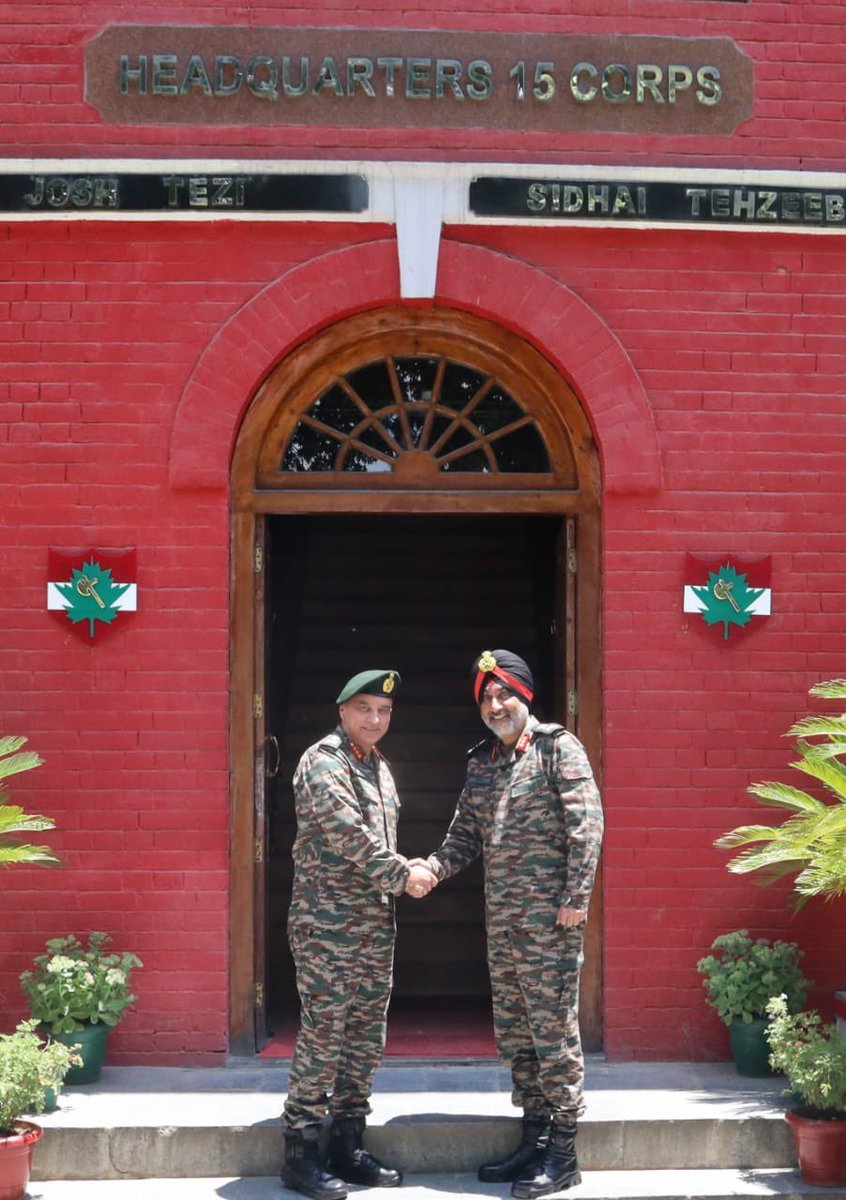
Lieutenant General Rajiv Ghai, the General Officer Commanding (GoC) of the Army’s strategic Chinar Corps, conducted a comprehensive review of security and operational readiness for the upcoming Amarnath Yatra. The annual pilgrimage, set to begin on July 1, involves a 60-day journey to the holy cave situated at an altitude of 3,880 meters in the south Kashmir Himalayas. The review aimed to ensure the safety and smooth execution of the pilgrimage, considering the two primary routes: the traditional 48-kilometer Nunwan-Pahalgam route in Anantnag district (southern route) and the shorter but more challenging 14-kilometer Baltal route in Ganderbal district (northern route).
In a tweet, the Chinar Corps shared, “#ChinarCorpsCdr Lt Gen Rajiv Ghai reviewed the security & operational preparedness along both the northern & southern routes for #Amarnathyatra2023 today.”
The Amarnath Yatra holds immense religious significance for Hindus, attracting thousands of devotees from across the country. The pilgrimage passes through difficult terrain and poses several challenges due to the unpredictable weather conditions and the presence of militant activity in the region. Therefore, ensuring the safety and security of the pilgrims remains a top priority for the Indian Army and local authorities.
Lieutenant General Rajiv Ghai’s review of the security and operational preparedness is a testament to the Army’s commitment to safeguarding the pilgrims during their spiritual journey. The Chinar Corps, responsible for the security of the Kashmir Valley, plays a crucial role in maintaining peace and stability in the region.
The review likely encompassed a comprehensive assessment of the security arrangements along both the northern and southern routes. It would have included evaluating the deployment of personnel, checking the preparedness of security forces, assessing the communication networks, and reviewing the contingency plans to tackle any untoward incidents. By conducting such a review ahead of the pilgrimage, the Chinar Corps aims to identify any gaps or areas that require additional attention to ensure a safe and successful Amarnath Yatra.
The Nunwan-Pahalgam route, known as the southern route, is the longer but relatively less challenging path chosen by a majority of pilgrims. It winds through scenic landscapes, offering breathtaking views of the surrounding mountains and valleys. On the other hand, the Baltal route, known as the northern route, is shorter but steep and demanding. It requires pilgrims to navigate through difficult terrains and overcome physical challenges to reach the holy cave.
In recent years, the Indian government has taken several measures to enhance the safety and comfort of the pilgrims. These include setting up base camps, improving infrastructure, establishing medical facilities, and deploying additional security forces along the routes. Additionally, a robust system of registration and issuance of yatra permits has been put in place to manage the flow of pilgrims effectively.
The review conducted by Lieutenant General Rajiv Ghai demonstrates the Army’s commitment to maintaining a secure environment for the Amarnath Yatra. It highlights the collaborative efforts of the Indian Army, local administration, and other security agencies in ensuring the successful and peaceful completion of the pilgrimage. Through their meticulous planning and preparedness, the authorities aim to facilitate a spiritually fulfilling experience for the devotees while prioritizing their safety and well-being.
As the annual Amarnath Yatra draws near, the review of security and operational preparedness serves as a reminder of the collective determination to uphold the sanctity of the pilgrimage and provide a secure environment for all participants. The Chinar Corps, along with its partners, remains dedicated to preserving the religious and cultural heritage associated with the Amarnath Yatra, thereby enabling devotees to embark on their spiritual quest with peace of mind.