





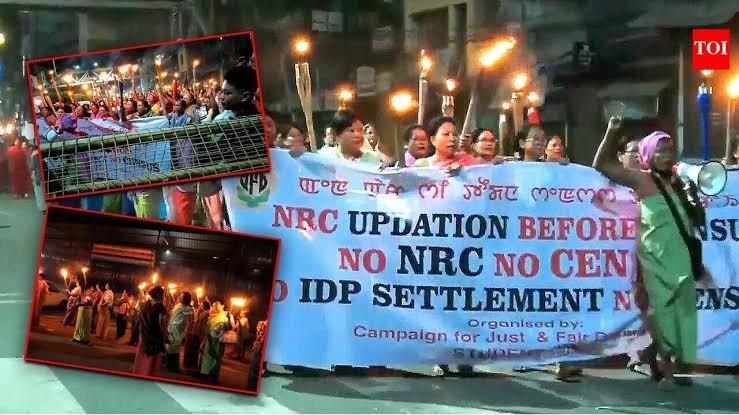
The Manipur fair delimitation campaign has intensified as civil society groups continue pressing the state government and the Centre over the proposed delimitation of Assembly constituencies. Campaigners have linked their demand with concerns about demographic changes, electoral representation and the timing of the next Census.
The Campaign for Just and Fair Delimitation has emerged as one of the prominent groups raising the issue. Its representatives have demanded that the government address concerns surrounding population data before any constituency restructuring proceeds.
Meanwhile, the Manipur People’s Party and other political voices have also raised questions about electoral rolls and demographic changes. The overlapping demands have added another layer to Manipur’s already complex political debate ahead of the 2027 Assembly election.
However, allegations about demographic changes and electoral irregularities remain contested political claims. Any final delimitation exercise would have to follow the constitutional and statutory process prescribed by the authorities.
Assam NRC Rejection Slips Remain Pending for 19 Lakh Applicants
Manipur Fair Delimitation Campaign Gains Momentum
The Manipur fair delimitation campaign has gained visibility through protests and public mobilisation around the demand for a transparent constituency-restructuring process. Campaigners have argued that delimitation should not rely on population figures that they believe could be affected by migration or other demographic changes.
The Campaign for Just and Fair Delimitation has particularly focused on the relationship between the Census and delimitation. Supporters have argued that population verification should take place before new constituency boundaries are determined.
Furthermore, the campaign has connected delimitation with citizenship verification. Some civil society groups have called for an updated National Register of Citizens before the Census, arguing that accurate citizenship records would provide a stronger basis for future electoral decisions.
These demands have gained additional attention after the Centre deferred Census operations in Manipur amid calls for an NRC exercise before the population enumeration. The development has further linked the Census, NRC and delimitation debates in the state.
At the same time, the government has maintained that any NRC exercise would require coordination with the Centre. State officials have repeatedly acknowledged that Manipur cannot independently conduct such an exercise without the necessary authority and approval.
Therefore, the delimitation campaign remains broader than a demand about constituency boundaries alone. It encompasses questions about population records, citizenship verification and the credibility of future electoral representation.
Civil Society Groups Raise Demographic Concerns
A major argument behind the campaign concerns what supporters describe as demographic changes in Manipur. Civil society organisations have raised concerns about migration and alleged illegal immigration, particularly in relation to areas affected by the prolonged conflict.
Campaigners have argued that population figures should accurately reflect eligible residents before authorities use them for delimitation. They say this is important because population-based changes can influence the number and boundaries of constituencies.
However, allegations of illegal immigration require verification through appropriate legal and administrative procedures. Population changes by themselves do not establish that people entered or reside in the state unlawfully.
The distinction has become particularly important because Manipur has experienced displacement since ethnic violence began in May 2023. Large numbers of people have moved from conflict-affected areas, creating additional challenges for population assessment and electoral administration.
Moreover, the state has continued to debate the status of displaced people and the restoration of normal political and administrative processes. These circumstances make population data a sensitive issue as authorities prepare for future elections.
Civil society groups nevertheless argue that demographic questions should receive attention before the delimitation process advances. Their campaign seeks assurances that future constituency boundaries will reflect what they consider a fair and verifiable population base.
Meanwhile, other political parties have raised similar concerns from different perspectives. The convergence has increased pressure on governments to explain how they intend to address population data and electoral representation.
NRC and Census Debate Shapes Delimitation Demand
The delimitation issue is closely connected with Manipur’s continuing debate over an NRC before the Census. The state government has recently reaffirmed that it remains serious about pursuing an NRC exercise before any Census operation.
Government spokesperson Sapam Ranjan said authorities were sincere about the demand and appealed to civil society groups to cooperate. He also indicated that the state government would continue pursuing the matter with the appropriate authorities.
The Manipur Legislative Assembly has separately passed resolutions seeking an NRC update. The latest resolution called for the NRC to be updated before the Census, continuing a demand that lawmakers had raised previously.
Home Minister Govindas Konthoujam has also said that 1951 would be considered the base year for the proposed NRC update. He said officials were examining historical records associated with that period.
Nevertheless, an NRC and delimitation remain legally distinct processes. An NRC concerns citizenship registration, while delimitation concerns the readjustment of electoral constituencies. The two issues may become politically connected, but they involve different legal procedures.
The Census also serves a different purpose because it records population and demographic information. Consequently, calls for an NRC before the Census represent a political and administrative demand rather than an automatic legal requirement for every delimitation exercise.
The Centre’s decision to defer Census operations in Manipur has therefore become an important development in the wider debate. It has allowed civil society groups supporting an NRC-first approach to maintain pressure on the authorities.
At the same time, other groups have criticised the demand. The Kuki-Zo Council, for example, has opposed an NRC before the 2027 Census and described the proposal as premature. Such opposing positions demonstrate the difficulty of reaching consensus on the issue.
Government Faces Pressure Over Electoral Representation
The campaign has placed the Manipur government under increasing political pressure to clarify its position on delimitation. Civil society groups want assurances that constituency restructuring will not disadvantage particular communities or regions.
The concern is significant because delimitation can affect political representation for years. Changes in constituency boundaries can alter the distribution of voters and influence how communities participate in the electoral process.
Furthermore, Manipur’s existing political divisions make the issue particularly sensitive. The state has experienced prolonged ethnic conflict, displacement and competing political demands since May 2023.
A transparent process could therefore become essential for maintaining public confidence. Campaigners have called for consultations and reliable population data before any major electoral restructuring takes place.
The government, however, must operate within the constitutional framework governing delimitation. The Election Commission and other competent authorities have defined roles in electoral administration, while the legal framework determines when and how constituency boundaries can be altered.
Consequently, the state government cannot independently determine the final contours of a delimitation exercise. Its role is more closely connected with providing information, coordinating with central institutions and addressing concerns raised by residents and civil society organisations.
Political parties are also preparing for the 2027 Assembly election. The issue could become a significant campaign topic if disagreements over population data, electoral rolls and constituency representation remain unresolved.
The Manipur People’s Party has already called for opposition unity against BJP-led rule and has separately raised concerns about electoral institutions. Such developments indicate that delimitation could increasingly become part of broader political competition.
2027 Election Adds Urgency to Delimitation Debate
The approaching 2027 Assembly election gives the Manipur fair delimitation campaign additional political importance. Parties and civil society organisations are increasingly discussing how electoral representation should be structured before the next major electoral cycle.
For civil society groups, the immediate priority is ensuring that any future delimitation process uses credible population information. They want the authorities to address concerns about migration, citizenship records and displaced populations before relying on demographic data.
Moreover, the campaign reflects wider concerns about political representation. Communities affected by conflict and displacement may have different views about how their electoral interests should be protected during any future constituency restructuring.
At the same time, delimitation cannot be treated solely as a political negotiation. Any changes must follow the relevant constitutional provisions, statutory procedures and decisions of the competent authorities.
The debate could therefore continue through several stages. Population data, the Census, electoral rolls, citizenship verification and delimitation each involve separate administrative processes, even though political parties and civil society groups increasingly discuss them together.
Public consultations could also influence the political environment. If authorities provide clear explanations about the legal framework and data sources, they may help reduce uncertainty surrounding the process.
Nevertheless, disagreements are likely to persist because different communities and political organisations have different expectations. Some want an NRC before the Census, while others oppose linking citizenship verification with population enumeration.
For now, the campaign has succeeded in keeping delimitation at the centre of public discussion. Its next impact will depend on how the state and Union governments respond to demands for greater transparency and clarification.
Conclusion
The Manipur fair delimitation campaign has intensified pressure on the government over electoral representation, population data and the proposed restructuring of Assembly constituencies. Civil society groups want authorities to address concerns about demographic changes and citizenship records before any delimitation process moves forward.
The debate remains closely connected with the NRC and Census questions, although each process has a separate legal purpose. With the 2027 Assembly election approaching, the government faces continued demands for clarity, transparency and consultation on the future of electoral representation in Manipur.
FAQs
What is the Manipur fair delimitation campaign?
The Manipur fair delimitation campaign is a civil society-led effort seeking a transparent and credible process for any future restructuring of Assembly constituencies. Supporters have raised concerns about population data and demographic changes.
Why are civil society groups demanding fair delimitation?
Campaigners argue that accurate population information is essential for fair electoral representation. They have also raised concerns about migration, citizenship records and displacement in the state.
How is NRC connected to delimitation in Manipur?
The two are separate legal processes. However, civil society groups supporting the NRC-first approach argue that citizenship records should be clarified before population data are used for future electoral decisions.
Why has the Census become part of the delimitation debate?
The Census provides population and demographic information that can become relevant to electoral representation. Consequently, campaigners want population data to be reliable before any future constituency restructuring.
When is the next Manipur Assembly election?
The next Manipur Assembly election is expected in 2027. Political parties and civil society organisations are already discussing electoral representation and other issues that could shape the political environment before the election.