





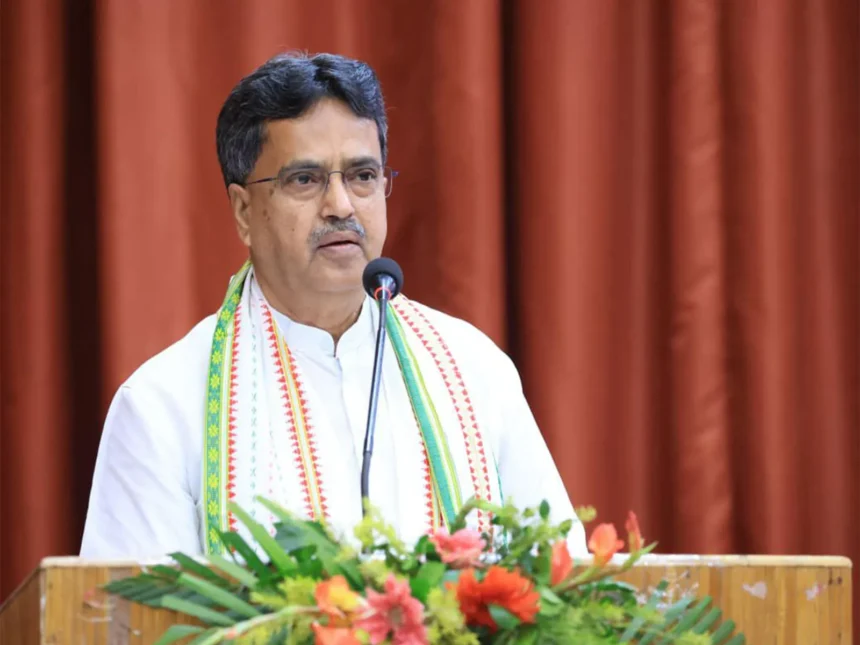
Tripura Chief Minister Manik Saha has stressed that urban development must improve public infrastructure without disturbing the natural balance of cities. The Tripura urban ecological balance approach was highlighted during the inauguration of the renovated heritage pond near Ujan Abhoynagar Bazar in Agartala.
The Chief Minister said urbanisation should go beyond concrete construction and focus on quality of life, environmental protection and sustainable planning. He pointed to the restoration of old ponds and water bodies as an important part of this approach.
The government is also pursuing drainage improvements, alternative roads, solar-powered facilities, street lighting and conservation of parks and water bodies. Similar projects are being extended beyond Agartala to district headquarters, municipal councils and Nagar Panchayat areas.
Mizoram Moves to Preserve 79 Archaeological Sites and Monuments
Tripura Urban Ecological Balance Becomes Development Priority
Speaking at the Ujan Abhoynagar programme, Saha said the government’s development objective is not limited to constructing infrastructure. Instead, he emphasised improving residents’ quality of life while protecting the natural balance of urban areas.
The Chief Minister linked this approach to the problems faced by traditional ponds and water bodies in Agartala. According to him, neglect, inadequate maintenance and poor planning had placed several such water bodies at risk.
He also highlighted the consequences of filling up ponds. Apart from affecting the environment, the loss of water bodies can create drainage problems during the monsoon. Therefore, preserving existing natural assets has become an important element of the state’s urban planning approach.
The government has been working with the Agartala Municipal Corporation and other departments to identify old and important water bodies. Officials are also pursuing restoration and revival efforts across the city.
This strategy reflects a broader shift toward combining infrastructure development with environmental considerations. Rather than treating ponds, parks and green areas as separate from urban infrastructure, the government is presenting them as components of a liveable city.
Ujan Abhoynagar Pond Project Highlights Restoration Effort
The renovated pond beside Ujan Abhoynagar Bazar represents one example of the government’s approach. The project was implemented under AMRUT 2.0 and includes boundary protection, walking paths, lighting, seating facilities and landscaped green areas.
The improvements are intended to make the area more useful for local residents. Morning walkers, shoppers and other visitors can use the improved surroundings for recreation and relaxation.
At the same time, the project has an environmental dimension because it restores a water body that had faced problems linked to encroachment, waste and pollution. The renovation therefore combines public amenities with the preservation of an existing urban natural asset.
Tripura Times reported that the project cost more than ₹3 crore under the central government’s AMRUT scheme. The report also said work is underway to restore around 24 to 25 old water bodies and parks in Agartala.
Saha also appealed to traders and residents to protect the renovated facility after its redevelopment. He urged people not to throw plastic, thermocol or other waste into or around the pond.
Such public participation is significant because maintaining restored assets requires continuing community involvement. Consequently, the government has framed cleanliness and protection of public spaces as a shared responsibility rather than a task for civic agencies alone.
Agartala Urban Projects Extend Beyond Beautification
The Chief Minister’s remarks also covered several infrastructure initiatives aimed at making Agartala a smarter and more liveable city. These include drainage modernisation, alternative roads to reduce congestion, solar power installations, street lights and conservation of parks and water bodies.
Drainage improvement has particular importance for Agartala because waterlogging can become a major concern during heavy monsoon rainfall. Protecting natural water bodies can complement engineered drainage systems by retaining elements of the city’s existing water network.
Road development is another component of the urban programme. The government is working on alternative routes to ease traffic congestion while continuing other civic infrastructure improvements.
Solar-powered facilities also form part of the effort to make urban services more sustainable. Meanwhile, parks and water bodies provide additional public spaces within an increasingly developed urban environment.
Earlier in 2026, Saha chaired a review meeting on urban development and urban local bodies. The meeting focused on infrastructure, civic services, sustainable and inclusive development, timely implementation and citizen-centric planning.
The latest initiatives therefore build on a wider policy emphasis rather than representing an isolated beautification project. The government has repeatedly linked urban infrastructure with improved civic services and quality of life.
Statewide Urban Development Plan Takes Shape
The focus on ecological considerations is not limited to Agartala. Saha has said similar development work is progressing in district headquarters, municipal council areas and Nagar Panchayats across Tripura.
On October 5, the Chief Minister also announced that the state has prepared a master plan for state-of-the-art infrastructure in Nagar Panchayat and Municipal Council areas. The plan follows the government’s broader effort to expand modern urban services beyond the capital.
The state has already implemented multiple projects under major urban programmes. Saha said 65 projects had been completed in Agartala under the Smart City Mission at a reported cost of ₹581 crore. He also cited AMRUT 2.0 initiatives, including drinking-water infrastructure and housing for economically weaker sections.
However, expanding infrastructure also increases the importance of careful land and environmental planning. The Chief Minister’s emphasis on protecting water bodies suggests that future urban development is expected to account for natural features alongside roads, buildings and civic facilities.
For municipalities and Nagar Panchayats, this approach could place greater emphasis on maintaining parks, drainage networks and existing water bodies while upgrading public services. The precise implementation of the broader master plan will determine how these objectives are incorporated into individual projects.
Public cooperation will remain another important element. Restored ponds and parks can lose their benefits if residents and commercial establishments allow waste dumping or encroachment to return.
Conclusion
The Tripura urban ecological balance focus reflects Chief Minister Manik Saha’s stated approach to combining modern infrastructure with environmental protection. The restoration of the Ujan Abhoynagar pond demonstrates how public amenities, green spaces and water-body conservation can form part of an urban redevelopment project.
Tripura is also pursuing broader improvements in drainage, roads, solar facilities, street lighting and civic services across urban areas. As the state expands its development plans beyond Agartala, maintaining water bodies and other natural assets will remain an important consideration in creating liveable and sustainable urban spaces.
FAQs
What is Tripura’s urban ecological balance approach?
The approach combines urban infrastructure development with protection of natural features such as ponds, water bodies and parks. Chief Minister Manik Saha has said development should improve quality of life while preserving the natural balance of urban areas.
Why is Tripura restoring old ponds?
The government says several traditional ponds faced neglect, poor maintenance and threats from unplanned development. Saha also linked the filling of water bodies with environmental damage and drainage problems during the monsoon.
What facilities were added at the Ujan Abhoynagar pond?
The AMRUT 2.0 project includes boundary protection, walking paths, lighting, benches and landscaped green spaces around the renovated pond.
Is the urban development programme limited to Agartala?
No. The government has said similar development work is being undertaken in district headquarters, Municipal Council areas and Nagar Panchayats across Tripura.
What other urban improvements are planned in Tripura?
The government has highlighted drainage modernisation, alternative roads, solar power, street lighting and conservation of parks and water bodies. A wider master plan for modern infrastructure in Municipal Council and Nagar Panchayat areas has also been announced.