





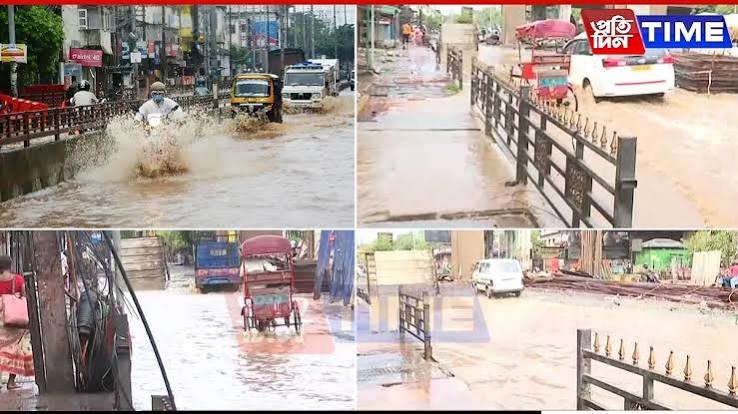
The Guwahati Flash Floods created major disruption as unprecedented artificial flooding affected several commercial districts of the city. According to the available information, heavy water accumulation brought business activities and daily movement to a standstill, highlighting concerns over urban drainage systems and flood management in Assam’s largest city.
Assam Relief Camps Reach 274 as Authorities Expand Flood Response Operations
The Guwahati Flash Floods emerged as a major urban challenge after artificial floods severely affected commercial areas across the city. According to the available information, waterlogging disrupted normal activities in key business zones, affecting transportation, local commerce, and public movement.
Urban flooding has become a growing concern in rapidly developing cities where drainage capacity, rainfall intensity, and land-use changes influence water management. Moreover, artificial flooding caused by inadequate drainage systems can create significant challenges for residents, businesses, and civic authorities.
The latest situation highlights the difficulties of managing extreme water accumulation in urban areas. Therefore, improving drainage infrastructure and strengthening flood preparedness remain important priorities for city management.
The disruption caused by the flooding also emphasizes the need for long-term urban planning. Additionally, effective water management systems play a crucial role in reducing the impact of sudden flooding events.
Guwahati Flash Floods Disrupt Commercial Activities Across the City
The Guwahati Flash Floods affected major commercial districts, creating difficulties for businesses, commuters, and residents. According to the available information, artificial flooding caused severe water accumulation that interrupted regular activities in affected areas.
Moreover, commercial zones depend heavily on reliable transportation and accessibility. Consequently, flood-related disruptions can affect business operations, supply movement, and public services.
Urban flash floods often occur when drainage systems struggle to manage large volumes of water within a short period. Furthermore, rapid urban expansion can increase pressure on existing water management infrastructure.
The available information confirms that unprecedented artificial floods paralyzed Guwahati’s commercial districts. However, authorities have not released specific details regarding the affected locations, financial impact on businesses, or duration of the waterlogging.
Urban Drainage Challenges Highlighted by Guwahati Flash Floods
The Guwahati Flash Floods have renewed attention on the city’s drainage infrastructure and urban flood management systems. Artificial flooding can occur when water fails to drain effectively, resulting in widespread accumulation across roads and public areas.
Additionally, improving drainage networks remains an important step toward reducing the impact of future flooding events. This approach requires coordinated planning, infrastructure upgrades, and regular maintenance.
Flood management in urban areas involves multiple factors, including rainfall patterns, drainage capacity, and land development practices. Meanwhile, civic authorities continue assessing challenges linked to water accumulation and flood prevention.
The available information does not indicate whether specific infrastructure failures caused the flooding or what immediate corrective measures have been announced. Therefore, the current update relates specifically to the disruption caused by artificial floods in commercial districts.
The situation highlights the importance of sustainable urban water management.
Guwahati Flash Floods Raise Concerns Over City Resilience
The Guwahati Flash Floods carry broader significance for urban resilience and disaster preparedness in Assam. Severe waterlogging in commercial areas demonstrates the challenges cities face when existing infrastructure struggles to handle extreme conditions.
Moreover, resilient urban planning requires investment in drainage systems, flood monitoring, and effective emergency response mechanisms. Strong infrastructure can help reduce disruptions caused by sudden flooding events.
The flooding incident also highlights the importance of balancing urban growth with environmental planning. Similarly, sustainable development strategies can help cities prepare better for climate-related challenges and changing weather patterns.
Strengthening flood resilience remains a key priority for growing urban centres. Consequently, the Guwahati Flash Floods underline the need for improved drainage management, infrastructure planning, and long-term solutions to reduce artificial flooding risks.
As authorities continue reviewing the situation, future updates are expected to provide additional information regarding restoration efforts, infrastructure improvements, and flood prevention measures.
Conclusion
The Guwahati Flash Floods have disrupted commercial districts after unprecedented artificial flooding brought significant challenges to businesses, commuters, and residents. The incident highlights the vulnerability of urban areas when drainage systems face pressure from excessive water accumulation.
Furthermore, the situation emphasizes the importance of improving drainage infrastructure, strengthening flood preparedness, and adopting sustainable urban planning practices. Effective water management remains essential for reducing the impact of future flooding events.
Overall, the Guwahati Flash Floods represent a major urban challenge that requires continued attention from civic authorities and planners. As assessments continue, future measures aimed at improving drainage capacity and flood resilience will remain important for protecting the city’s commercial and residential areas.
FAQs
1. What is the latest update on the Guwahati Flash Floods?
The Guwahati Flash Floods caused severe artificial flooding that disrupted commercial districts across the city.
2. What caused the flooding in Guwahati?
According to the available information, unprecedented artificial flooding led to major water accumulation in commercial areas.
3. How did the floods affect commercial districts?
The flooding disrupted business activities, transportation, and daily movement in affected commercial zones.
4. Have authorities announced permanent solutions?
No. The available information confirms the flooding but does not mention specific long-term solutions or infrastructure upgrades.
5. Why are urban drainage systems important during floods?
Urban drainage systems help manage excess water and reduce the impact of sudden flooding events in cities.