





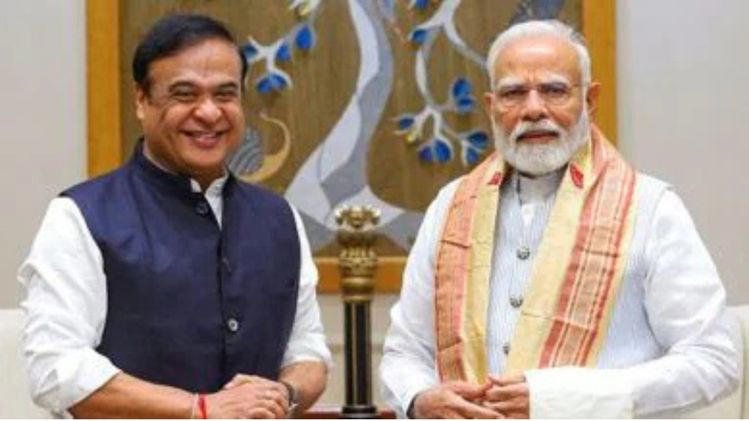
Himanta Biswa Sarma thanks PM Modi for landmark GST reforms that he believes have transformed India’s taxation framework and strengthened state finances. The Assam Chief Minister expressed gratitude to the Prime Minister for guiding the country through one of the most significant economic reforms in recent decades. According to Sarma, the Goods and Services Tax not only boosted revenue collection but also ensured a more transparent and business-friendly environment.
Read More: Gemini’s Nano Banana Lets Fans Click Selfies with Shah Rukh Khan
GST reforms and their impact on Assam
As the Chief Minister of Assam and a key political leader from the Northeast, Sarma highlighted how GST reforms changed the economic landscape of his state. Before GST, Assam relied heavily on traditional taxes like VAT, excise, and entry taxes, which often created loopholes and uneven collections. With the implementation of GST, these fragmented systems were replaced with a unified tax structure, simplifying compliance for businesses and improving state revenue.
Sarma pointed out that Assam’s revenue collection has shown steady growth since the introduction of GST. This growth helped the state invest more in infrastructure, healthcare, and social welfare. For a developing state like Assam, this consistency in revenue flow has been critical in maintaining fiscal stability and meeting the needs of its people.
A tribute to PM Modi’s vision
Himanta Biswa Sarma thanks PM Modi for envisioning a tax system that brought together all states under one umbrella. He noted that Modi’s leadership during the rollout of GST in 2017 played a crucial role in overcoming initial challenges. According to Sarma, the Prime Minister’s focus on cooperative federalism ensured that states were partners in this reform rather than passive participants.
Sarma also stressed that PM Modi’s consistent support for state concerns within the GST Council gave confidence to smaller states like Assam. The system of compensation for revenue losses, especially during the early years, allowed states to transition smoothly without financial shocks.
Business-friendly reforms
The Chief Minister underlined that GST reforms made doing business easier for entrepreneurs and traders. Earlier, businesses faced multiple tax filings across different departments, which created confusion and increased compliance costs. Under GST, a single nationwide system simplified procedures, boosted transparency, and reduced the scope for corruption.
This business-friendly environment encouraged more traders in Assam to enter the formal economy. Sarma believes that by widening the tax base, GST has created a stronger financial backbone for the country and helped states like Assam expand their development programs.
Addressing challenges in implementation
Acknowledging that the GST journey was not without hurdles, Sarma admitted that states and businesses initially faced difficulties in adjusting to the new system. However, he credited the Modi government for making continuous improvements. Frequent updates to the GST portal, rationalization of rates, and simplification of return filing helped ease the process over time.
The Chief Minister also praised the role of the GST Council in resolving disputes and accommodating state-specific concerns. For Assam, issues related to inter-state trade in tea and petroleum-based products required special attention, and Sarma said these were handled effectively through dialogue and cooperation.
Benefits for common citizens
While the technical side of GST reforms is often discussed, Sarma pointed out that ordinary citizens also benefitted. By reducing cascading taxes, GST brought down the overall cost of goods and services in many sectors. Transparent pricing, standardized rates, and a nationwide market meant consumers could access goods at fair prices.
Additionally, the growth in state revenue allowed Assam to fund social schemes, including initiatives in education, healthcare, and rural development. Sarma emphasized that these benefits would not have been possible without the GST framework introduced under PM Modi’s leadership.
Strengthening cooperative federalism
One of the key highlights of GST has been the role of the GST Council, where states and the Centre make decisions collectively. Sarma praised this model as an example of cooperative federalism. He said that under PM Modi, the council became a forum for constructive dialogue, giving states an equal voice in shaping national economic policy.
This collaborative approach ensured that smaller states, including those from the Northeast, were not sidelined. Sarma asserted that the inclusive nature of the GST Council strengthened India’s federal structure while promoting a unified economic vision.
Looking ahead
Himanta Biswa Sarma thanks PM Modi for his leadership but also urged continuous reforms to make GST even more efficient. He suggested simplifying compliance further for small businesses, expanding digital infrastructure, and addressing sector-specific challenges. He believes that ongoing reforms will keep GST relevant to the evolving needs of India’s economy.
Sarma also expressed confidence that under PM Modi’s guidance, GST will continue to fuel India’s growth story. For Assam, he said the reforms would enable the state to achieve its development goals faster and integrate more effectively with the national economy.
Himanta Biswa Sarma thanks PM Modi for landmark GST reforms that reshaped India’s tax system and strengthened state finances. By creating a unified, transparent, and business-friendly framework, GST has helped Assam and other states boost revenue, support social schemes, and encourage economic growth. Sarma’s acknowledgment reflects the larger sentiment that these reforms stand as a milestone in India’s journey toward a modern, inclusive, and resilient economy.
Read More: Sikkim Bhutia Association Seeks Sensible Tribal Status Approach