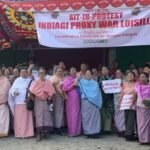





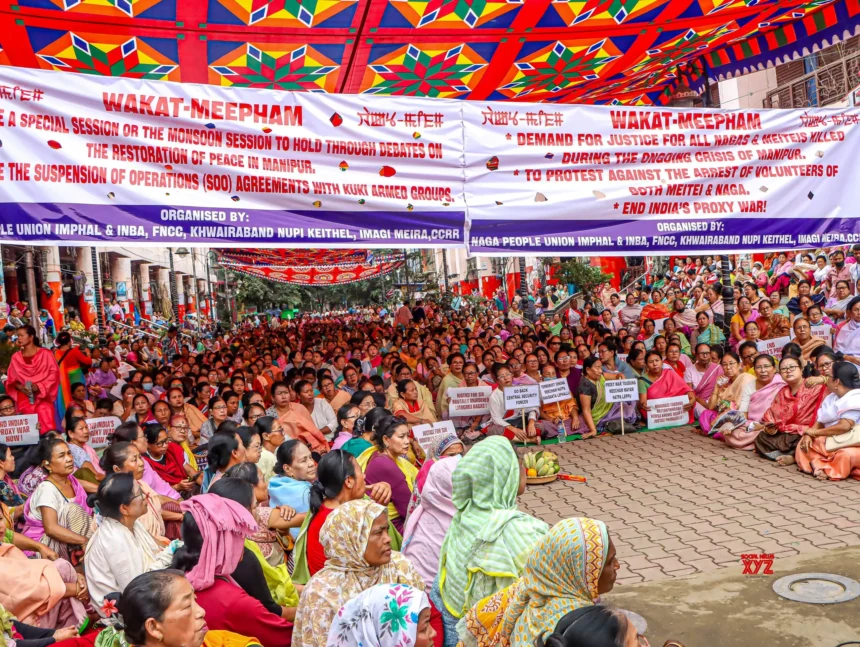
The Imphal Mass Sit-In Protest drew widespread public attention as civil society organizations organized a large demonstration to protest ongoing civilian unrest and demand greater security accountability. Moreover, participants called for measures aimed at restoring public confidence and ensuring peace in the region. Consequently, the gathering highlighted the continuing concerns of community groups regarding law and order while emphasizing the importance of peaceful democratic expression.
Meghalaya Awaits Assam Border Panel Communication
Imphal Mass Sit-In Protest Brings Together Civil Society Organizations
The Imphal Mass Sit-In Protest was organized by several civil society organizations in Imphal to express concerns over civilian unrest and the prevailing security situation. Furthermore, participants assembled peacefully to voice their demands for greater accountability from the authorities responsible for maintaining law and order.
Public demonstrations remain a recognized means through which citizens and organizations express their views on issues affecting their communities. Consequently, the protest attracted attention as participants sought to raise awareness of their concerns through a peaceful sit-in.
Moreover, organizers emphasized the importance of maintaining peace while presenting their demands. Therefore, the demonstration reflected the role of civic engagement in democratic discourse.
Additionally, community leaders encouraged constructive dialogue as part of efforts to address public concerns. Thus, the protest became an important platform for expressing collective viewpoints.
Protesters Call for Greater Security Accountability
The Imphal Mass Sit-In Protest centered on demands for stronger security accountability in response to continuing civilian unrest. Furthermore, demonstrators urged the authorities to take appropriate measures to improve public safety and restore confidence among residents.
Security accountability remains an important aspect of governance during periods of unrest. Consequently, civil society organizations called for effective action and transparent communication from relevant authorities.
Moreover, participants stressed the importance of ensuring the safety of civilians while maintaining law and order. Therefore, the protest focused on strengthening institutional accountability through peaceful advocacy.
Similarly, public engagement contributes to discussions on governance and security-related issues. Additionally, community participation helps bring local concerns to the attention of policymakers.
Peaceful Demonstration Highlights Civic Participation
The Imphal Mass Sit-In Protest demonstrated the continued involvement of civil society organizations in addressing public issues through peaceful means. Furthermore, organizers encouraged participants to maintain order throughout the demonstration.
Peaceful assemblies provide an opportunity for citizens to express their concerns within a democratic framework. Consequently, such gatherings often facilitate dialogue between communities and public institutions.
Moreover, constructive engagement can help strengthen trust between authorities and the public. Therefore, peaceful civic participation remains an important element of democratic governance.
Similarly, responsible public discourse supports efforts to address complex social and security challenges. Additionally, continued communication between stakeholders can contribute to long-term solutions.
Authorities Continue Monitoring the Security Situation
The Imphal Mass Sit-In Protest took place against the backdrop of ongoing efforts to maintain stability in the region. Furthermore, authorities continue monitoring the security situation while responding to developments through established administrative and law enforcement mechanisms.
Government agencies regularly assess evolving security conditions and coordinate with relevant departments to maintain public order. Consequently, security management remains an ongoing priority.
Moreover, continued dialogue between authorities and community organizations can support confidence-building measures. Therefore, institutional cooperation remains important for addressing public concerns.
Similarly, transparent communication and lawful democratic participation contribute to a stable civic environment. Additionally, sustained engagement between all stakeholders can help promote lasting peace.
Conclusion
The Imphal Mass Sit-In Protest underscored the concerns of civil society organizations regarding civilian unrest and the demand for greater security accountability. Moreover, the peaceful demonstration reflected the importance of democratic participation and community engagement in addressing public issues.
Furthermore, organizers emphasized dialogue, accountability, and public safety while urging authorities to respond to community concerns through appropriate measures. Consequently, the protest became a significant civic event in the ongoing discussion surrounding security and governance in Manipur.
Looking ahead, continued communication between government authorities, security agencies, and civil society organizations will remain essential for promoting peace and strengthening public confidence. Therefore, the Imphal Mass Sit-In Protest highlights the continuing role of peaceful civic action in democratic society.
FAQs
1. What was the Imphal Mass Sit-In Protest?
It was a peaceful demonstration organized by civil society organizations in Imphal to protest civilian unrest and demand greater security accountability.
2. Who organized the protest?
Civil society organizations in Imphal organized the sit-in demonstration.
3. What were the main demands of the protesters?
Participants called for improved security accountability, enhanced public safety, and measures to address civilian concerns.
4. Was the protest conducted peacefully?
According to the available information, the demonstration was organized as a peaceful sit-in protest.
5. Why is the Imphal Mass Sit-In Protest significant?
It highlights the role of civil society in peacefully expressing public concerns and advocating for accountability and dialogue on security-related issues.