





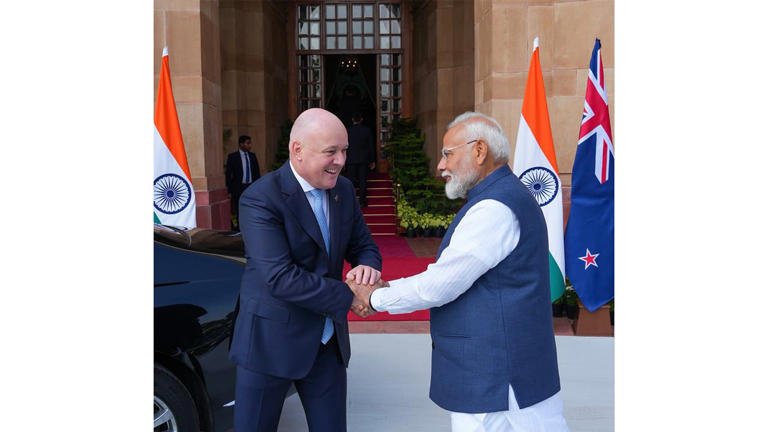
The India-New Zealand Free Trade Agreement (FTA) is likely to come into force in October 2026, according to government sources, marking a major step towards deeper economic and trade cooperation between the two countries.
The agreement was signed in April 2026 after negotiations between New Delhi and Wellington. Once implemented, the pact is expected to expand market access, encourage investment and create new opportunities for businesses in both countries.
One of the most significant features of the agreement is the proposed elimination of duties on 100 per cent of Indian exports to New Zealand. The arrangement is expected to provide Indian businesses with wider access to the New Zealand market across several sectors.
Government sources said the India-New Zealand FTA is likely to become operational by October 2026 as both countries work towards completing the required implementation processes.
The agreement also includes a major investment commitment from New Zealand. Under the pact, New Zealand has committed to invest USD 20 billion in India over a period of 15 years.
India-New Zealand FTA Expected to Take Effect in October
The India-New Zealand FTA October 2026 timeline indicates that the agreement could become operational within the coming weeks.
Both governments have expressed their intention to ensure the early entry into force of the agreement.
The implementation process requires the completion of necessary legal and administrative procedures in both countries.
New Zealand has already introduced legislation aimed at implementing its obligations under the FTA. The proposed legislation contains amendments related to tariffs, customs procedures, investment rules and export quotas. The legislation states that the agreement was signed in New Delhi on April 27, 2026.
Government sources in India have said the agreement is likely to come into force in October.
The final operational timeline will depend on the completion of all required procedures.
Once the agreement takes effect, businesses in both countries could begin accessing the benefits provided under the new trade framework.
The FTA represents an important addition to India’s wider strategy of expanding trade partnerships with countries across different regions.
Indian Exports to Receive Wider Duty-Free Access
A major benefit for Indian exporters will be the proposed elimination of duties on 100 per cent of Indian exports to New Zealand.
This could make Indian products more competitive in the New Zealand market.
Lower or eliminated customs duties can reduce the cost of goods for importers.
Indian companies may therefore find new opportunities to expand their exports.
Several important sectors are expected to benefit from the agreement.
These include agriculture, marine products, textiles and clothing, engineering goods, leather, footwear, pharmaceuticals, electronics, electrical machinery and chemicals.
For exporters, improved market access could help increase sales and strengthen long-term commercial relationships.
Small and medium-sized enterprises could also explore opportunities in the New Zealand market.
The agreement may further encourage Indian companies to diversify their export destinations.
Diversification has become increasingly important for businesses facing changing global trade conditions.
The India-New Zealand FTA could therefore provide Indian exporters with another important international market.
USD 20 Billion Investment Commitment From New Zealand
The agreement is not limited to trade in goods.
It also includes a significant investment commitment from New Zealand.
Government sources have said New Zealand has committed USD 20 billion in investment in India over 15 years.
Investment commitments can help strengthen economic links between the two countries.
They can also create opportunities for cooperation in infrastructure, technology, services and other sectors.
The actual distribution of investment will depend on commercial decisions and future projects.
However, the commitment highlights the broader economic ambitions behind the trade agreement.
India has continued to attract foreign investment across several sectors.
The FTA could create an additional framework for companies and investors seeking to expand their presence.
Improved trade relations can also encourage businesses from both countries to explore joint ventures and long-term partnerships.
The agreement therefore aims to create closer economic integration rather than focusing only on customs duties.
India and New Zealand Target Higher Bilateral Trade
India and New Zealand have set an ambitious target of expanding bilateral trade in goods and services.
The two countries aim to double their two-way trade to NZD 7 billion by 2030, which is approximately Rs 35,000 crore.
The target reflects the expectation that the FTA will encourage businesses to increase commercial engagement.
Both governments have also encouraged companies to explore opportunities based on the complementary strengths of their economies.
Trade agreements can help businesses plan for the long term by creating clearer rules for market access.
Companies may become more willing to invest in supply chains when they have greater certainty about tariffs and trade procedures.
The India-New Zealand agreement could also create opportunities for businesses that have not previously considered the other country as a major export market.
The growth of bilateral trade will depend on several factors.
These include business demand, logistics, pricing and the ability of companies to meet regulatory standards.
However, the agreement provides a framework that could make such expansion easier.
Key Sectors Expected to Benefit From FTA
The India-New Zealand FTA covers a broad range of sectors.
Indian exporters could benefit from improved access for agricultural and marine products.
Textile and clothing businesses may also gain new opportunities.
Engineering products, leather goods and footwear form other important areas covered by the agreement.
The pharmaceutical industry could also benefit from improved market access.
India has a large pharmaceutical manufacturing sector and exports medicines to markets around the world.
Electronics, electrical machinery and chemical products could also gain from the trade agreement.
The wider sectoral coverage means that the FTA could benefit businesses of different sizes.
Large exporters may use the agreement to strengthen existing international operations.
Smaller businesses may also explore opportunities in a market that becomes more accessible through reduced trade barriers.
The agreement could further support India’s broader objective of increasing its global export presence.
Legal Steps Underway in New Zealand
New Zealand has already taken steps to prepare its domestic legal framework for the implementation of the agreement.
The India Free Trade Agreement Legislation Amendment Bill 2026 was introduced in New Zealand’s Parliament to make changes required for implementing the FTA.
The legislation covers several areas.
These include amendments related to dairy export licensing, overseas investment rules, tariffs, customs procedures and certificates of origin.
It also establishes a framework for export quotas involving products such as apples, kiwifruit and mānuka honey.
The proposed law states that its commencement will be determined through an Order in Council.
This arrangement allows the legislation to come into force alongside the implementation of the India-New Zealand FTA.
The legal process demonstrates the practical work required before a trade agreement can become fully operational.
Signing an agreement represents an important milestone.
However, governments must often complete domestic legal and administrative procedures before businesses can begin receiving its benefits.
FTA Could Strengthen India’s Trade Strategy
The India-New Zealand agreement forms part of India’s wider effort to expand its network of international trade partnerships.
India has increasingly pursued trade agreements to secure greater market access for its exporters and strengthen economic relationships with key countries.
The country’s recent trade initiatives have focused on both traditional and emerging markets.
Trade agreements can help Indian companies reduce their dependence on a limited number of export destinations.
They can also provide businesses with new opportunities during periods of uncertainty in global trade.
The New Zealand agreement could strengthen India’s presence in the wider Asia-Pacific region.
It may also encourage greater cooperation in investment and services.
For New Zealand, the agreement offers expanded access to India’s large and growing market.
This creates potential benefits for companies in both countries.
The FTA therefore represents a strategic effort to strengthen bilateral economic engagement over the long term.
Businesses Prepare for New Market Opportunities
The expected October 2026 implementation will be closely watched by exporters, importers and investors.
Indian businesses could begin preparing to understand the tariff benefits and rules available under the agreement.
Companies will need to examine product-specific requirements.
Rules of origin will also remain important because exporters must meet the required conditions to claim preferential tariff benefits.
New Zealand businesses may similarly assess opportunities in the Indian market.
The agreement could encourage companies to establish new partnerships and supply relationships.
Businesses in agriculture, food processing, manufacturing and services may particularly examine the potential impact of the pact.
Investment opportunities could also increase as companies gain greater confidence in the long-term economic relationship.
The success of the agreement will ultimately depend on how effectively businesses use the opportunities created by the FTA.
Government agencies will also play an important role in providing information and helping companies understand the new rules.
India-New Zealand Economic Ties Set for New Phase
The expected entry into force of the India-New Zealand FTA in October 2026 could mark the beginning of a new phase in economic relations between the two countries.
The agreement aims to expand trade and investment while improving market access.
The proposed elimination of duties on 100 per cent of Indian exports to New Zealand is expected to create significant opportunities for Indian businesses.
The agreement also includes a USD 20 billion investment commitment from New Zealand over 15 years.
Meanwhile, both countries have set a target of doubling bilateral trade in goods and services to NZD 7 billion by 2030.
The implementation process remains the next major stage.
Both governments must complete the required domestic procedures before the agreement becomes operational.
With government sources indicating an October 2026 timeline, businesses are now watching closely for the final confirmation of the FTA’s entry into force.
If implemented as expected, the India-New Zealand FTA could provide a major boost to bilateral trade, investment and economic cooperation.
It could also open new opportunities for Indian exporters across sectors ranging from agriculture and textiles to pharmaceuticals, engineering and electronics.
The coming months will determine how quickly businesses begin using the new framework and whether the agreement helps India and New Zealand achieve their ambitious goal of significantly expanding two-way trade by 2030.