


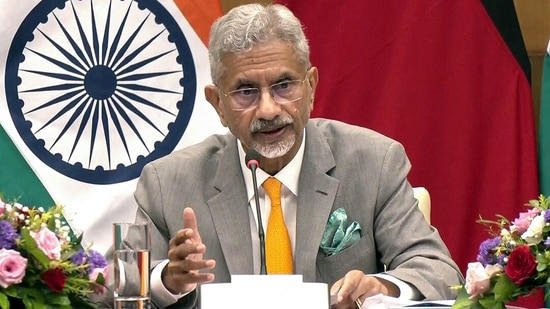
India’s external affairs minister S Jaishankar underlined the importance of building stronger partnerships with Europe after his recent meeting with German foreign minister Annalena Baerbock. The discussions came at a time when new US tariffs on several sectors have caused concern in global trade circles. While the talks addressed multiple aspects of bilateral and multilateral cooperation, Jaishankar’s central message was clear: India and the European Union need to pursue closer collaboration to adapt to the changing world order. The call to deepen India-EU ties reflects India’s larger foreign policy goals in the face of global economic and strategic shifts.
Read More: Tripura’s Unemployment Rate Sees Steady Decline
Big changes in global environment
Speaking after the meeting, Jaishankar noted that the world is experiencing “big changes” in both economics and geopolitics. He pointed to rising protectionism, new tariff regimes, and shifting supply chains as developments that could reshape international relations. The US decision to impose higher tariffs on key imports has added urgency to India’s effort to build resilient trade links elsewhere.
Jaishankar stressed that India-EU ties can help create a buffer against such unpredictable changes. By expanding economic cooperation, both sides can diversify supply chains and reduce dependence on volatile markets. He added that the EU remains a natural partner because of its role as a leading economic and technological powerhouse.
Strengthening India-EU ties through trade and investment
One of the key takeaways from the discussions with Baerbock was the shared commitment to advance the free trade agreement (FTA) negotiations between India and the EU. Talks on the FTA have been ongoing for several years, but recent developments have added fresh momentum.
Jaishankar explained that a comprehensive trade deal would benefit both sides. For India, greater access to European markets would boost exports, particularly in sectors such as textiles, pharmaceuticals, and technology services. For the EU, a stronger trade framework with India would open opportunities in India’s rapidly growing economy. The emphasis on strengthening India-EU ties also reflects New Delhi’s attempt to counterbalance disruptions caused by the US tariffs.
Technology and green partnerships
During the meeting, both ministers discussed cooperation in areas such as digital technology, green energy, and climate action. Germany, as Europe’s largest economy, has been a leading partner in India’s renewable energy transition. Investments in solar, wind, and hydrogen projects are already underway, and both sides aim to scale these collaborations further.
Jaishankar highlighted that India-EU ties can grow stronger by aligning technological capabilities with sustainability goals. Europe’s advanced green technologies combined with India’s expanding energy needs create a natural space for cooperation. These projects not only enhance energy security but also contribute to meeting climate targets.
Shared concerns over global tariffs
The introduction of new tariffs by the United States has created ripple effects in the global economy. Jaishankar observed that such moves increase uncertainty for emerging economies. India and the EU both recognize the need to respond strategically rather than react defensively.
Baerbock agreed that stronger India-EU ties could provide stability in this changing environment. By working together on trade and technology, both sides can reduce vulnerabilities created by sudden policy shifts from other powers. The discussions emphasized that cooperation is not just about economic gains but also about building resilience in uncertain times.
Regional security and strategic partnership
Beyond economics, Jaishankar and Baerbock also exchanged views on regional and global security. Issues such as the Indo-Pacific, the Russia-Ukraine conflict, and stability in West Asia were part of the agenda. Both sides acknowledged the importance of democratic nations working together to uphold a rules-based international order.
Jaishankar remarked that India-EU ties are not limited to trade but extend to strategic cooperation. The Indo-Pacific, in particular, has emerged as a region where both India and Europe have converging interests. Freedom of navigation, maritime security, and infrastructure development remain key areas of focus.
Germany’s role in advancing India-EU ties
As one of the strongest economies in Europe, Germany plays a crucial role in shaping EU’s policies toward India. The visit of Baerbock underscored Berlin’s commitment to enhancing cooperation with New Delhi. German investments in India have grown steadily, especially in manufacturing, automobiles, and renewable energy sectors.
Jaishankar stressed that stronger bilateral ties with Germany naturally feed into the broader India-EU partnership. He added that India values Germany’s support in moving the FTA process forward and creating frameworks for technology and climate cooperation.
Addressing global challenges together
Both ministers agreed that India and Europe must cooperate more closely on global challenges such as climate change, digital regulation, and health security. The COVID-19 pandemic highlighted the need for joint responses to crises, while the ongoing conflicts in different parts of the world have reinforced the importance of diplomacy and multilateralism.
Jaishankar said that India-EU ties can act as a model for how democracies can coordinate responses to global disruptions. He also noted that India’s presidency of the G20 last year provided a strong example of inclusive diplomacy, and such approaches must continue at bilateral and regional levels.
Looking ahead
The meeting between Jaishankar and Baerbock has reinforced India’s strategic emphasis on Europe. With the US adopting more protectionist trade policies, New Delhi views closer ties with the EU as essential for balancing its foreign policy and economic interests. The commitment to accelerate FTA negotiations, expand green partnerships, and enhance cooperation in digital technologies reflects this strategic shift.
For Europe, strengthening ties with India offers an opportunity to engage with one of the world’s fastest-growing economies and a key democratic partner in Asia. As geopolitical tensions continue to reshape the global order, the India-EU partnership is gaining importance as a pillar of stability and growth.
Jaishankar’s remarks after meeting Baerbock highlight India’s recognition of the changing global dynamics. With “big changes” taking place in trade and security, the call for stronger India-EU ties has come at a critical moment. The partnership holds the potential to shape not only economic cooperation but also shared strategies for navigating an unpredictable world.
As both sides move forward, the focus will be on transforming shared goals into concrete action. Whether through trade agreements, climate partnerships, or strategic collaboration, the future of India-EU ties promises to be more significant than ever before.