







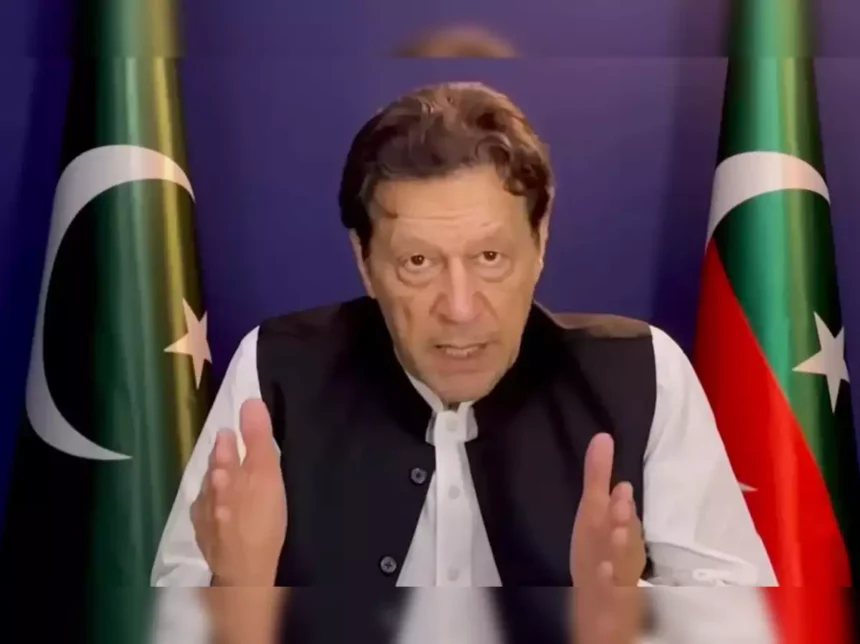
In a recent statement, Pakistan’s Interior Minister Rana Sanaullah has declared that legal proceedings will be initiated against former Prime Minister Imran Khan within the next 2-3 weeks. The charges are related to the bloody violence that erupted following Khan’s arrest in a corruption case on May 9. However, Khan, the 70-year-old leader of the Pakistan Tehreek-e-Insaf (PTI) party, has vehemently denied any involvement in the violent incidents, emphasizing that he was in jail when they occurred. He further accused the establishment of planning to keep him incarcerated for 10 years under a sedition case.
Sanaullah, during an interview with Geo News on Saturday night, held Khan “100 percent” responsible for the violent protests that ensued after his arrest. The interior minister’s remarks come as part of an ongoing political controversy surrounding the arrest and subsequent events.
The arrest of Imran Khan, a prominent figure in Pakistani politics, triggered a series of protests and clashes between his supporters and law enforcement agencies. The situation quickly escalated into violent confrontations, leading to injuries and loss of life. The authorities have been investigating the incidents to identify those responsible for the violence.
Khan, who has consistently maintained his innocence, claims that the timing of his arrest and the subsequent violence was orchestrated to undermine his political career. He suggests that powerful factions within the establishment are conspiring against him to suppress his party’s influence and keep him imprisoned for an extended period. These allegations have sparked concerns about the fairness and impartiality of the legal proceedings against him.
The interior minister’s announcement of impending legal action against Khan adds another layer of complexity to the situation. It remains to be seen how the legal process unfolds and whether the evidence presented will support the allegations made against the PTI leader. The case will likely attract significant attention, both nationally and internationally, as it involves a prominent political figure and raises questions about the rule of law and political motivations.
In the wake of these developments, it is crucial for all parties involved to ensure transparency, impartiality, and adherence to due process throughout the legal proceedings. The credibility of the justice system in Pakistan and its ability to provide fair and unbiased judgments will be closely scrutinized.
Additionally, it is important to prioritize the restoration of calm and stability in the country. The violent incidents that followed Khan’s arrest have highlighted the need for effective communication, dialogue, and peaceful resolution of political disputes. All stakeholders should work towards fostering an environment that encourages open and constructive political discourse while upholding the principles of democracy and the rule of law.
As the legal proceedings against Imran Khan unfold, it is essential for Pakistan to demonstrate its commitment to upholding justice and fairness. The country’s reputation, both domestically and internationally, rests on its ability to provide a transparent and equitable legal system that is trusted by its citizens.
Ultimately, the resolution of this case will have far-reaching implications for Pakistan’s political landscape and the public’s perception of the justice system. It is crucial that the legal proceedings are conducted with the utmost professionalism, transparency, and adherence to the principles of justice, ensuring a fair outcome that upholds the rule of law.

