




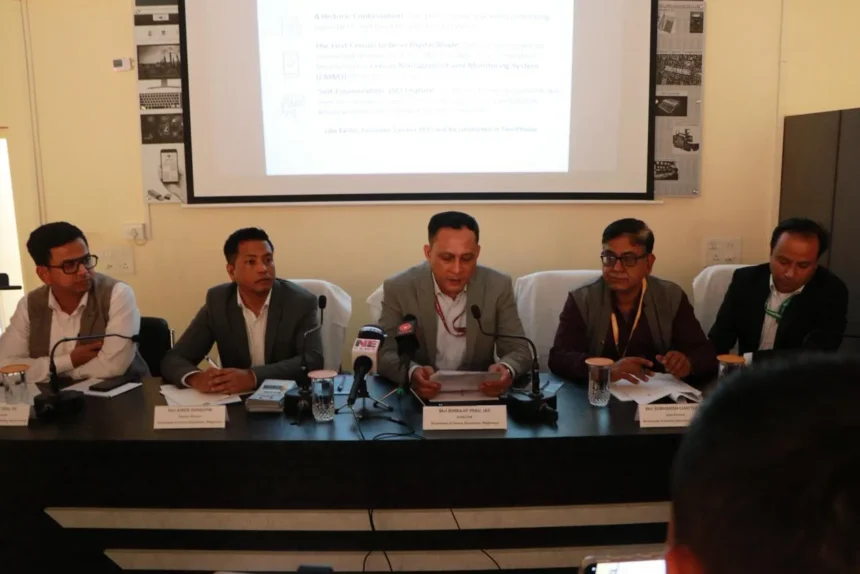
Meghalaya digital census operations officially began after the state administration launched Phase I field activities for Census 2027 using mobile-based enumeration technology across multiple districts. Meanwhile, officials confirmed that trained field operators have started collecting data through a dedicated mobile application designed to digitally record household details, amenities, and demographic information. The initiative positioned Meghalaya among the first northeastern states to actively implement technology-driven census operations for the upcoming national population exercise. Additionally, administrative departments intensified coordination efforts to ensure smooth field execution, data accuracy, and public participation during the large-scale enumeration process.
Authorities stated that the digital transition aims to modernize census methodology, improve efficiency, and reduce delays associated with manual data collection systems. Furthermore, policy experts described the rollout as an important milestone in India’s broader push toward technology-enabled governance and data-driven planning.
Siliguri Expansion Plan Targets Civic Merger
Arunachal ILP Enforcement Drive Expels Violators
Meghalaya Launches Mobile-Based Enumeration Drive
The Meghalaya government formally initiated field-level Census 2027 activities through deployment of trained survey personnel equipped with mobile devices. Meghalaya digital census operations therefore became a major administrative development across the northeastern region.
Meanwhile, officials explained that the mobile application allows enumerators to digitally capture information regarding housing conditions, household assets, infrastructure access, and demographic characteristics. Additionally, authorities stated that the system includes standardized digital forms containing 33 notified questions linked to house listing and amenities.
Administrative teams reportedly completed training sessions for field operators before beginning the statewide exercise. Furthermore, district authorities coordinated logistical arrangements to support smooth implementation in both urban and remote areas.
Earlier, traditional census exercises relied heavily on paper-based documentation and manual processing systems. Consequently, Meghalaya’s digital rollout marked a major technological shift in the execution of population data collection activities.
At the same time, officials urged citizens to cooperate fully with enumerators and provide accurate information during the verification process.
Technology Integration Aims to Improve Accuracy
Government authorities emphasized that digital systems may significantly improve efficiency and reliability during Census 2027 operations. Meghalaya digital census operations therefore reflect growing administrative reliance on mobile technology and real-time data management.
Meanwhile, officials explained that digital data entry reduces risks associated with manual errors, delayed processing, and physical record handling. Additionally, the mobile-based platform may enable faster data synchronization and streamlined monitoring of field progress.
Technology experts observed that digitized census systems can improve transparency, operational coordination, and data validation processes during large-scale surveys. Furthermore, mobile applications allow supervisory teams to monitor field activities more effectively through centralized dashboards and reporting systems.
Several governance analysts noted that accurate census data remains essential for policy planning, welfare distribution, infrastructure development, and resource allocation. Consequently, authorities are prioritizing technological efficiency and standardized implementation during the exercise.
However, cybersecurity specialists stressed the importance of protecting personal information and ensuring secure handling of sensitive demographic data throughout the digital enumeration process.
Field Operators Begin Door-to-Door Verification
Trained census personnel started conducting house listing and verification activities across several Meghalaya districts. Meghalaya digital census operations therefore entered an active implementation phase involving direct public interaction and household-level data collection.
Meanwhile, officials stated that field operators received instructions regarding data accuracy, digital entry procedures, and communication protocols while interacting with residents. Additionally, authorities emphasized that enumerators would verify housing details, amenities, and occupancy information during visits.
Administrative departments reportedly deployed teams in both urban centers and rural regions to ensure comprehensive coverage during the first phase. Furthermore, district coordinators remained engaged in monitoring operational progress and addressing technical or logistical challenges faced by field workers.
Several observers highlighted that Meghalaya’s difficult terrain and remote settlements may create implementation challenges during large-scale field operations. Consequently, authorities increased coordination support and technical assistance for teams operating in geographically sensitive areas.
At the same time, local administrations appealed to communities to cooperate with census personnel and avoid misinformation regarding the survey process.
Census Data Holds Major Policy Importance
Experts emphasized that Census 2027 data will play a critical role in shaping future governance and development planning across India. Meghalaya digital census operations therefore carry significance far beyond routine administrative data collection.
Meanwhile, policy analysts explained that census information directly influences welfare schemes, electoral planning, public infrastructure allocation, and social development programs. Additionally, accurate demographic data helps governments assess population trends, migration patterns, and economic conditions.
Officials noted that housing and amenities data collected during the current phase may support future planning involving sanitation, electricity access, water supply, and urban development policies. Furthermore, digital census systems could improve long-term accessibility and analytical use of population data.
Earlier, delays in national census exercises generated administrative and policy concerns regarding updated demographic statistics. Consequently, state-level preparedness for Census 2027 gained heightened attention among policymakers and governance experts.
At the same time, economists stressed that reliable population data remains essential for evidence-based development strategies and fiscal planning.
Northeast States Observe Meghalaya’s Digital Model
The launch of the digital enumeration process attracted attention from neighboring northeastern states monitoring census preparedness. Meghalaya digital census operations therefore emerged as an early regional example of technology-driven population data collection.
Meanwhile, administrative observers suggested that successful implementation in Meghalaya may encourage broader digital adoption during Census 2027 operations elsewhere in Northeast India. Additionally, officials from multiple states reportedly continue evaluating digital tools for future governance and survey activities.
Technology policy experts argued that northeastern states could particularly benefit from mobile-based administrative systems because of difficult terrain and dispersed settlements. Furthermore, digital governance initiatives may improve service delivery and operational coordination in remote districts.
Several civic organizations welcomed the modernization effort and described digital census systems as an important step toward efficient public administration. Consequently, Meghalaya’s rollout generated wider interest regarding technological transformation in governance structures.
At the same time, development experts cautioned that successful implementation would depend heavily on training quality, network connectivity, and technical reliability in field conditions.
Public Awareness and Participation Encouraged
Authorities intensified public awareness efforts to ensure smooth participation during the ongoing census activities. Meghalaya digital census operations therefore included outreach campaigns emphasizing cooperation, transparency, and accurate information sharing.
Meanwhile, officials urged residents to respond honestly during household verification and assist field operators during the enumeration process. Additionally, district administrations reportedly used local communication networks to spread awareness regarding the purpose and importance of Census 2027.
Community organizations and local leaders also encouraged citizens to support the exercise because census outcomes directly influence future public services and development programs. Furthermore, officials reassured residents that collected information would remain protected under official administrative procedures.
Several experts observed that public trust and awareness remain crucial for maintaining accuracy during large-scale population surveys. Consequently, authorities continue prioritizing communication strategies and local engagement throughout the field operation phase.
At the same time, civic groups requested clear grievance mechanisms for addressing technical or procedural concerns raised by residents during the enumeration drive.
Conclusion
Meghalaya digital census operations officially commenced after the state deployed trained field operators equipped with mobile-based enumeration technology for Census 2027 activities. Meanwhile, authorities continue emphasizing data accuracy, technological efficiency, and public cooperation during the statewide survey exercise. The initiative positioned Meghalaya among the earliest northeastern states implementing digital population enumeration systems on a large scale. Ultimately, the success of the operation may significantly influence future governance planning and broader adoption of technology-driven census methods across India.
FAQs
What has Meghalaya launched for Census 2027?
The state launched mobile-based field operations using trained digital enumerators for census activities.
Why are Meghalaya digital census operations important?
The initiative modernizes population data collection through technology-driven enumeration methods.
What information are field operators collecting?
Enumerators are recording household details, amenities, housing conditions, and demographic data.
How are the data being collected?
Officials are using a dedicated mobile application for digital data entry and verification.
Why is census data important for governance?
Census information supports welfare planning, infrastructure development, and policy formulation.
Could other northeastern states adopt similar systems?
Yes, observers believe Meghalaya’s model may encourage broader digital census adoption in the region.