
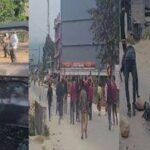



Meghalaya child death has prompted the West Khasi Hills district administration to seek detailed reports after a three-year-old from Domkyrkoh died while being taken for medical help. Officials have asked health, development and road authorities to establish the circumstances and assess gaps in emergency access.
The incident has drawn attention to healthcare access in remote parts of Meghalaya, where poor road connectivity can make urgent travel difficult. It has also renewed questions about how quickly remote families can secure transport when a child needs urgent care.
Meghalaya child death prompts official reports
The West Khasi Hills administration has sought reports from the Block Development Officer of Rambrai, the District Medical and Health Officer and the Executive Engineer of PWD (Roads).
According to preliminary information, the child fell critically ill at Domkyrkoh and died while being taken for medical assistance. The administration has not said that any particular department or individual was responsible.
Domkyrkoh falls within the service area of the Mawkhiat Sub-Centre, which operates under Rambrai Primary Health Centre. The sub-centre, established under the Pradhan Mantri Ayushman Bharat Health Infrastructure Mission, is about one-and-a-half hours away from the village on foot.
Meghalaya child death raises emergency access concerns
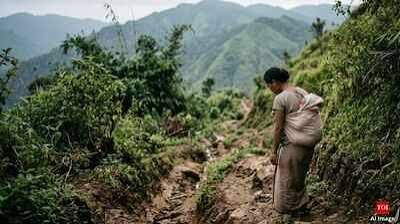
Villagers said the family struggled to arrange a vehicle after the child’s condition worsened. They claimed drivers were unwilling to enter Domkyrkoh because of the poor road and asked the family to bring the child towards Mawdet, around 10 kilometres away.
The family reportedly began walking while carrying the child. The case has since become a wider concern for residents who depend on difficult routes to reach essential services. Villagers said the journey lasted nearly three hours and that the child died before the family reached medical assistance.
However, the administration’s preliminary account adds an important detail. It said local health workers were not informed about the child’s illness before or during the onset of symptoms. As a result, an available emergency transport mechanism could not be activated at that stage.
Meghalaya child death puts road connectivity under scrutiny
The incident has renewed focus on roads around Domkyrkoh. The administration said vehicles reach the village through Mainop, while the road can become non-motorable during heavy rain. Public transport is also limited.
A 10-kilometre road project linking the fourth kilometre of the Rambrai-Mawrok PMGSY Road to Nonglang via Domkyrkoh has been sanctioned under the Central Road and Infrastructure Fund. The project is intended to provide direct connectivity and improve all-weather access to healthcare and emergency services.
The sanctioned Phase-I project has been reported at about Rs 25 crore. Its implementation is now likely to face greater public attention following the Meghalaya child death and concerns raised by residents about emergency travel.
Emergency transport remains a key issue
The administration said an emergency transport arrangement under the Chief Minister’s Safe Motherhood Scheme exists in the region. However, it said the mechanism could not be activated because local health workers had not been informed about the child’s condition.
The clarification is significant because emergency access involves more than road conditions. Timely communication with health workers and rapid activation of available transport can also affect how quickly a patient receives care.
Meghalaya child death triggers field health assessment
The Health Department will send a multi-disciplinary team to Domkyrkoh on October 6. The team will assess healthcare needs and examine difficulties residents face in reaching medical services and emergency transport.
Officials will examine healthcare requirements, transport facilities, road accessibility and emergency response arrangements before recommending immediate measures.
The administration has also said PWD (Roads) will be asked to expedite work on the sanctioned CRIF road project. Findings from the departmental reports and field visits are expected to guide the next steps.
Meghalaya child death renews focus on remote healthcare
The Meghalaya child death has exposed challenges remote communities can face during medical emergencies. The administration’s preliminary findings indicate that the response must address healthcare communication, emergency transport and physical connectivity together.
The reports should help establish the full sequence of events. Until those findings are available, claims about precise causes and responsibility should be treated with caution.
For residents of Domkyrkoh and nearby villages, the immediate concern is access to healthcare during emergencies. The planned field assessment and road work will therefore be closely watched as authorities respond to the tragedy.