







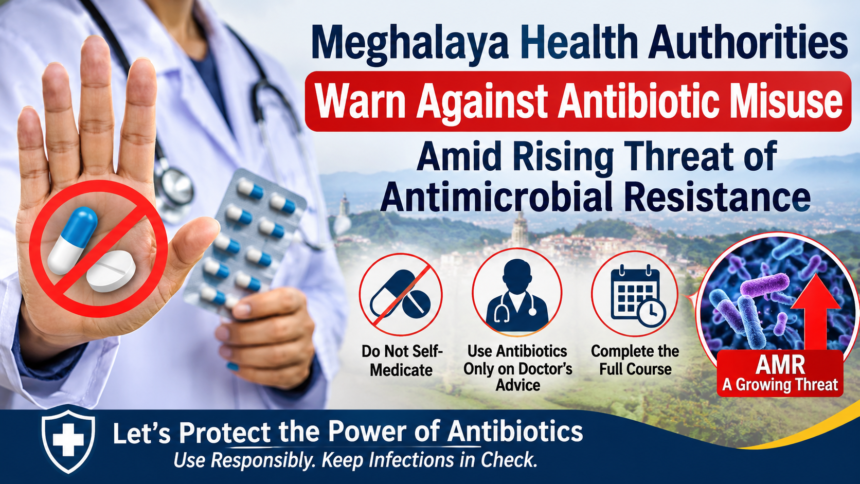
Meghalaya health authorities have urged the public, doctors and pharmacists to use antibiotics responsibly, warning that misuse and self-medication are contributing to the growing threat of antimicrobial resistance (AMR). In an awareness message issued by the Department of Microbiology, Shillong Medical College, in association with the Directorate of Health Services, Medical Education and Research (DME), officials stressed the need for coordinated efforts to protect the effectiveness of antibiotics.
The advisory cautioned people against taking antibiotics without medical advice, using leftover medicines or stopping prescribed treatment prematurely. Antimicrobial resistance can make bacterial infections increasingly difficult to treat, leading to prolonged illnesses, higher healthcare costs and potentially life-threatening complications. Meghalaya has also introduced its State Antibiotic Policy 2025–2026 to promote responsible antibiotic use and strengthen its response to AMR.
Read More: Patsoi MLA Sapam Kunjakeshwor Singh Dies
Key Facts About Meghalaya’s Antibiotic Misuse Warning
- Location: Meghalaya, Northeast India
- Issuing authorities: Department of Microbiology, Shillong Medical College, and Directorate of Health Services, Medical Education and Research
- Main concern: Antibiotic misuse and antimicrobial resistance (AMR)
- Policy: Meghalaya State Antibiotic Policy 2025–2026
- Policy launch date: June 16, 2025
- Key advice: Avoid self-medication, follow prescriptions and use antibiotics only when medically necessary
- Target groups: Patients, doctors, pharmacists and healthcare institutions
Meghalaya Warns Against Self-Medication and Antibiotic Misuse
Meghalaya health authorities have raised concerns over the indiscriminate use of antibiotics, warning that improper consumption could accelerate antimicrobial resistance.
In an awareness advisory, the Department of Microbiology, Shillong Medical College, along with the Directorate of Health Services, Medical Education and Research, called for responsible antibiotic use across the healthcare system.
The advisory urged people not to take antibiotics without consulting a qualified medical professional. It also warned against using leftover medicines from previous prescriptions or stopping treatment without medical advice.
According to the authorities, unnecessary antibiotic consumption can contribute to the emergence and spread of drug-resistant bacteria. As a result, infections that were once easily treated may become more difficult to manage.
What Is Antimicrobial Resistance?
Antimicrobial resistance occurs when microorganisms, particularly bacteria, develop the ability to survive medicines that previously killed them or stopped their growth.
Consequently, infections caused by resistant bacteria may require more complicated treatment. Patients could face prolonged illness, longer hospital stays, higher medical expenses and, in severe cases, life-threatening complications.
The department also highlighted a common misconception that antibiotics can treat every infection.
Antibiotics work against bacterial infections, not viral illnesses. They cannot treat viral infections such as the common cold and most cases of influenza.
Taking antibiotics unnecessarily may expose patients to side effects without providing any benefit. Meanwhile, resistant bacteria can spread between individuals, communities and healthcare facilities, making AMR a broader public health challenge.
Meghalaya State Antibiotic Policy 2025–2026
Meghalaya has already taken steps to tackle antimicrobial resistance through the Meghalaya State Antibiotic Policy 2025–2026.
The policy was launched on June 16, 2025, during the first Meghalaya Health Summit. It aims to promote rational antibiotic use and strengthen the state’s efforts to prevent the emergence and spread of drug-resistant infections.
However, health authorities stressed that the policy’s success will depend on effective implementation and participation from healthcare professionals, pharmacies, institutions and the general public.
Doctors and Pharmacists Urged to Prescribe Responsibly
The advisory called on doctors to prescribe antibiotics only when clinically necessary. They should carefully assess the appropriate medicine, dosage, route of administration and duration of treatment.
Where appropriate, laboratory investigations and microbiological findings should also guide treatment decisions.
The department emphasised the importance of choosing the right antibiotic for the right patient, at the right dose and for the right duration. It also warned that broader-spectrum antibiotics are not automatically better treatment options.
Pharmacists, meanwhile, have been urged to dispense antibiotics in accordance with prescriptions and regulatory requirements. They should also educate patients about proper medication use and discourage inappropriate consumption.
Public Urged to Avoid Unnecessary Antibiotics
The health authorities advised people not to demand antibiotics for every episode of fever, cough or cold.
They also urged the public to avoid sharing medicines, changing prescribed doses independently or discontinuing treatment without consulting a healthcare professional.
The department warned that antimicrobial resistance could affect more than routine infection treatment. It could also threaten the safety of surgeries, cancer chemotherapy and organ transplantation, which depend on effective medicines to prevent and treat infections.
Why AMR Prevention Matters in Meghalaya and Northeast India
Antimicrobial resistance is a growing public health challenge that requires coordinated action across communities and healthcare systems.
In Meghalaya and other Northeast Indian states, responsible antibiotic use, access to appropriate medical care and public awareness are important in protecting patients from drug-resistant infections.
Health authorities believe that collective responsibility can help preserve the effectiveness of antibiotics for future generations.
Frequently Asked Questions (FAQs)
Q1. What is antimicrobial resistance (AMR)?
AMR occurs when microorganisms, particularly bacteria, develop resistance to medicines that previously worked against them.
Q2. Can antibiotics treat a common cold or flu?
No. Antibiotics treat bacterial infections, not viral illnesses such as the common cold and most cases of influenza.
Q3. What has Meghalaya done to tackle antibiotic misuse?
Meghalaya launched the State Antibiotic Policy 2025–2026 on June 16, 2025, to promote responsible antibiotic use and strengthen its response to AMR.
Q4. Why should people avoid taking antibiotics without a prescription?
Unnecessary antibiotic use can contribute to drug resistance, expose patients to avoidable side effects and make future infections harder to treat.
Q5. What is the key message from Meghalaya health authorities?
Use antibiotics only when medically necessary, follow professional advice and avoid self-medication or inappropriate use.
Also Read: Tripura High Court Directs NHIDCL to Submit Report