





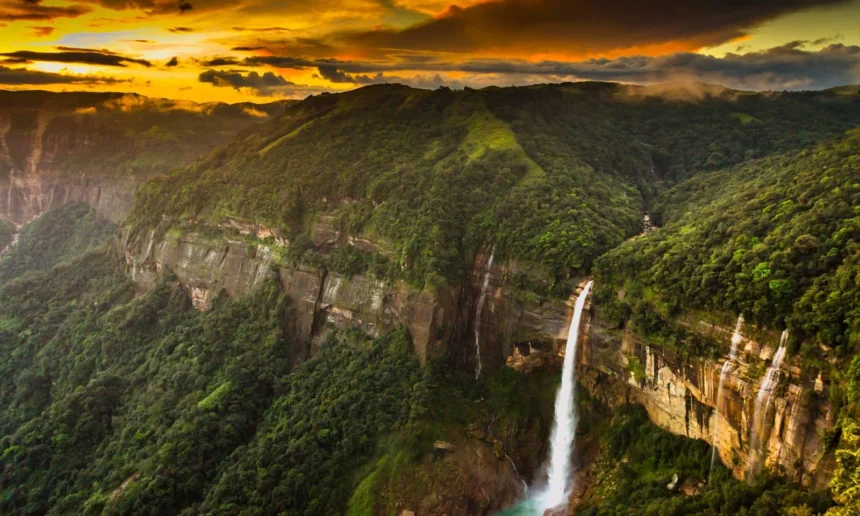
Meghalaya tourism boom trends gained major attention after tourism authorities reported record visitor footfall in popular destinations including Cherrapunji and Shillong during the current travel season. Meanwhile, officials stated that improved connectivity, rising social media visibility, and expanding eco-tourism activities contributed significantly to the unprecedented influx of domestic and international tourists across the state. The tourism surge immediately strengthened discussions regarding economic growth, hospitality expansion, and infrastructure preparedness in Meghalaya’s most visited regions. Additionally, local businesses, transport operators, and tourism stakeholders reported sharp increases in seasonal commercial activity linked to the growing tourist influx.
The development emerged as Northeast India continues attracting wider national attention for nature tourism, adventure travel, and cultural experiences. Furthermore, travel industry experts observed that Meghalaya’s scenic landscapes and favorable climate increasingly position the state among India’s fastest-growing tourism destinations.
Kolkata Book Fair Returns with Confirmed Dates
Bengal Paddy Farmers to Receive Direct Financial Support
Cherrapunji and Shillong Witness Heavy Tourist Rush
Tourism officials confirmed that visitor numbers in Cherrapunji and Shillong reached unusually high levels during the ongoing season. Meghalaya tourism boom discussions therefore rapidly expanded across the hospitality and travel sectors.
Meanwhile, authorities explained that tourists from major Indian cities increasingly selected Meghalaya because of its waterfalls, caves, hills, and monsoon landscapes. Additionally, hotel occupancy rates reportedly surged in Shillong, Cherrapunji, and nearby tourism circuits during recent weeks.
Travel operators stated that weekend bookings and holiday traffic increased substantially compared with previous seasons. Furthermore, tourism businesses observed rising demand for local guides, transport services, and eco-tourism packages across popular attractions.
Earlier, Meghalaya experienced gradual tourism growth following improvements in road infrastructure and digital travel promotion campaigns. Consequently, the latest visitor surge reinforced optimism regarding long-term tourism expansion in the state.
At the same time, officials acknowledged growing pressure on traffic systems and tourism infrastructure because of the increasing crowd volume.
Eco-Tourism and Nature Travel Drive Growth
Authorities highlighted eco-tourism and nature-based travel experiences as major factors behind the tourism surge. Meghalaya tourism boom patterns therefore reflected changing travel preferences favoring sustainable and experience-driven tourism.
Meanwhile, travelers increasingly visited destinations known for waterfalls, living root bridges, trekking trails, caves, and forest landscapes. Additionally, tourism departments promoted community-based tourism initiatives involving local homestays and cultural experiences.
Environmental tourism experts observed that Meghalaya’s unique geography and biodiversity provide strong appeal for travelers seeking nature-oriented destinations. Furthermore, cooler weather conditions and scenic hill landscapes continue attracting tourists escaping urban heat conditions.
Several hospitality analysts noted that social media platforms significantly amplified Meghalaya’s tourism visibility among younger travelers and adventure tourists. Consequently, digital travel content increasingly influenced seasonal visitor growth across the region.
However, environmental groups also urged authorities to balance tourism expansion with ecological sustainability and responsible waste management.
Local Economy Benefits From Visitor Influx
The tourism surge generated strong economic activity across multiple sectors connected with hospitality and travel services. Meghalaya tourism boom developments therefore created significant commercial opportunities for local businesses and workers.
Meanwhile, hotel operators, restaurant owners, taxi services, and local market vendors reported increased customer demand throughout major tourism hubs. Additionally, homestay operators and rural tourism entrepreneurs experienced rising bookings during the ongoing season.
Business associations stated that tourism-linked employment opportunities expanded for guides, drivers, artisans, and hospitality workers across several districts. Furthermore, local producers selling handicrafts, food products, and cultural items benefited from increased tourist spending.
Several economists observed that tourism remains an important growth sector capable of supporting small businesses and community-based economic development in hill states. Consequently, authorities increasingly prioritized tourism infrastructure and destination promotion strategies.
At the same time, residents in crowded tourism zones expressed concern regarding traffic congestion and environmental stress during peak travel periods.
Infrastructure and Traffic Challenges Emerge
The sudden rise in tourist footfall also exposed infrastructure and traffic management challenges across major destinations. Meghalaya tourism boom pressures therefore prompted authorities to review transportation and civic preparedness systems.
Meanwhile, visitors reported heavy vehicle congestion along major routes connecting Shillong, Cherrapunji, and nearby attractions during weekends and holiday periods. Additionally, parking shortages and overcrowding affected several highly visited scenic locations.
Officials stated that district administrations and tourism agencies continue assessing road expansion, waste management, and visitor regulation measures to handle increasing tourist flow. Furthermore, authorities reportedly considered improved traffic coordination and tourism zoning strategies in crowded destinations.
Infrastructure experts observed that rapid tourism growth often creates operational strain in environmentally sensitive hill regions with limited urban capacity. Consequently, long-term planning involving sustainable transport and civic infrastructure became increasingly important.
However, tourism stakeholders emphasized that improved management systems could help sustain growth while protecting visitor experience quality.
Social Media Influence Expands Destination Popularity
Travel experts highlighted the growing influence of digital platforms in transforming Meghalaya into a major tourism hotspot. Meghalaya tourism boom visibility therefore expanded rapidly through online travel videos, photography, and influencer-driven promotion.
Meanwhile, destinations such as Dawki, Cherrapunji, Laitlum Canyon, and Shillong continued trending across social media because of scenic landscapes and adventure tourism experiences. Additionally, travel creators and vloggers significantly contributed to increasing national awareness regarding Meghalaya’s attractions.
Several tourism analysts observed that visually driven online content frequently shapes modern travel trends and destination popularity. Furthermore, digital exposure often encourages younger travelers to explore previously underrepresented regions.
Hospitality businesses also adapted marketing strategies to attract online audiences through digital booking systems and social media engagement. Consequently, Meghalaya’s tourism ecosystem increasingly integrated technology-driven promotion and branding efforts.
At the same time, environmental activists encouraged responsible digital tourism campaigns discouraging overcrowding and environmentally harmful visitor behavior.
Authorities Plan Long-Term Tourism Expansion
State authorities indicated that long-term tourism planning remains a major development priority for Meghalaya. Meghalaya tourism boom momentum therefore may influence future infrastructure investment and policy strategies across the state.
Meanwhile, officials reportedly reviewed projects involving road connectivity, eco-tourism facilities, cultural tourism circuits, and hospitality sector expansion. Additionally, policymakers emphasized the importance of balancing economic growth with environmental conservation and community participation.
Several development experts recommended sustainable tourism frameworks supporting local employment while minimizing ecological damage in fragile hill ecosystems. Furthermore, tourism planners stressed the importance of preserving indigenous culture and natural heritage alongside commercial expansion.
Economic researchers observed that Northeast India holds significant untapped tourism potential because of its biodiversity, cultural diversity, and natural landscapes. Consequently, Meghalaya may continue strengthening its position as a leading tourism destination within the region.
At the same time, tourism operators remained optimistic regarding continued visitor growth during upcoming travel seasons.
Conclusion
Meghalaya tourism boom trends gained widespread attention after authorities reported record visitor footfall in Cherrapunji and Shillong during the current travel season. Meanwhile, improved connectivity, social media visibility, and eco-tourism demand significantly boosted tourist arrivals across the state. The tourism surge strengthened economic activity while also raising concerns regarding infrastructure pressure and environmental sustainability in major destinations. Ultimately, experts believe Meghalaya’s long-term tourism success may depend on balanced growth, sustainable planning, and responsible destination management.
FAQs
Why is Meghalaya experiencing a tourism boom?
Improved connectivity, social media exposure, and eco-tourism demand increased visitor arrivals.
Which destinations are seeing the highest footfall?
Shillong and Cherrapunji recorded major tourist inflows this season.
How is tourism helping the local economy?
Hotels, restaurants, transport services, and local businesses are benefiting from increased tourism activity.
What challenges emerged during the tourism surge?
Traffic congestion, overcrowding, and infrastructure pressure became major concerns.
Why is Meghalaya popular among tourists?
The state attracts visitors with waterfalls, hills, caves, forests, and eco-tourism experiences.
Could tourism continue growing in Meghalaya?
Experts believe sustainable planning and infrastructure improvements may support long-term tourism expansion.