





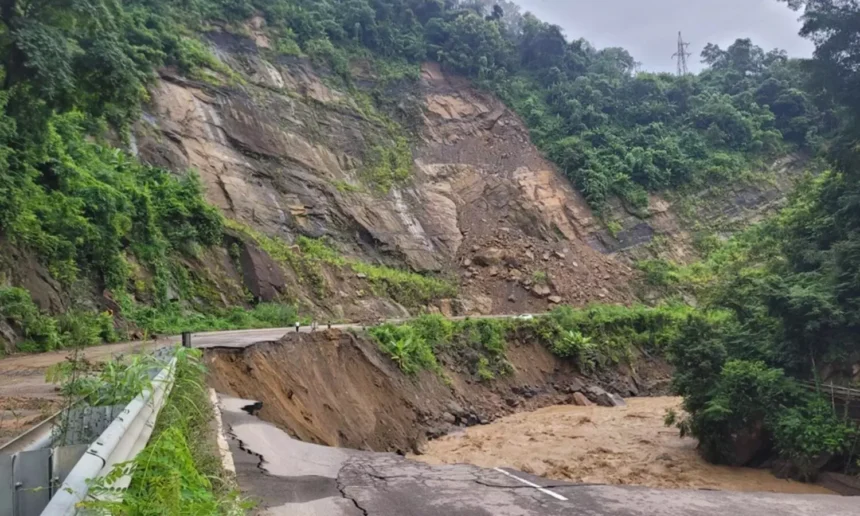
The Nagaland NH-29 Project Delays have come under renewed scrutiny after Nagaland Member of Parliament S. Supongmeren Jamir conducted field inspections of ongoing infrastructure works along National Highway-29. During the review, the MP expressed concern over delays in project execution and raised questions regarding safety standards at construction sites managed by private concessionaires. The inspection highlighted growing public concerns about road safety, project timelines, and accountability in one of Nagaland’s most important highway corridors. The development has intensified calls for stricter monitoring and improved implementation of infrastructure projects across the state.
Breaking News: Tripura ADC Swearing In Sparks Tensions
Manipur Violence Inquiry Commission Visits Camps
MP Conducts On-Site Highway Inspection
The Nagaland NH-29 Project Delays became a major focus during S. Supongmeren Jamir’s field visit to various stretches of the highway. The inspection was aimed at assessing the progress of ongoing infrastructure works and identifying issues affecting timely completion.
National Highway-29 serves as a critical transportation route connecting major urban centers and commercial hubs within Nagaland. Consequently, delays in construction and maintenance projects have generated concerns among commuters, businesses, and local communities that depend on efficient road connectivity.
During the review, the MP reportedly examined project sites, interacted with officials, and evaluated the pace of work being carried out by contractors and concessionaires. Such inspections are considered important for ensuring transparency and keeping infrastructure projects aligned with approved schedules.
The visit also provided an opportunity to assess challenges affecting project implementation, including construction management, safety measures, and operational efficiency. Observers noted that direct inspections often help draw attention to issues requiring immediate corrective action.
Safety Lapses Raise Serious Concerns
The Nagaland NH-29 Project Delays discussion was accompanied by concerns regarding safety standards at project sites. The MP emphasized the importance of ensuring that construction activities do not compromise public safety or create avoidable risks for commuters.
Highway construction projects typically require strict adherence to safety protocols, including proper signage, traffic management systems, protective barriers, and hazard warnings. Any shortcomings in these areas can increase the likelihood of accidents and inconvenience road users.
Concerns regarding safety have become increasingly significant because NH-29 experiences regular traffic movement involving private vehicles, commercial transport, and public transportation services. As a result, maintaining safe conditions throughout construction periods remains a critical responsibility for project operators.
The MP reportedly called for stronger oversight mechanisms to ensure that concessionaires comply with contractual obligations and established safety guidelines. Effective monitoring can help identify deficiencies early and support timely corrective measures.
Stakeholders have welcomed the focus on safety, arguing that infrastructure development should prioritize both efficiency and public welfare.
Accountability of Private Concessionaires
The Nagaland NH-29 Project Delays issue has also highlighted the role of private concessionaires responsible for executing and managing infrastructure projects. Questions regarding accountability have emerged as delays and safety-related concerns continue to attract public attention.
Infrastructure projects often involve partnerships between government agencies and private entities. While such arrangements can enhance efficiency and mobilize investment, they also require effective oversight to ensure compliance with contractual commitments.
The MP stressed the need for concessionaires to maintain quality standards, adhere to timelines, and address safety concerns promptly. Delayed completion of projects can affect economic activity, transportation efficiency, and public confidence in infrastructure initiatives.
Experts note that accountability mechanisms are essential for ensuring successful project delivery. Regular inspections, performance reviews, and transparent reporting can help improve project outcomes while reducing the likelihood of prolonged delays.
The latest inspection has therefore renewed focus on the responsibilities of all stakeholders involved in highway development and maintenance.
Importance of NH-29 for Nagaland’s Development
National Highway-29 plays a vital role in supporting connectivity, commerce, and regional development across Nagaland. The route serves as a major transportation corridor linking important population centers and facilitating the movement of goods and services.
Timely completion of infrastructure upgrades can improve travel efficiency, reduce transportation costs, and support economic growth. Consequently, delays in highway projects often have broader implications for businesses, logistics operations, and local communities.
Improved road infrastructure can also contribute to enhanced access to healthcare, education, and government services. Therefore, ensuring the successful implementation of highway projects remains an important development priority for the state.
The recent inspection underscores the growing expectation that infrastructure investments should deliver tangible benefits within reasonable timelines while maintaining high safety standards. Public interest in the progress of NH-29 projects is likely to remain strong as authorities continue monitoring developments.
Efforts to address identified concerns may play a significant role in improving both project outcomes and public confidence in future infrastructure initiatives.
Conclusion
The Nagaland NH-29 Project Delays have attracted renewed attention following MP S. Supongmeren Jamir’s inspection of ongoing highway works and his call for stricter oversight of safety lapses. The review highlighted concerns related to project timelines, construction standards, and accountability among private concessionaires. Given the strategic importance of NH-29 for connectivity and economic activity, stakeholders are emphasizing the need for timely completion and improved safety measures. The inspection may serve as an important step toward ensuring greater transparency and efficiency in infrastructure development across Nagaland.
FAQs
Q1. Who conducted the inspection of NH-29 projects?
Nagaland MP S. Supongmeren Jamir carried out field inspections of the highway projects.
Q2. What concerns were raised during the inspection?
The review focused on project delays, safety lapses, and accountability among private concessionaires.
Q3. Why is NH-29 important for Nagaland?
It is a key transportation corridor supporting connectivity, trade, and regional development.
Q4. What are concessionaires responsible for in such projects?
They are responsible for project execution, maintenance obligations, safety compliance, and timely completion.
Q5. What does Nagaland NH-29 Project Delays refer to?
It refers to concerns regarding delayed infrastructure works and related issues along National Highway-29.
Q6. Why is safety oversight important during highway construction?
Proper safety measures help protect commuters, workers, and nearby communities from potential hazards.