




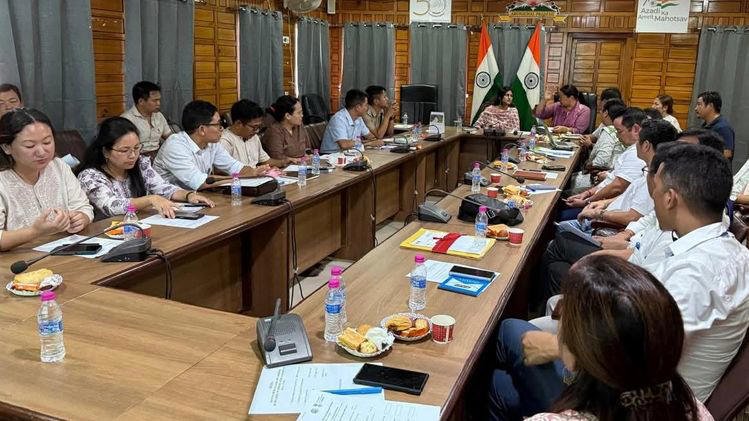
The Deputy Commissioner of Papum Pare district has urged stronger coordination among government departments and Panchayat bodies to improve Panchayat indicators. During a recent review meeting, he stressed the importance of teamwork to strengthen local governance and ensure better delivery of development schemes.
The Deputy Commissioner pointed out that Panchayati Raj Institutions (PRIs) play a vital role in grassroots development. He emphasized that effective coordination between district officials and Panchayat members can help improve the performance of various welfare schemes. According to him, many indicators linked to rural development require collective efforts, and proper monitoring can bridge gaps in implementation.
Read More: Jamun-Karela Juice for Diabetes: Benefits and Easy Recipe
Focus on Panchayat performance indicators
The meeting highlighted the need to focus on Panchayat Development Indicators (PDIs), which assess the performance of local governance. These indicators cover areas like education, health, sanitation, livelihood, and women’s participation. The Deputy Commissioner explained that these benchmarks reflect how well rural areas are progressing. He added that better scores in these indicators can help the district access more central and state-level funds.
Officials from multiple departments, including health, education, agriculture, and rural development, attended the review session. They presented updates on ongoing projects and discussed challenges in meeting key targets. The Deputy Commissioner urged them to share information regularly with Panchayat leaders, so that village-level planning aligns with government priorities.
Strengthening grassroots governance
The Deputy Commissioner noted that Panchayati Raj Institutions are the backbone of rural self-governance. He said they must be empowered with knowledge, training, and resources to carry out their responsibilities effectively. He also stressed that community participation is essential to improve indicators, since the success of most schemes depends on people’s involvement.
He advised the departments to ensure timely disbursement of benefits under welfare schemes. At the same time, he called for strengthening the monitoring process at the grassroots. The Deputy Commissioner asked Panchayat leaders to maintain records of activities and share them with higher authorities for evaluation.
Role of departments in Panchayat development
During the session, the health department shared updates on vaccination drives, maternal health programs, and awareness campaigns on nutrition. The Deputy Commissioner asked them to work closely with Panchayat members to improve health outcomes at the village level. He also suggested organizing medical outreach camps in remote areas with the help of local leaders.
The education department highlighted initiatives taken to reduce school dropout rates. The Deputy Commissioner emphasized the need to involve Panchayats in ensuring children attend school regularly. He also suggested that local leaders encourage parents to prioritize education, particularly for girl students.
Similarly, the agriculture and rural development departments presented progress on livelihood schemes, self-help group activities, and employment programs. The Deputy Commissioner stressed that Panchayats should mobilize people to participate in these opportunities. He said community engagement can help increase income levels and reduce rural distress.
Monitoring and accountability
A key part of the meeting focused on the importance of monitoring and accountability. The Deputy Commissioner said officials and Panchayat members must regularly review the progress of schemes. He called for transparent reporting mechanisms that would allow higher authorities to evaluate outcomes and identify areas needing attention.
He also encouraged the use of technology in monitoring projects. By digitizing records and using online dashboards, departments and Panchayats can track indicators more effectively. This can help improve transparency and ensure that data is readily available for future planning.
Importance of teamwork in governance
The Deputy Commissioner reminded everyone that effective governance cannot be achieved in isolation. He said each department must coordinate with Panchayat institutions to make development inclusive. By working together, he explained, they can ensure that government initiatives reach the last mile and benefit the most vulnerable groups.
He further urged Panchayat leaders to stay proactive and raise issues faced by their communities. According to him, open communication between village representatives and officials is key to resolving problems quickly.
Community involvement for better indicators
The meeting also stressed the role of community involvement in improving Panchayat Development Indicators. The Deputy Commissioner explained that many schemes require active participation from local residents. For example, cleanliness drives, school attendance, and health awareness programs need strong community support to succeed.
He asked Panchayat leaders to organize awareness meetings at the village level. By educating residents about the importance of these indicators, communities can contribute to improving their scores. He also encouraged the use of traditional gatherings as platforms for discussing development issues.
Road ahead for Papum Pare
The Deputy Commissioner concluded by outlining a roadmap for improving Panchayat indicators in Papum Pare district. He said departments and Panchayats must meet regularly to review progress. He also suggested setting up small task forces to address specific areas such as education, health, and sanitation.
He expressed hope that with better coordination and commitment, the district could set an example for others in Arunachal Pradesh. He reiterated that strong Panchayati Raj Institutions are key to ensuring rural prosperity and effective governance.
Final note
The review meeting in Papum Pare district highlighted the importance of collective responsibility in governance. By improving Panchayat indicators, the district can not only strengthen rural self-governance but also ensure that government schemes benefit every household. The Deputy Commissioner’s call for better coordination reflects a vision for inclusive and transparent development in Arunachal Pradesh.
Read More: Mizoram Assembly to hold two-day monsoon session on August 27–28