





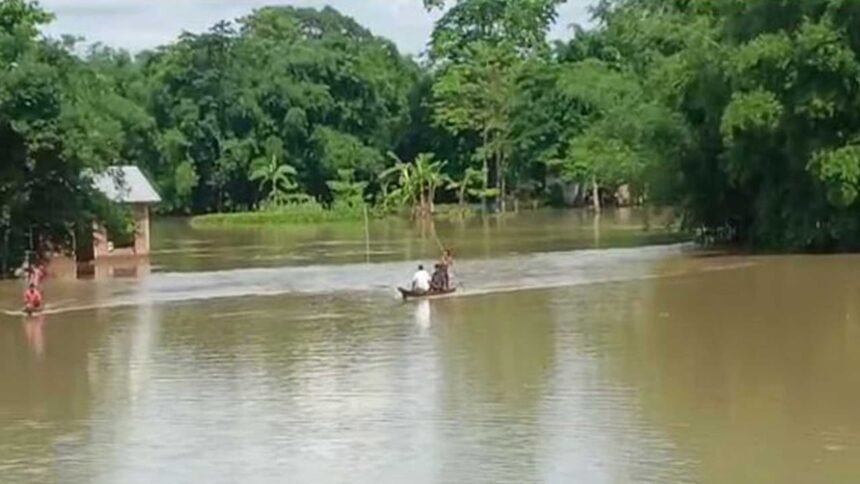
The Sivasagar Submergence situation has intensified as Sivasagar was declared the worst-affected district, with more than 2 lakh people impacted by the ongoing floods. According to the available information, widespread inundation has affected communities across the district, highlighting the continuing humanitarian challenges posed by the flood crisis in Assam.
The Sivasagar Submergence has become a major concern after authorities identified Sivasagar as the worst-affected district in the state’s current flood situation. According to the available information, the flooding has impacted over 2 lakh people, making the district the most severely affected by the ongoing disaster.
Floods continue to disrupt daily life across several parts of Assam during the monsoon season. Moreover, prolonged rainfall and rising river levels often inundate residential areas, agricultural land, and public infrastructure, creating significant challenges for affected communities.
The latest update underscores the scale of the flood emergency in Sivasagar. Therefore, authorities continue monitoring conditions while coordinating relief and disaster management efforts in the affected areas.
The development also highlights the importance of timely disaster response and continuous assessment of flood conditions. Additionally, coordinated relief measures remain essential to support residents impacted by widespread flooding.
Refugee Policy Demand Raised Mizoram Home Minister Seeks Clear Centre Policy
Sivasagar Submergence Affects More Than 2 Lakh Residents
The Sivasagar Submergence has affected more than 2 lakh people, according to the available information. The widespread flooding has placed Sivasagar at the center of Assam’s ongoing flood emergency.
Moreover, extensive inundation can disrupt transportation, public services, educational institutions, and economic activities across affected regions. Consequently, local authorities continue assessing the situation and monitoring flood conditions.
Flood-prone districts often experience significant challenges during periods of sustained rainfall. Furthermore, disaster management agencies regularly coordinate with local administrations to support emergency response and relief operations.
The available information confirms that Sivasagar is the worst-affected district with more than 2 lakh people impacted. However, authorities have not released additional details regarding the number of relief camps, infrastructure damage, or the extent of crop losses.
Relief Efforts Continue Amid the Sivasagar Submergence
The Sivasagar Submergence highlights the continuing importance of coordinated disaster management during the monsoon season. Government agencies typically work together to monitor water levels, assess affected areas, and provide assistance where necessary.
Additionally, continuous field assessments help authorities identify priority areas requiring immediate attention. This approach supports efficient disaster response while improving coordination among emergency agencies.
Flood monitoring remains a critical component of disaster preparedness across Assam. Meanwhile, officials continue reviewing the evolving situation as weather conditions and river levels change.
The available information does not specify whether additional evacuations or emergency measures have been announced. Therefore, the current update relates specifically to Sivasagar being identified as the worst-affected district and the number of people impacted.
The situation remains under close observation by the relevant authorities.
Sivasagar Submergence Highlights the Scale of Assam’s Flood Crisis
The Sivasagar Submergence carries broader significance for disaster management and humanitarian response across Assam. Large-scale flooding affects communities, infrastructure, and public services while requiring sustained administrative coordination.
Moreover, effective flood management depends on timely monitoring, coordinated relief operations, and ongoing communication between government agencies and local authorities. Strong preparedness measures also contribute to improving resilience in flood-prone regions.
The designation of Sivasagar as the worst-affected district reflects the severity of the current flood situation. Similarly, continued assessments remain essential for understanding the evolving impact on affected communities.
Strengthening disaster preparedness and response continues to be an important priority across Assam. Consequently, the Sivasagar Submergence underscores the need for coordinated emergency management and sustained relief efforts as authorities respond to the ongoing flood emergency.
As flood conditions continue to evolve, future official updates are expected to provide additional information regarding relief operations, rehabilitation measures, and the overall impact on the district.
Conclusion
The Sivasagar Submergence has made Sivasagar the worst-affected district in Assam’s ongoing flood crisis, with more than 2 lakh people impacted. The latest update highlights the extensive reach of the flooding and the significant challenges facing affected communities.
Furthermore, the situation emphasizes the importance of continuous monitoring, coordinated disaster response, and effective relief operations during the monsoon season. Authorities remain focused on assessing conditions and supporting flood-affected residents.
Overall, the Sivasagar Submergence reflects the severity of the current floods in Assam. As response efforts continue and conditions evolve, further official updates are expected to provide greater clarity on relief measures, recovery initiatives, and the overall humanitarian situation.
FAQs
1. What is the latest update on the Sivasagar Submergence?
The Sivasagar Submergence has made Sivasagar the worst-affected district in Assam, with over 2 lakh people impacted by the floods.
2. How many people have been affected in Sivasagar?
According to the available information, more than 2 lakh people have been affected by the flooding.
3. Why is Sivasagar considered the worst-affected district?
Sivasagar has been identified as the worst-affected district because it has recorded the highest number of people impacted by the ongoing floods.
4. Have authorities released details about infrastructure damage?
No. The available information confirms the number of affected people but does not provide details regarding infrastructure damage or relief camp figures.
5. Are relief and monitoring efforts continuing?
Yes. According to the available information, authorities continue monitoring flood conditions and coordinating disaster response efforts.