





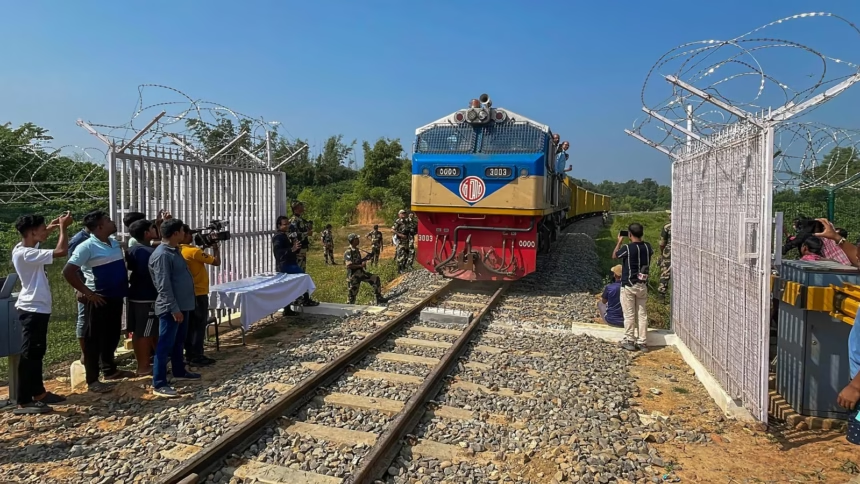
The Border Trade Expansion Talks gained importance today as officials from the Land Ports Authority of India met at the Agartala-Akhaura Integrated Check Post to discuss measures for streamlining bilateral cargo movement with Bangladesh. The meeting focused on improving trade efficiency, reducing logistical bottlenecks, enhancing infrastructure utilization, and strengthening cross-border economic cooperation between the two neighboring countries.
Rural Electrification Push Brings Solar Power
Mission Senehjori Launched to Strengthen Assam’s Muga Silk Ecosystem
Border Trade Expansion Talks Held at Agartala-Akhaura Check Post
Officials from the Land Ports Authority of India (LPAI) convened an important meeting today at the Agartala-Akhaura Integrated Check Post to review and improve bilateral cargo operations between India and Bangladesh. The discussions formed part of ongoing efforts to strengthen cross-border trade and facilitate smoother movement of goods through one of the region’s key trade gateways.
The meeting focused on identifying practical measures that could improve efficiency, reduce delays, and support growing trade volumes between the two countries. Participants examined existing procedures and explored opportunities to streamline cargo handling and transportation processes.
As trade activity continues to expand, authorities increasingly recognize the importance of modern and efficient border infrastructure in supporting economic growth.
Agartala-Akhaura Route Plays a Crucial Role
The Agartala-Akhaura Integrated Check Post serves as one of the most significant land trade corridors connecting northeastern India with Bangladesh. The route supports the movement of a wide range of goods and contributes to regional economic integration.
Its strategic location makes it an important gateway for commerce, logistics, and transportation. Consequently, improving operational efficiency at the check post remains a priority for both trade authorities and businesses.
Officials noted that growing commercial activity requires continuous improvements in infrastructure and administrative processes. Therefore, regular reviews help ensure that facilities can meet increasing demands effectively.
The latest discussions underscore the importance of the Agartala-Akhaura corridor in strengthening bilateral economic relations.
Focus on Streamlining Cargo Movement
A primary objective of the meeting involved streamlining cargo movement across the border. Efficient cargo handling can significantly reduce transit times and improve overall trade performance.
Officials reviewed procedures related to customs clearance, cargo documentation, vehicle movement, and logistics coordination. They explored ways to minimize operational bottlenecks that may affect the timely transportation of goods.
Faster cargo movement benefits traders, transport operators, and consumers by reducing delays and improving supply chain reliability. Furthermore, efficient border operations can enhance competitiveness and encourage greater trade activity.
Authorities emphasized that procedural improvements often complement infrastructure investments in achieving better trade outcomes.
Strengthening Bilateral Trade Cooperation
The discussions reflected the broader commitment of India and Bangladesh to strengthening economic cooperation through enhanced trade connectivity. Bilateral trade has continued to grow over the years, creating opportunities for businesses and industries on both sides of the border.
Efficient trade infrastructure supports this growth by facilitating the movement of goods in a predictable and cost-effective manner. As a result, authorities continue working to improve operational systems and expand trade facilitation measures.
Officials highlighted the importance of maintaining close coordination between relevant agencies involved in cross-border trade. Collaborative approaches often help resolve challenges more effectively and improve overall efficiency.
The meeting reinforced the shared interest in promoting smoother commercial exchanges between the neighboring countries.
Infrastructure Utilization Reviewed
Participants also reviewed the utilization of existing infrastructure at the integrated check post. Modern facilities can significantly improve trade operations when managed effectively and used to their full potential.
Authorities assessed cargo handling capabilities, storage facilities, transportation arrangements, and operational workflows. Such evaluations help identify areas where improvements may further enhance efficiency.
Infrastructure development remains a key component of trade facilitation strategies. Well-designed and properly maintained facilities support faster processing and reduce congestion during periods of high activity.
Officials emphasized the need to ensure that infrastructure investments continue delivering maximum benefits to traders and logistics operators.
Economic Importance of Cross-Border Trade
Cross-border trade plays an important role in supporting economic development and regional connectivity. The exchange of goods between India and Bangladesh contributes to business growth, employment opportunities, and commercial expansion.
For northeastern states such as Tripura, efficient trade corridors can improve access to markets and strengthen economic integration with neighboring regions. Consequently, trade facilitation measures often receive considerable attention from policymakers and development planners.
Enhanced cargo movement can also support industries that depend on reliable transportation networks for importing raw materials and exporting finished products.
The ongoing focus on trade connectivity reflects the broader significance of economic cooperation in regional development efforts.
Logistics Efficiency Remains a Priority
Logistics efficiency emerged as another important topic during the discussions. Modern supply chains depend on reliable transportation systems, effective coordination, and minimal delays.
Officials examined ways to improve coordination among stakeholders involved in cargo movement, including transport operators, customs authorities, and logistics providers. Better coordination can reduce waiting times and improve operational predictability.
In addition, authorities discussed measures aimed at improving communication and information-sharing processes. Efficient logistics systems help businesses manage costs while supporting smoother trade operations.
The emphasis on logistics reflects growing recognition of its role in facilitating international commerce.
Trade Growth Creates New Opportunities
As trade volumes increase, border infrastructure and administrative systems must adapt to evolving requirements. Growing commercial activity often creates opportunities for businesses, transport operators, and service providers.
The Agartala-Akhaura route has witnessed increasing attention due to its potential to support regional trade expansion. Improved cargo movement can encourage investment and strengthen economic ties between connected regions.
Officials acknowledged that continuous improvements remain necessary to accommodate future growth. Therefore, periodic reviews and strategic planning will continue to play an important role in trade management efforts.
The current discussions form part of a broader process aimed at preparing infrastructure and systems for rising demand.
Regional Connectivity Benefits From Improved Trade
Enhanced trade operations often contribute to broader regional connectivity objectives. Efficient transportation corridors facilitate not only commercial exchanges but also stronger economic relationships between neighboring areas.
For Tripura, improved trade links can support economic diversification and strengthen integration with regional markets. Businesses may benefit from better access to supply chains, customers, and commercial opportunities.
Furthermore, improved connectivity can contribute to long-term development goals by supporting commerce, investment, and infrastructure growth.
Authorities continue emphasizing the importance of leveraging strategic border locations to promote regional economic progress.
Border Trade Expansion Talks Reflect Future-Oriented Planning
The Border Trade Expansion Talks demonstrate a proactive approach toward strengthening trade infrastructure and improving operational efficiency. By reviewing cargo movement processes and exploring opportunities for enhancement, authorities aim to create a more effective trade environment.
The discussions highlight the importance of forward-looking planning in managing growing trade volumes and supporting economic cooperation. Continued engagement among stakeholders can help ensure that trade systems remain responsive to changing needs.
As bilateral commerce continues to expand, initiatives focused on efficiency and connectivity will remain essential components of economic development strategies.
Conclusion
The Border Trade Expansion Talks held at the Agartala-Akhaura Integrated Check Post underscore the growing importance of efficient cross-border trade between India and Bangladesh. Through discussions on cargo movement, logistics coordination, infrastructure utilization, and trade facilitation, officials have taken steps toward improving commercial operations along a key trade corridor. The meeting reflects a broader commitment to strengthening bilateral economic cooperation and supporting regional development through enhanced connectivity. As trade volumes continue to rise, ongoing collaboration and infrastructure improvements will play a crucial role in ensuring smooth and efficient cargo movement across the border.
FAQs
1. What were the Border Trade Expansion Talks about?
The Border Trade Expansion Talks focused on improving bilateral cargo movement and trade efficiency between India and Bangladesh.
2. Where was the meeting held?
The meeting took place at the Agartala-Akhaura Integrated Check Post.
3. Which organization participated in the discussions?
Officials from the Land Ports Authority of India participated in the trade-related discussions.
4. Why is the Agartala-Akhaura route important?
The route serves as a major land trade corridor connecting northeastern India with Bangladesh and supports significant cargo movement.
5. How can streamlined cargo movement benefit trade?
Improved cargo movement can reduce delays, lower logistics costs, enhance supply chain efficiency, and support increased trade activity.