



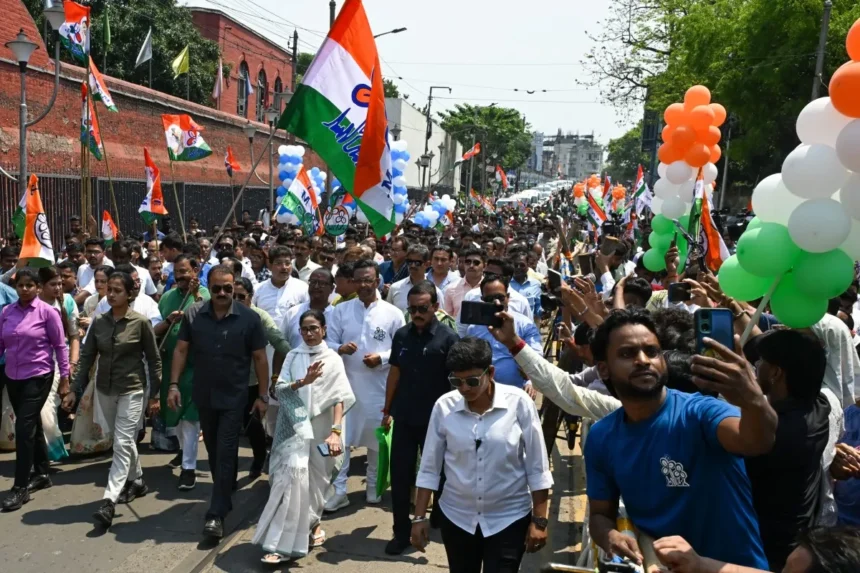
TMC election intimidation claims intensified after the Trinamool Congress publicly challenged recent local election defeats and accused opposition parties of orchestrating widespread political pressure and voter intimidation during polling activities. Meanwhile, senior party leaders alleged that opposition-backed groups created hostile conditions in multiple constituencies, affecting campaign operations and voter participation across several local bodies. The accusations immediately triggered sharp political reactions because local elections in West Bengal frequently attract intense competition and allegations involving electoral misconduct. Additionally, election observers and political analysts closely monitored the dispute as tensions escalated between rival political formations.
The controversy emerged amid continuing political polarization in the state, where local body elections often carry broader significance for regional political influence and organizational strength. Furthermore, analysts noted that municipal and panchayat election outcomes frequently shape future political strategies ahead of larger assembly and parliamentary contests.
Bengal Service Rules Revised for Recruitment
Guwahati AI Phygital Bank Revolution Begins
TMC Questions Integrity of Local Polling Process
The Trinamool Congress formally raised objections regarding the conduct of several local election contests following unexpected electoral setbacks. TMC election intimidation claims therefore quickly became central to political debate across West Bengal.
Meanwhile, party representatives alleged that opposition workers intimidated supporters, disrupted campaign activities, and attempted to influence voter behavior in sensitive polling regions. Additionally, TMC leaders claimed that local-level pressure tactics negatively affected democratic participation in multiple constituencies.
Senior leaders demanded administrative review and stricter monitoring of future elections to prevent alleged intimidation and procedural irregularities. Furthermore, party spokespersons argued that political competition should remain peaceful and free from coercive tactics targeting voters and grassroots workers.
Earlier, local elections in West Bengal witnessed repeated allegations involving clashes, intimidation, and organizational rivalry among competing political parties. Consequently, the latest accusations renewed long-standing concerns regarding electoral tensions in the state.
At the same time, opposition leaders strongly rejected the allegations and accused the ruling party of attempting to divert attention from electoral setbacks.
Opposition Parties Reject Allegations
Opposition political parties dismissed the accusations and defended the legitimacy of the election outcomes. TMC election intimidation claims discussions therefore rapidly expanded into a broader political confrontation involving governance and electoral accountability.
Meanwhile, opposition representatives argued that voter dissatisfaction and local anti-incumbency factors contributed to the ruling party’s defeat in several constituencies. Additionally, rival leaders accused the Trinamool Congress of routinely blaming opponents after unfavorable electoral results.
Several opposition spokespersons stated that polling procedures took place under administrative supervision and followed established electoral protocols. Furthermore, critics claimed that the allegations reflected political frustration rather than evidence of systematic intimidation.
Political analysts observed that electoral accusations frequently emerge in highly competitive states where grassroots political structures remain deeply polarized. Consequently, post-election disputes often intensify political rhetoric and public confrontation.
At the same time, civic observers urged all parties to avoid inflammatory language capable of escalating tensions at the local level.
Local Elections Hold Major Political Importance
Political experts emphasized that local body elections in West Bengal carry significance far beyond municipal administration alone. TMC election intimidation claims therefore attracted statewide attention because grassroots contests often influence broader political momentum.
Meanwhile, analysts noted that victories in municipal and panchayat elections strengthen organizational networks, local leadership structures, and voter mobilization capacity. Additionally, strong local performances frequently shape political narratives before major assembly or parliamentary elections.
Observers explained that local elections also serve as indicators of public sentiment regarding governance, development, and regional political dynamics. Furthermore, political parties heavily invest in local contests because control over grassroots institutions affects long-term electoral influence.
Several governance experts highlighted that West Bengal’s political environment remains intensely competitive, particularly in districts where party structures operate at deep community levels. Consequently, allegations surrounding local elections often generate strong statewide reactions.
However, election monitoring groups stressed that political parties should prioritize democratic engagement and peaceful campaigning practices regardless of electoral outcomes.
Political Tensions Continue Across Districts
The dispute surrounding the election results contributed to renewed political tension in several districts. TMC election intimidation claims debates therefore extended beyond party statements into wider public and administrative discussions.
Meanwhile, reports of confrontational rhetoric and political demonstrations emerged from some regions following declaration of results. Additionally, local administrations reportedly increased monitoring in sensitive areas to prevent escalation of post-election tensions.
Authorities urged political organizations to maintain peace and respect democratic procedures while addressing electoral grievances through legal and institutional channels. Furthermore, law enforcement agencies reportedly remained alert in politically sensitive constituencies where tensions historically increase after closely contested elections.
Several civil society organizations appealed for restraint and constructive dialogue between rival political groups. Consequently, calls for peaceful democratic engagement gained visibility amid the ongoing political dispute.
At the same time, residents in several districts expressed concern regarding recurring political conflict during local electoral processes.
Analysts Examine Changing Political Dynamics
Political commentators closely examined the election outcomes and subsequent allegations for indications of shifting voter behavior in West Bengal. TMC election intimidation claims therefore became linked with broader analysis regarding evolving regional political patterns.
Meanwhile, analysts suggested that local electoral setbacks may reflect changing political competition in specific constituencies rather than statewide political transformation alone. Additionally, some experts argued that regional factors, candidate selection, and local governance issues often heavily influence municipal election results.
Observers also noted that opposition parties continue attempting to strengthen grassroots presence in districts traditionally dominated by the Trinamool Congress. Furthermore, electoral competition at the local level increasingly reflects broader polarization within West Bengal politics.
Several strategists highlighted that local election disputes may shape future campaign narratives and organizational planning ahead of upcoming political contests. Consequently, both ruling and opposition parties are expected to intensify political mobilization in contested regions.
At the same time, governance experts encouraged greater institutional transparency and confidence-building measures during future elections.
Democratic Institutions and Electoral Trust Under Spotlight
The controversy renewed wider public discussion regarding electoral trust, democratic institutions, and political conduct during local elections. TMC election intimidation claims debates therefore extended into questions involving election management and democratic accountability.
Meanwhile, election observers emphasized the importance of ensuring safe participation for voters, polling staff, and political workers during all stages of the electoral process. Additionally, democratic institutions depend heavily on public confidence in transparency, neutrality, and lawful conduct.
Legal experts argued that allegations involving intimidation or procedural irregularities should undergo proper investigation through established electoral and judicial mechanisms. Furthermore, political parties bear responsibility for maintaining democratic norms and avoiding escalation of tensions.
Several civic groups also recommended stronger voter awareness programs and enhanced monitoring systems in politically sensitive constituencies. Consequently, discussions regarding electoral reform and administrative preparedness regained public attention.
At the same time, policy analysts stressed that peaceful democratic participation remains essential for maintaining political stability and institutional credibility.
Conclusion
TMC election intimidation claims intensified after the Trinamool Congress challenged recent local election defeats and accused opposition parties of widespread political pressure and intimidation during polling activities. Meanwhile, opposition leaders rejected the allegations and defended the legitimacy of the electoral outcomes across multiple constituencies. The controversy renewed attention on political polarization, grassroots competition, and electoral conduct in West Bengal’s local governance landscape. Ultimately, the dispute may continue influencing political narratives and democratic debates ahead of future elections in the state.
FAQs
What allegations did the TMC make?
The Trinamool Congress accused opposition parties of voter intimidation and political pressure during local elections.
Why are TMC election intimidation claims significant?
The accusations emerged after important local election defeats and intensified political tensions in West Bengal.
How did opposition parties respond?
Opposition leaders rejected the allegations and defended the legitimacy of the election outcomes.
Why are local elections politically important in West Bengal?
Local polls influence grassroots organization, voter mobilization, and future political strategies.
Did authorities respond to the tensions?
Administrations reportedly increased monitoring in sensitive areas to maintain peace after the elections.
Could the controversy affect future politics?
Yes, analysts believe the dispute may shape campaign narratives and political strategies ahead of future elections.