
Tripura Chief Minister Dr. Manik Saha has confirmed that he will travel to New Delhi amid reports of a high-level political meeting involving Union Home Minister Amit Shah and Tipra Motha Party founder Pradyot Kishore Debbarma. The developments come as political tensions within Tripura’s ruling arrangement intensify ahead of the upcoming Village Committee elections.
The reported Delhi discussions could focus on differences between the BJP and Tipra Motha, particularly over issues affecting tribal communities and the implementation of commitments associated with the parties’ political understanding. Moreover, the timing has increased attention because the local elections could test the strength of their relationship at the grassroots level.
However, reports that Shah formally “summoned” Debbarma should be distinguished from confirmed details about the meeting. The political developments nevertheless indicate that senior leaders may be seeking to address differences before the electoral contest intensifies.
109-Km Boundary Mapping: Joint Teams Begin Technical Review
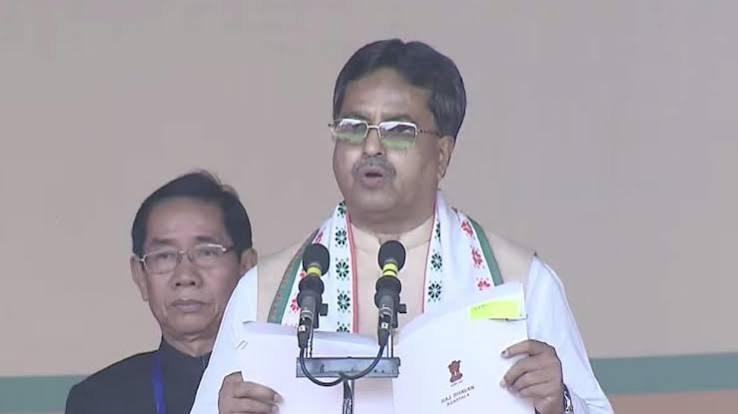
Dr. Manik Saha Confirms Delhi Visit
Dr. Manik Saha has confirmed his planned visit to New Delhi.
The Chief Minister’s trip comes amid renewed political discussions involving the BJP and Tipra Motha. Furthermore, his presence in the national capital could provide an opportunity for senior leaders to discuss disagreements affecting the Tripura alliance.
The timing is significant because Village Committee elections are approaching.
However, details about the exact agenda and participants in any Delhi meeting remain subject to official confirmation.
Amit Shah and Pradyot Debbarma in Focus
Union Home Minister Amit Shah and Tipra Motha founder Pradyot Kishore Debbarma have emerged as central figures in the latest political developments.
Reports have suggested that Shah sought discussions with Debbarma amid growing differences between the two political formations. Moreover, such talks could focus on maintaining coordination while addressing unresolved political demands.
Debbarma has consistently emphasised issues involving tribal rights, constitutional safeguards, land, language, and political representation.
However, the precise issues on the Delhi agenda have not been fully disclosed.
BJP-Tipra Motha Relationship Faces Pressure
The BJP and Tipra Motha have experienced periods of cooperation as well as disagreement.
Tipra Motha joined the Tripura government after reaching an understanding with the BJP, while retaining its political identity and distinct tribal agenda. Additionally, the party has continued to raise demands linked to greater safeguards for indigenous communities.
These differences can create friction within a governing arrangement.
Therefore, the upcoming Village Committee elections could become an important test of whether the two parties can maintain practical coordination.
Village Committee Elections Raise Stakes
The upcoming Village Committee elections are particularly important because they directly affect grassroots political representation.
Village-level bodies can influence local development, public services, community priorities, and political mobilisation. Moreover, tribal areas remain an important political base for Tipra Motha.
The election campaign could consequently expose differences that remain manageable at the state-government level.
However, electoral competition does not necessarily mean that the broader alliance will collapse.
Tribal Issues Remain Central
Tipra Motha’s political agenda has consistently focused on issues affecting indigenous tribal communities.
Land rights, cultural identity, language protection, political representation, and constitutional safeguards remain important themes. Furthermore, these issues can shape voter sentiment across tribal-majority areas.
The BJP has also sought to maintain its political presence among tribal voters.
Consequently, both parties have an incentive to avoid a prolonged public confrontation.
Constitutional Safeguards Could Feature
Political discussions between the two sides could involve demands for stronger constitutional protection for Tripura’s indigenous population.
Tipra Motha has previously pushed for greater safeguards over land, identity, and political representation. Additionally, the party has highlighted commitments associated with its agreement with the BJP-led government.
Any progress on such issues could influence the political relationship.
However, constitutional and legislative measures require processes that extend beyond a single political meeting.
Alliance Coordination Becomes Important
The ruling arrangement requires coordination between the BJP and Tipra Motha on several fronts.
Differences over election strategy could complicate cooperation at the local level. Moreover, competing candidates or separate campaigns could lead supporters of the two parties to confront each other politically.
Senior-level discussions could therefore help establish boundaries for the upcoming contest.
However, any seat-sharing or campaign arrangement would require explicit political agreement.
Pradyot Debbarma Maintains Independent Position
Debbarma has repeatedly maintained that Tipra Motha will protect its political identity.
The party’s independent approach reflects its focus on tribal interests and constitutional safeguards. Furthermore, maintaining an independent political position can help Tipra Motha appeal to voters who want stronger representation of indigenous concerns.
That approach can also create friction with a larger governing partner.
Therefore, the Delhi discussions could test whether both sides can reconcile alliance cooperation with political independence.
Village Polls Could Reshape Grassroots Politics
The elections could influence political dynamics beyond village committees.
Strong performance by Tipra Motha could strengthen Debbarma’s negotiating position, while a successful BJP campaign could reinforce the ruling party’s influence in tribal areas. Additionally, the results could affect future cooperation between the parties.
The stakes therefore extend beyond local administration.
However, electoral outcomes will depend on candidate selection, local issues, voter turnout, and campaign strategy.
Delhi Meeting Could Reduce Tensions
A direct conversation between senior leaders could help reduce public disagreements.
Political alliances often require negotiations when partners maintain different priorities. Moreover, confidential discussions can allow leaders to explore compromises without immediately escalating tensions through public statements.
If the talks produce a mutually acceptable understanding, both parties could enter the Village Committee elections with greater coordination.
However, disagreements over core political demands may remain difficult to resolve quickly.
Dr. Manik Saha’s Role Matters
As Tripura’s Chief Minister, Manik Saha has a central role in maintaining stability within the state government.
His Delhi visit could allow him to participate in discussions concerning the alliance’s future direction. Furthermore, the Chief Minister can help translate any political understanding into state-level administrative action.
The visit therefore carries significance beyond routine political travel.
However, the final outcome will depend on decisions taken by the senior leadership of both parties.
Political Competition Could Intensify
Even if senior leaders reach an understanding, local competition may continue.
BJP and Tipra Motha workers have different organisational structures and political priorities. Moreover, grassroots elections can produce rivalries that national-level agreements cannot completely eliminate.
Managing those differences will be important during the campaign.
Therefore, party leadership will need to communicate clearly with local units.
What Happens Next?
The immediate focus will remain on the reported Delhi discussions and the political strategy surrounding the Village Committee elections.
If senior leaders reach an understanding, the parties could coordinate more closely during the campaign. Conversely, unresolved disagreements could lead both organisations to pursue separate strategies in key constituencies.
The coming weeks could therefore clarify the future direction of the relationship.
However, neither the Delhi visit nor reported discussions should automatically be interpreted as evidence of an alliance breakdown.
Conclusion
Tripura Chief Minister Dr. Manik Saha’s confirmed Delhi visit comes amid reports of high-level discussions involving Union Home Minister Amit Shah and Tipra Motha founder Pradyot Kishore Debbarma. The developments have attracted attention because the BJP-Tipra Motha relationship faces political differences ahead of the state’s upcoming Village Committee elections.
Moreover, the discussions could address concerns involving tribal safeguards, political representation, land and language issues, and electoral coordination. At the same time, reports that Amit Shah formally “summoned” Debbarma require careful distinction from officially confirmed details about the meeting.
Overall, the Delhi visit highlights the importance of maintaining political coordination before the grassroots elections. Whether the discussions produce a new understanding or leave existing differences unresolved could shape the BJP-Tipra Motha relationship and Tripura’s tribal politics in the months ahead.
FAQs
1. Why is Dr. Manik Saha travelling to Delhi?
The Chief Minister has confirmed his Delhi visit amid political discussions involving the BJP and Tipra Motha ahead of the Village Committee elections.
2. What is the reported role of Amit Shah?
Reports have linked Union Home Minister Amit Shah to discussions with Tipra Motha founder Pradyot Kishore Debbarma. The precise details of any meeting require official confirmation.
3. Why are the Village Committee elections important?
The elections will test grassroots political strength, particularly in areas where Tipra Motha has significant support among tribal communities.
4. What issues could the parties discuss?
Potential areas include tribal safeguards, land and language protection, political representation, alliance coordination, and commitments associated with the BJP-Tipra Motha understanding.
5. Does the Delhi meeting mean the alliance is ending?
Not necessarily. Senior-level discussions can also aim to resolve disagreements and strengthen coordination before an election.