



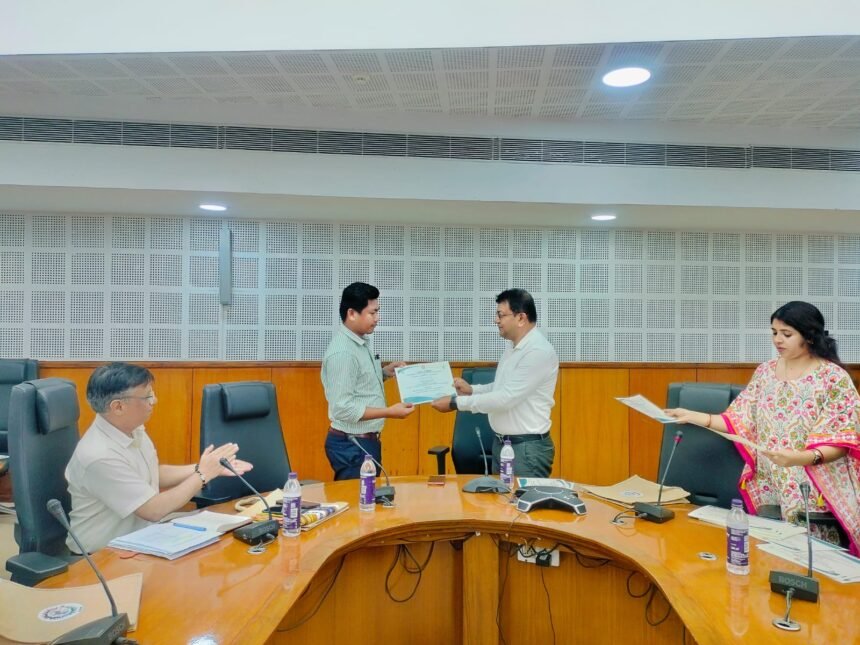
A high-level coordination meeting has reinforced administrative alignment as Tripura MDC Government Integration becomes a key focus in improving cooperation between state departments and the Tripura Tribal Areas Autonomous District Council (TTAADC). The meeting, held with the Chief Engineer of the Government of Tripura, aimed to ensure smoother coordination between line departments and the autonomous council. Officials emphasized that better integration is essential for equitable development, faster execution of infrastructure projects, and improved service delivery across tribal and non-tribal regions of the state.
CPIM Raises Job Recruitment Transparency Issue
Tripura Left Front Vacant Drive Intensifies Pressure
Background
The administrative structure in Tripura includes both state government departments and autonomous institutions such as the TTAADC, which manages governance in tribal areas. Therefore, coordination between these bodies plays a crucial role in ensuring balanced development and effective implementation of infrastructure projects.
Over time, challenges related to project execution, resource allocation, and departmental coordination have highlighted the need for stronger institutional collaboration. In response, Tripura MDC Government Integration reflects ongoing efforts to streamline communication between engineering departments and autonomous governance bodies.
Moreover, such coordination meetings are typically held to align development priorities and ensure that planning and execution remain consistent across jurisdictions.
Current Update
The recent meeting with the Chief Engineer focused on improving synchronization between state line departments and the TTAADC administration. Officials actively discussed mechanisms to ensure that infrastructure projects move forward without delays and that technical approvals are processed more efficiently.
As a result, the Tripura MDC Government Integration initiative aims to reduce administrative gaps and strengthen cooperation in project planning and implementation. In addition, authorities emphasized ensuring that development efforts reach all regions in a balanced and timely manner.
Furthermore, officials indicated that improved coordination could significantly accelerate public infrastructure development, especially in remote and tribal-dominated areas.
Key Details
Discussions during the meeting centered on engineering coordination, project monitoring systems, and shared responsibility frameworks between departments and the autonomous council. Officials also explored ways to improve communication channels and reduce procedural bottlenecks.
Importantly, the significance of Tripura MDC Government Integration lies in its potential to unify development efforts under a more collaborative administrative structure. By aligning technical and administrative processes, the government aims to improve efficiency and ensure equitable distribution of development benefits.
Experts note that such integration efforts require consistent follow-up, clearer institutional roles, and strong interdepartmental coordination to achieve lasting impact.
Impact and Public Significance
Improved coordination between the state government and TTAADC is expected to directly impact infrastructure development, particularly in rural and tribal areas. Consequently, faster project execution could lead to better roads, improved public utilities, and enhanced service delivery.
From a governance perspective, Tripura MDC Government Integration may reduce duplication of efforts and improve accountability in project implementation. As a result, citizens are likely to benefit from more efficient delivery of government schemes and infrastructure improvements.
Additionally, the initiative reflects a broader push toward inclusive development, ensuring that all regions receive equitable attention in planning and execution.
What Happens Next
Following the meeting, departments are expected to further refine coordination mechanisms and implement agreed-upon improvements. Meanwhile, regular follow-up reviews may be conducted to monitor progress and address implementation challenges.
In the next phase, authorities could introduce digital coordination systems, improved project tracking tools, and clearer procedural guidelines between departments and the autonomous council. Ultimately, the success of Tripura MDC Government Integration will depend on sustained administrative cooperation and timely execution of development plans.
Conclusion
The coordination meeting marks an important step toward strengthening institutional collaboration in Tripura’s development framework. Overall, as the state focuses on improving infrastructure and governance efficiency, Tripura MDC Government Integration emerges as a key strategy for ensuring equitable and streamlined development. Going forward, continued cooperation between departments and the TTAADC will play a vital role in shaping future outcomes.
FAQs
1. What was the purpose of the meeting?
The meeting aimed to improve coordination between state departments and the TTAADC for development projects.
2. What is Tripura MDC Government Integration?
It refers to efforts to streamline coordination between government departments and autonomous council bodies.
3. Who attended the meeting?
The Chief Engineer of the Government of Tripura and officials linked to development coordination participated.
4. Why is this coordination important?
It helps ensure efficient execution of infrastructure projects and equitable development.
5. What areas will benefit from this initiative?
Tribal and rural regions are expected to benefit from improved infrastructure and services.
6. What is the expected outcome?
Better coordination, faster project execution, and improved governance efficiency.