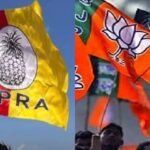

The Tripura Village Committee Alliance Friction has emerged as the BJP, TIPRA Motha and IPFT prepare for the upcoming TTAADC Village Committee elections. Although the three parties have announced a broader electoral understanding, candidate nominations indicate competition and differences at the grassroots level. Moreover, the contest has exposed the complexities of managing an alliance across a large number of local seats.
Gauhati University poll now faces hunger strike
Tripura Village Committee Alliance Friction Shapes Candidate Contest
The Tripura Village Committee Alliance Friction comes as the ruling BJP and its tribal allies attempt to coordinate their campaigns for the Village Committee elections under the Tripura Tribal Areas Autonomous District Council.
Recent reports indicate that the BJP, TIPRA Motha and IPFT agreed to jointly contest the local elections. However, the nomination process has shown that the parties have not fielded candidates uniformly across the available seats.
The BJP, in particular, has reportedly chosen not to contest more than half of the available seats. Times of India reported that the party did not field candidates in more than 57% of the seats, despite its alliance arrangements with tribal-based parties.
Meanwhile, TIPRA Motha submitted the highest number of nominations among the alliance partners, highlighting its strong grassroots presence in the tribal areas.
Therefore, the nomination pattern suggests that the alliance strategy involves more than simply placing candidates from every partner in every constituency.
Alliance Partners Face Grassroots Political Balancing
The Tripura Village Committee Alliance Friction also reflects the different political strengths of the three parties. TIPRA Motha has a particularly strong organisational base in the tribal areas, while the BJP remains the dominant ruling party at the state level.
IPFT, meanwhile, has its own support base among indigenous voters and has participated in political arrangements with the BJP. Consequently, distributing seats among the partners requires careful coordination.
The current situation also follows the 2026 TTAADC general election, where TIPRA Motha won 24 of the 28 elected seats while the BJP secured four.
That result provides important context for the Village Committee contest. Moreover, it demonstrated TIPRA Motha’s strong position within the autonomous council’s electoral geography.
However, Village Committee elections operate at a much more local level. Local candidates, community networks and individual organisational strength can therefore influence contests alongside broader party alliances.
Additionally, the large number of local seats makes coordination more complicated than a conventional constituency-based election.
1,891 Seats Become Test of Alliance Coordination
Reports surrounding the Village Committee elections have focused attention on the large number of seats being contested across the TTAADC area. The reported figure of around 1,891 seats underscores the scale of the local electoral exercise.
However, available reporting does not establish that BJP, TIPRA Motha and IPFT are directly contesting one another across all 1,891 seats. Instead, nomination patterns indicate that the alliance partners have distributed their participation unevenly.
Therefore, describing the entire 1,891-seat contest as a three-way fight would overstate the available evidence.
At the same time, competition between alliance partners can emerge where more than one organisation seeks influence or where local-level arrangements differ from broader political agreements.
Furthermore, such contests can test whether a pre-poll alliance can maintain unity once candidates begin competing for grassroots support.
The Village Committee elections consequently carry significance for the BJP, TIPRA Motha and IPFT beyond the individual seats. The results could provide an indication of each party’s organisational reach in tribal areas.
Tripura Village Committee Alliance Friction Could Test Future Politics
The Tripura Village Committee Alliance Friction could become an important indicator of how effectively the three parties can manage their relationship at the local level.
For the BJP, the elections provide an opportunity to maintain political influence across the tribal areas while working with regional allies. Meanwhile, TIPRA Motha will seek to translate its strong TTAADC performance into influence over village-level institutions.
IPFT also faces the challenge of maintaining relevance within an alliance dominated by larger political organisations.
Moreover, the outcome could shape perceptions of the alliance ahead of future political developments in Tripura. Strong coordination could strengthen the partnership, while significant local disagreements could expose underlying differences.
Recent political developments have already shown that relations between the alliance partners require careful management. At the same time, the parties continue to share an interest in maintaining cooperation at the state level.
The Village Committee elections will therefore provide a practical test of that cooperation. Consequently, the final candidate distribution, campaign strategies and election results will offer a clearer picture of the alliance’s grassroots strength.
For now, the available evidence points to an alliance with uneven candidate participation rather than a uniform three-way contest across every seat.
Conclusion
The Tripura Village Committee Alliance Friction highlights the challenge of translating a BJP-TIPRA Motha-IPFT alliance into coordinated grassroots electoral action. While the parties have agreed to work together, nomination figures show that they have adopted different levels of participation across the Village Committee seats. Moreover, the reported 1,891-seat scale makes coordination particularly significant as the election approaches.
FAQs
1. What is the Tripura Village Committee Alliance Friction?
The Tripura Village Committee Alliance Friction refers to differences and competing grassroots interests emerging among BJP, TIPRA Motha and IPFT despite their broader electoral understanding.
2. Are BJP, TIPRA Motha and IPFT contesting every seat against one another?
No. Available nomination reports indicate that the parties have distributed their participation unevenly, so the entire election should not be described as a three-way contest across every seat.
3. Which party has reportedly filed the most nominations?
Recent reporting identifies TIPRA Motha as the alliance partner with the highest number of nominations.
4. Why is the election important for TIPRA Motha?
TIPRA Motha already holds a strong position in the TTAADC after winning 24 of the 28 elected council seats in the 2026 general election.
5. What could the Village Committee results indicate?
The results could indicate the grassroots organisational strength of the three parties and show how effectively their alliance functions at the local level.