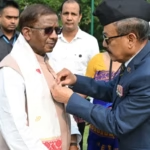






Traditional Practices Will Be Protected, Says Union Minister
UCC tribal exemption is now official. Union Minority Affairs Minister Kiren Rijiju announced that tribal communities in Northeast India will be excluded from the Uniform Civil Code (UCC). This move ensures that their customary laws and traditional practices remain intact.
The announcement was made in Itanagar, Arunachal Pradesh — Rijiju’s home state — and comes as debates over the UCC intensify across the country.
What Is the UCC and Why Is It Controversial?
The Uniform Civil Code aims to create a single set of personal laws for all Indian citizens. It covers areas such as marriage, divorce, inheritance, and adoption. Supporters argue that it promotes equality, especially for women. However, many communities fear that the UCC could override their religious and cultural identities.
In the Northeast, this concern is even more sensitive. Tribal groups have long operated under their customary laws, many of which are community-based and orally transmitted.
UCC Tribal Exemption Safeguards Indigenous Cultures
Rijiju clarified that the UCC tribal exemption is a conscious effort to preserve tribal identity.
“We understand and respect the special status of Northeast tribal communities. Their customs and systems will not be altered by the UCC,” he said.
This means that states like Nagaland, Mizoram, Meghalaya, Arunachal Pradesh, Manipur, and tribal areas of Assam and Tripura will remain governed by their own customary laws in personal matters.
Legal Backing: What the Constitution Guarantees
The exemption isn’t arbitrary. It aligns with Articles 371A and 371G of the Indian Constitution, which guarantee that no central law will apply to religious and social practices in Nagaland and Mizoram without state approval.
These provisions were put in place to protect tribal customs, especially in regions where indigenous populations form the majority.
Why This Matters for Northeast India
The UCC tribal exemption is a significant victory for cultural preservation. More than 200 tribal communities live in the region, each with its own systems of family law, conflict resolution, and property inheritance.
Many tribes use village councils or traditional courts, and their systems differ from the rest of the country. Leaders feared that the UCC would erase these practices.
Now, with this exemption confirmed, tribal voices feel heard.
Community Response: Relief and Support
Several tribal organizations welcomed Rijiju’s announcement. The All Arunachal Pradesh Students’ Union (AAPSU), the Meghalaya Indigenous Forum, and the Naga Mothers’ Association have issued statements supporting the move.
One spokesperson said:
“We’re grateful the government acknowledged our unique way of life. Imposing a uniform law would have been disastrous.”
Political Implications and National Reaction
The announcement also has political significance. Many parties in the Northeast had raised the issue in public forums and state assemblies. With elections due in some tribal-majority states next year, the exemption could influence voter sentiment.
Meanwhile, some legal scholars argue that too many exemptions could weaken the very idea of a UCC. Others believe this shows India’s strength in accommodating diversity within unity.
UCC Tribal Exemption in Practice: What to Expect
So, what does this exemption mean in real life?
- No change to marriage, divorce, or inheritance laws in tribal areas
- Tribal communities will continue using customary courts and practices
- State governments may draft specific protections for these exemptions
- The final UCC draft will likely include explicit clauses on tribal autonomy
Stay Informed, Stay Empowered
The UCC tribal exemption is a reminder that your voice matters.
Ask questions about legal changes.
Engage with your local leaders to protect your rights and traditions.
Educate yourself about how constitutional protections apply to your community.
If you belong to a tribal group and need legal advice, reach out to your Autonomous District Council or a local legal aid center.
Respecting Diversity, Upholding Democracy
India’s strength lies in its diversity — and the UCC tribal exemption proves that inclusive governance is possible. While reforms like the UCC may improve uniformity in law, they should never come at the cost of erasing centuries of tradition.
By recognizing tribal autonomy, the government is sending a message: reform must go hand-in-hand with respect.
READ MORE: Assam Constable Arrested for Assaulting Minor in Meghalaya