
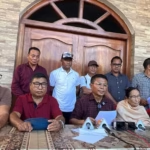



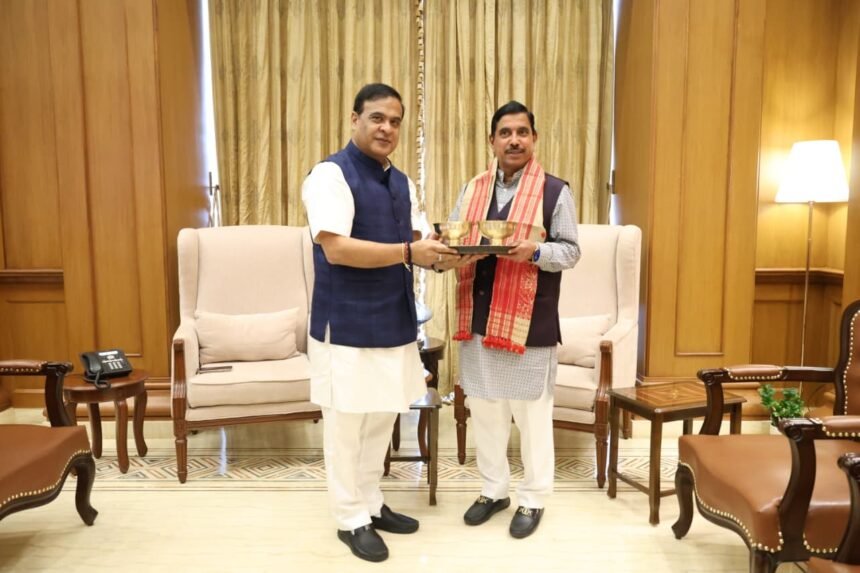
The West Jaintia Hills Boundary Committee has confirmed that it is awaiting a joint scheduling directive from the Chief Ministers of Meghalaya and Assam before the next round of interstate boundary discussions begins. Moreover, the committee stated that future meetings for the West Jaintia Hills sector will proceed only after both state governments finalize the schedule. Consequently, the announcement reinforces the importance of coordinated political leadership in advancing the ongoing boundary resolution process.
Zonal Cultural Center Funding Boosts Infrastructure at NEZCC Hubs
West Jaintia Hills Boundary Committee Awaits Joint Scheduling Directive
The West Jaintia Hills Boundary Committee confirmed that it is waiting for a joint directive from the Chief Ministers of Meghalaya and Assam regarding the scheduling of the next meeting. Furthermore, the committee indicated that discussions for the West Jaintia Hills sector will resume once the official timeline is communicated.
Interstate boundary negotiations generally follow a structured administrative framework involving both political and technical committees. Consequently, scheduling decisions are often finalized through mutual consultation between the participating state governments.
Moreover, coordinated planning helps ensure that all stakeholders are prepared before formal discussions begin. Therefore, the committee has decided to await the official directive before proceeding.
Additionally, the announcement reflects the continued commitment of both states to resolving boundary issues through dialogue. Thus, the process remains within an established institutional framework.
Chief Minister-Level Coordination to Guide Future Discussions
The West Jaintia Hills Boundary Committee emphasized that Chief Minister-level coordination remains essential for determining the next phase of negotiations. Furthermore, high-level political engagement plays a key role in facilitating interstate discussions on sensitive administrative matters.
Boundary-related talks require cooperation between government departments, technical experts, and political representatives. Consequently, scheduling decisions often involve consultations at multiple levels.
Moreover, joint directives help maintain consistency in the negotiation process. Therefore, coordinated leadership continues to support constructive engagement between Assam and Meghalaya.
Similarly, official communication enables committees to prepare agendas and organize future meetings efficiently. Additionally, structured coordination strengthens confidence in the dialogue process.
Boundary Resolution Process Continues Through Institutional Dialogue
The West Jaintia Hills Boundary Committee reaffirmed its commitment to the ongoing interstate boundary resolution process. Furthermore, the committee continues to operate within the institutional mechanism established by the two state governments.
Dialogue remains the primary approach for addressing outstanding boundary-related matters. Consequently, committee members continue to await further instructions while maintaining readiness for future discussions.
Moreover, established negotiation frameworks encourage peaceful and cooperative engagement. Therefore, the committee’s approach reflects the broader objective of resolving issues through mutual understanding.
Similarly, administrative coordination supports continuity in the negotiation process. Additionally, formal procedures help ensure transparency and orderly progress.
Official Scheduling Expected to Facilitate Next Round of Talks
The West Jaintia Hills Boundary Committee believes that the upcoming Chief Minister-level directive will pave the way for the next phase of interstate discussions. Furthermore, once the official schedule is announced, the committee will be able to resume its work on the West Jaintia Hills sector.
Timely communication between both governments remains important for maintaining momentum in the boundary dialogue. Consequently, the pending directive is viewed as a necessary procedural step.
Moreover, continued cooperation between Assam and Meghalaya supports constructive interstate relations. Therefore, both governments are expected to continue working through established consultation mechanisms.
Similarly, coordinated planning contributes to effective negotiations and institutional stability. Additionally, sustained political engagement remains essential for advancing the boundary resolution process.
Conclusion
The West Jaintia Hills Boundary Committee has confirmed that it is awaiting a joint scheduling directive from the Chief Ministers of Meghalaya and Assam before resuming discussions on the West Jaintia Hills sector. Moreover, the statement highlights the importance of coordinated political leadership and formal communication in interstate negotiations.
Furthermore, the committee’s decision reflects the structured approach adopted by both states to address boundary-related issues through dialogue and institutional cooperation. Consequently, the next phase of talks will depend on the official schedule issued by the two governments.
Looking ahead, continued coordination, regular communication, and mutual consultation will remain essential for advancing the interstate boundary resolution process. Therefore, the West Jaintia Hills Boundary Committee continues to play an important role in facilitating peaceful and constructive negotiations.
FAQs
1. What did the West Jaintia Hills Boundary Committee announce?
The committee stated that it is waiting for a joint Chief Minister-level scheduling directive before the next round of boundary talks begins.
2. Why have the boundary discussions not resumed?
The committee is awaiting an official schedule jointly finalized by the Chief Ministers of Meghalaya and Assam.
3. Which sector does the committee oversee?
The committee is responsible for matters related to the West Jaintia Hills sector in the ongoing interstate boundary dialogue.
4. Why is Chief Minister-level coordination important?
High-level coordination helps finalize meeting schedules, guide negotiations, and ensure effective cooperation between both state governments.
5. Why is the West Jaintia Hills Boundary Committee significant?
The committee serves as an important institutional mechanism for advancing dialogue and resolving interstate boundary issues through coordinated negotiations.