





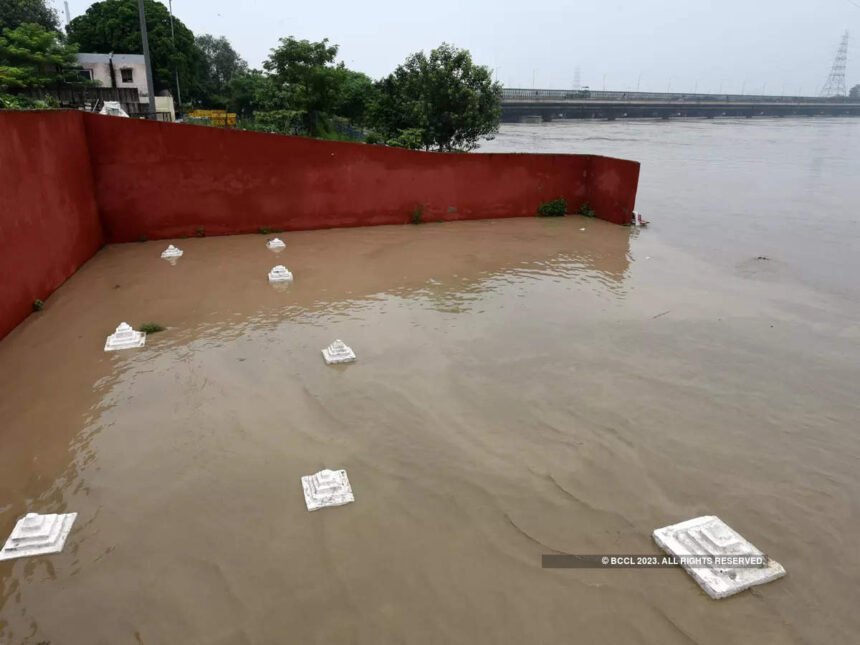
The Yamuna River, which had been raging and causing havoc in the national capital of India, showed some signs of calming down on Friday. However, a damaged regulator worsened the situation as floodwaters breached its banks, reaching significant landmarks and causing widespread submergence. Among the affected areas were the Supreme Court, located several kilometers from the river’s banks, and the busy ITO intersection. Even Mahatma Gandhi’s memorial at Rajghat was not spared from the deluge. Although the water levels receded slightly, it was insufficient to prevent the floodwaters from reaching the nerve center of central Delhi. Efforts were underway to repair the damaged regulator near the Indraprastha bus stand and the WHO Building, employing sandbags, braces, and boulders.
The usually serene Yamuna River had transformed into a ferocious force, wreaking havoc along its course through the national capital of India. After days of devastating floods and intense efforts to control the situation, there was a glimmer of hope on Friday when the river showed signs of subsiding. However, this respite was short-lived as damage to a vital regulator exacerbated the flood situation, resulting in water from the overflowing river inundating key areas in Delhi.
Among the notable casualties of this unexpected turn of events were the Supreme Court and the ITO intersection, both of which found themselves submerged under the relentless floodwaters. The Supreme Court, situated several kilometers away from the river’s banks, was an unexpected victim of this calamity. The floodwaters even reached the iconic Rajghat, the memorial dedicated to the Father of the Nation, Mahatma Gandhi.
Although there was a marginal decrease in the water levels, it proved insufficient to prevent the floodwaters from surging into the heart of central Delhi. The ITO intersection, a bustling hub of activity and a vital link in the city’s transportation network, became a casualty of the rising waters. The situation brought the city to a standstill, disrupting daily life and posing significant challenges to authorities in managing the crisis.
Efforts were immediately initiated to address the damage caused by the regulator. Repair work commenced near the Indraprastha bus stand and the WHO Building, where the damaged structure was located. Sandbags, braces, and boulders were deployed to reinforce the regulator and mitigate further damage. A sense of urgency enveloped the area as authorities and volunteers worked tirelessly to restore normalcy and prevent further devastation.
The ramifications of the flood extended beyond the physical damage inflicted upon infrastructure. The city’s residents faced numerous hardships as the floodwaters disrupted transportation, inundated residential areas, and compromised essential services. People were forced to evacuate their homes and seek refuge in temporary shelters, adding to the already strained resources and challenging the resilience of the affected communities.
As the city grappled with the aftermath of the deluge, attention turned to the need for enhanced flood management measures. The recurring floods in the Yamuna River highlighted the vulnerabilities of Delhi’s infrastructure and the urgent requirement for better flood control systems. Authorities were urged to invest in robust infrastructure, including improved regulators, embankments, and drainage systems, to mitigate the impact of future floods and safeguard the city and its residents.
The incident served as a wake-up call, emphasizing the importance of proactive measures to address the challenges posed by natural disasters. Efforts to strengthen disaster preparedness, early warning systems, and coordination among relevant agencies became imperative to ensure the safety and well-being of the city’s inhabitants.
The Yamuna River, after unleashing devastation upon the national capital, exhibited a temporary respite before wreaking further havoc due to a damaged regulator. The floodwaters breached its banks, reaching key areas in central Delhi, including the Supreme Court and the ITO intersection. Despite some decrease in water levels, the damage inflicted by the flooding continued to disrupt the city’s functioning. Repair efforts, utilizing sandbags, braces, and boulders, were initiated to address the damaged regulator near the Indraprastha bus stand and the WHO Building. The incident highlighted the urgent need for improved flood management infrastructure and emphasized the importance of proactive measures to mitigate the impact of future disasters.