



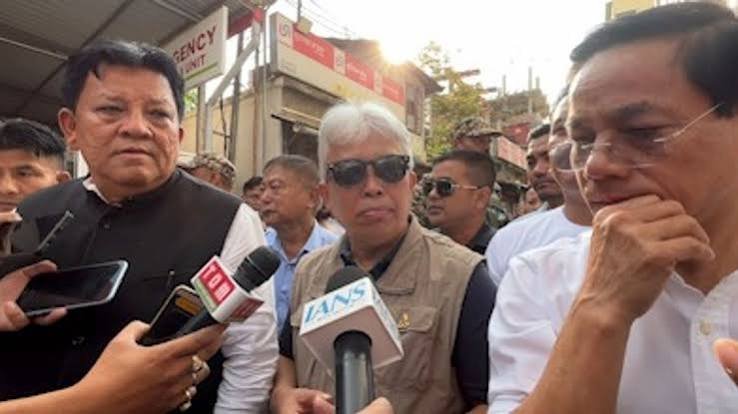
Congress MP Angomcha Bimol Akoijam has questioned claims of Manipur peace, saying a decline in violence does not necessarily mean normalcy has returned to the conflict-hit state. On October 19, 2026, the Inner Manipur MP said lasting peace cannot exist while people remain displaced and unable to return to their homes.
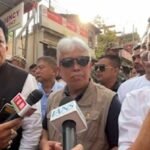
Akoijam made the remarks while speaking to the media at Raj Medicity Hospital in Imphal. He had visited people injured in a recent violent incident and enquired about their condition. His comments renewed attention on the continuing challenges facing Manipur as authorities and political leaders discuss the restoration of peace.
Manipur peace remains a concern, says Bimol Akoijam
Akoijam rejected the suggestion that a reduction in violent incidents alone proves the state has returned to normal. He argued that peace must involve more than the absence of physical violence.
“Honestly speaking, I do not buy the idea that peace has returned,” the MP said, stressing that the meaning of peace should extend beyond a temporary improvement in the security situation.
He compared peace with the medical definition of health to explain his position. Just as the absence of a visible illness does not automatically mean a person is healthy, fewer violent incidents do not necessarily indicate that a society has recovered.
According to Akoijam, the experiences of affected residents must remain central to any assessment of the situation. Displacement, insecurity and the inability to return home continue to raise questions about whether normal life has genuinely resumed.
Displacement remains central to Manipur peace debate
The displacement of residents remains a major challenge in discussions about Manipur peace. Many affected families have faced disruption to their homes, livelihoods, education and everyday routines during the prolonged crisis.
Akoijam highlighted the difficulties faced by people who cannot return to their original homes. For such families, a reduction in clashes may not translate into a meaningful return to normal life.
Moreover, rebuilding trust between communities requires sustained efforts beyond controlling immediate violence. Residents need confidence that they can travel, work and live without fear of further attacks.
The return of displaced people also involves practical concerns, including safe access to homes and the restoration of essential services. These issues underline why a lasting resolution cannot be measured solely through reports of fewer violent incidents.
However, the pace of recovery can differ across affected areas. Therefore, any assessment of progress must consider conditions on the ground and the experiences of people who continue to face the consequences of the conflict.
Hospital visit brings continuing violence into focus
Akoijam’s remarks came during his visit to Raj Medicity Hospital in Imphal, where he met people injured in a recent violent incident.
The visit provided the immediate context for his comments on the security situation. By enquiring about the injured, the MP drew attention to the continuing human impact of violence even as discussions about normalcy continue.
His statement also raised a broader question about how the authorities should measure progress towards peace. A decline in incidents can represent an important development, but it does not automatically resolve the underlying problems affecting communities.
Furthermore, lasting recovery requires attention to victims, displaced families and residents whose daily lives remain disrupted. Security measures and rehabilitation efforts need to work together to create conditions in which people can safely resume their routines.
The circumstances surrounding the latest incident remain important when evaluating the wider situation. However, the MP’s comments focused on the broader distinction between reduced violence and a genuine return to normal life.
Political claims about Manipur peace face scrutiny
The debate over Manipur peace also reflects differing assessments of the state’s recovery. On October 2, Chief Minister Yumnam Khemchand Singh urged participants at the 38th National Yogasana Championship in Imphal to carry the message that peace had returned to Manipur.
Akoijam’s October 19 remarks offered a contrasting assessment, emphasising displacement and the continuing consequences of violence. The difference highlights the importance of examining developments on the ground alongside official messages about recovery.
Neither a public statement nor a temporary decline in violence can, by itself, establish that all affected communities feel secure. A fuller assessment requires attention to safety, rehabilitation, movement and the ability of displaced residents to return home.
Lasting Manipur peace requires more than reduced violence
Akoijam’s remarks underline the distinction between a quieter security situation and a lasting resolution to Manipur’s crisis. For affected residents, meaningful peace involves safety, stability and the opportunity to rebuild their lives.
Meanwhile, the challenges of displacement and community trust remain important considerations in assessing the state’s recovery. Progress will depend on whether people can return home safely and resume their daily activities without fear.
Ultimately, the MP’s statement places the experiences of affected people at the centre of the debate. His position is clear: fewer violent incidents alone are not enough to establish that peace has returned to Manipur.
Manipur Peace Appeal: Nemcha Kipgen now Reaches Out to Nagas