





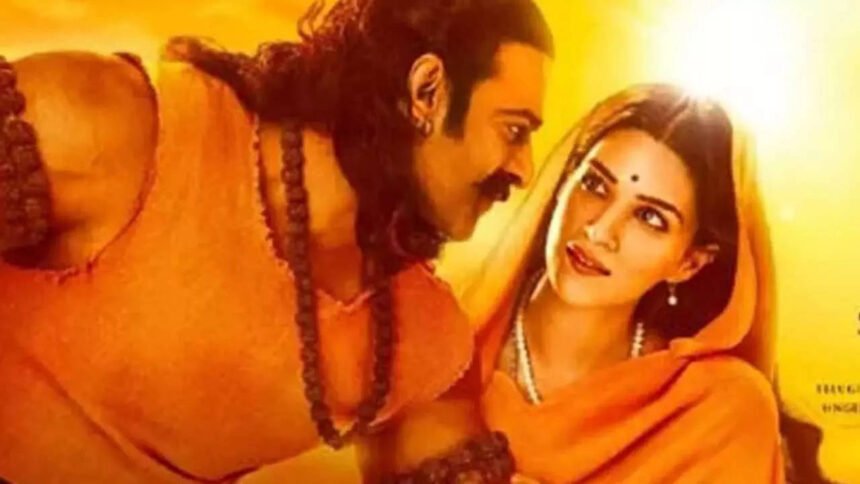
The highly anticipated film “Adipurush,” which presents a modern retelling of the epic Ramayana, premiered on Friday, eliciting strong emotions among audiences. The movie, directed by Om Raut and featuring Prabhas as Raghav, Kriti Sanon as Janaki, and Saif Ali Khan as Lankesh, generated significant buzz and drew large crowds to theaters, despite receiving mixed reviews from critics.
One notable incident occurred in Hyderabad, where a man reportedly faced physical assault for expressing criticism of the film. This incident highlights the intense emotions surrounding “Adipurush” and the polarizing effect it has had on some individuals. Such reactions underscore the significance and cultural impact of retelling religious epics in contemporary cinematic form.
In various theaters across the country, moviegoers demonstrated their devotion by reserving a seat for Lord Hanuman, a prominent character in the Ramayana. These symbolic gestures reflect the deep-rooted religious sentiments associated with the epic and the reverence it commands. Videos and photographs circulating on social media captured the moments of prayer and contemplation, capturing the attention of users and further amplifying the film’s reach.
Despite receiving lukewarm reviews from critics, “Adipurush” is expected to achieve a remarkable opening at the box office. The film’s popularity can be attributed to the timeless appeal of the Ramayana and the star-studded cast, featuring popular actors like Prabhas, Kriti Sanon, and Saif Ali Khan. Such factors have undoubtedly contributed to the high levels of anticipation and curiosity surrounding the film.
“Adipurush” represents another instance of a beloved mythological tale being reimagined for the silver screen, a trend that has gained momentum in recent years. This adaptation seeks to bring the age-old story to a contemporary audience, employing modern filmmaking techniques and storytelling methods. However, such reinterpretations often invite controversy and debates regarding the portrayal of revered characters and their adherence to traditional depictions.
The controversy surrounding “Adipurush” underscores the delicate balance that filmmakers must strike when presenting religious narratives to a diverse and deeply invested audience. While some embrace the fresh interpretation and the artistic license it offers, others may question the creative decisions made and feel that the sanctity of the source material is compromised. This tension often leads to passionate discussions, with supporters and critics engaging in spirited debates both online and offline.
The overwhelming response to the film’s opening indicates the enduring popularity and significance of the Ramayana in Indian culture. Despite being an ancient epic, the story of Lord Rama, his wife Sita, and the battle against the demon king Ravana continues to captivate and resonate with people across generations. Each retelling of the Ramayana brings a fresh perspective, breathing new life into the characters and their timeless struggles.
As “Adipurush” continues its theatrical run, it is likely to leave a lasting impact on Indian cinema and spark conversations about the intersection of mythology, culture, and art. Whether it manages to bridge the gap between tradition and innovation, while maintaining the core essence of the Ramayana, remains to be seen. However, it is undeniable that the film has struck a chord with audiences, evoking both devotion and controversy, and leaving an indelible mark on the collective consciousness of its viewers.