





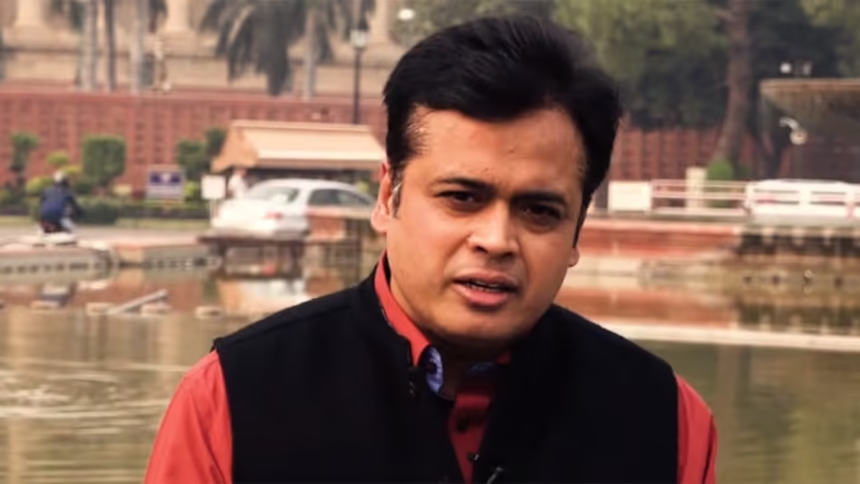
FIR filed against journalist Abhisar Sharma in Guwahati after alleged anti-government video surfaces online. The case sparks debate over press freedom and accountability.
Breaking: FIR Filed Against Journalist Abhisar Sharma in Guwahati Over Alleged Anti-Government Video
In a dramatic turn of events, an FIR filed against journalist Abhisar Sharma in Guwahati has stirred widespread debate on media freedom, accountability, and the growing tension between press and political establishments. The case revolves around an alleged anti-government video uploaded online, leading to legal action that has divided public opinion sharply.
The filing of the FIR in Guwahati has reignited discussions around the delicate balance between freedom of expression and responsibility in journalism, especially in a politically sensitive environment.
FIR Filed Against Journalist Abhisar Sharma in Guwahati: The Core of the Case
According to reports, the FIR filed against journalist Abhisar Sharma in Guwahati was based on allegations that his video contained remarks deemed “anti-government” and potentially capable of inciting unrest.
Key points of the FIR include:
- Accusations of spreading misinformation.
- Allegations of defamation against the government.
- Concerns over the video’s possible impact on public order.
While the details of the FIR are still emerging, legal experts suggest that the charges fall under sections relating to defamation, public nuisance, and promoting disharmony.
Journalist Abhisar Sharma’s Work and Background
Before the FIR filed against journalist Abhisar Sharma in Guwahati, he was widely recognized as a veteran media professional with years of experience in television and digital journalism. Known for his outspoken style, Sharma often takes critical stances on political developments, which has earned him both praise and criticism.
This incident is not the first time Sharma has found himself in controversy, but it certainly stands out as a major legal challenge.
FIR Filed Against Journalist Abhisar Sharma in Guwahati – A Blow to Press Freedom?
Critics of the move argue that the FIR filed against journalist Abhisar Sharma in Guwahati represents a troubling pattern of suppressing dissenting voices in the media.
- Supporters of press freedom believe journalists must be able to critique governments without fear of retaliation.
- Civil rights activists have warned that such actions may discourage investigative reporting.
- Media organizations across the country are closely monitoring the developments.
This case raises the question: Where should the line be drawn between critical journalism and alleged misinformation?
Public Reactions After FIR Filed Against Journalist Abhisar Sharma in Guwahati
Public response to the FIR has been polarized:
- Supporters of Sharma: They claim the case is an attempt to silence him and intimidate other journalists.
- Critics of Sharma: They argue that journalism must be responsible and not cross into defamation or incitement.
- Neutral observers: Many call for a fair legal process, free from political pressure.
On social media, hashtags related to “#AbhisarSharma” and “#PressFreedom” have been trending, reflecting the emotional weight of the issue.
Legal Perspective on FIR Filed Against Journalist Abhisar Sharma in Guwahati
Lawyers suggest that the case against Sharma could take months, or even years, to resolve. Legal questions include:
- Did the video contain false information that could disrupt public order?
- Was the content defamatory under Indian law?
- Does the FIR violate constitutional guarantees of free speech?
If proven, Sharma may face serious legal consequences, but if dismissed, the case could become a landmark example of defending media freedom in India.
FIR Filed Against Journalist Abhisar Sharma in Guwahati – Political Overtones
The case has undeniable political undertones, with opposition parties criticizing the move as an authoritarian clampdown on media. On the other hand, ruling party representatives insist the law applies equally to all citizens, including journalists.
This tug-of-war reflects broader concerns about the relationship between media and political power in India.
FIR Filed Against Journalist Abhisar Sharma in Guwahati – International Spotlight
International media watchdogs have also started to take note of the FIR, linking it to global discussions on press freedom, censorship, and democratic values.
If the case gains more attention, it could potentially draw international criticism towards India’s handling of media rights.
What Lies Ahead for Journalist Abhisar Sharma
The road ahead is uncertain. Sharma is expected to seek legal remedies, including anticipatory bail, while his legal team prepares to challenge the FIR.
The outcome of the case will not just impact Sharma personally but also set an important precedent for how far governments can go in regulating media content.
FIR Filed Against Journalist Abhisar Sharma in Guwahati – The Bigger Picture
Beyond Sharma’s case, this FIR highlights:
- The growing tension between media and political institutions.
- The role of digital journalism in amplifying dissent.
- The urgent need for dialogue between the press and government to avoid confrontational standoffs.
The debate ultimately circles back to a fundamental question: Can democracy thrive without a fearless and free press?