

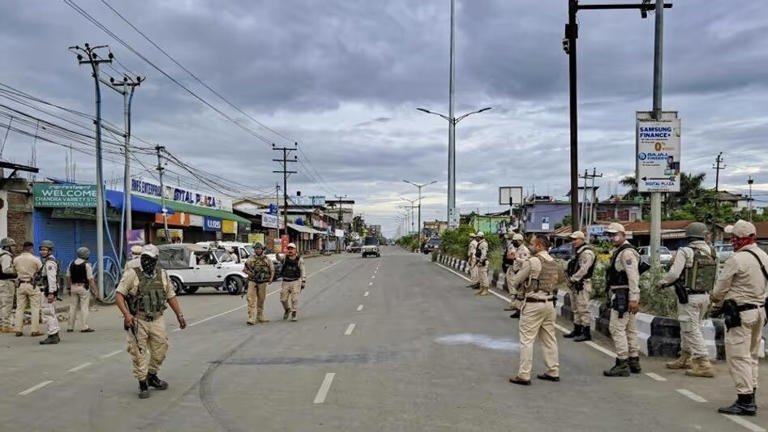
President’s Rule lifted in Manipur nearly a year after it was imposed, marking a significant political development in the northeastern state. The decision signals a return to elected governance after a prolonged period of central administration, which followed intense unrest and breakdown of law and order. With the revocation of President’s Rule, the state now enters a new phase aimed at restoring political stability and administrative normalcy.
Manipur had been under President’s Rule since last year, when escalating violence and political uncertainty led to the suspension of the elected government. During this period, the Centre directly administered the state, citing constitutional necessity. The lifting of President’s Rule reflects the Centre’s assessment that conditions have improved sufficiently to allow democratic governance to resume.
Political observers view the move as a crucial test for Manipur’s fragile peace process. While the restoration of an elected government brings hope, it also places responsibility on political leadership to ensure reconciliation, stability, and effective governance.
Read More: Football Talent in Manipur: Hill Districts Become New Hotspot
President’s Rule lifted in Manipur after prolonged central control
President’s Rule lifted in Manipur comes after months of central oversight during which administrative decisions were taken by the Governor under the direction of the Union government. Authorities had imposed President’s Rule following prolonged ethnic violence, administrative paralysis, and security concerns that disrupted normal governance.
During central rule, the focus remained on restoring law and order, ensuring delivery of essential services, and stabilising the security situation. Security forces increased deployment in sensitive areas, while administrative machinery worked to maintain basic governance.
Officials said the decision to lift President’s Rule followed a review of ground conditions. According to them, improved security, relative calm, and administrative preparedness paved the way for restoring the elected system.
Background to the imposition of President’s Rule
The imposition of President’s Rule in Manipur followed a period of intense unrest that deeply affected social harmony and governance. Violence led to loss of lives, displacement of families, and damage to property. As political institutions struggled to function effectively, the Centre intervened under constitutional provisions.
At that time, authorities argued that President’s Rule was necessary to prevent further deterioration and to allow space for stabilisation efforts. The move, however, also drew political debate, with opposition parties calling for early restoration of democratic processes.
Over the months, the Centre maintained that the suspension of the elected government was temporary and contingent on improvement in conditions. The lifting of President’s Rule now reflects that assessment.
Return to elected governance raises expectations
With President’s Rule lifted in Manipur, expectations among citizens and political stakeholders have risen sharply. People hope that an elected government will address long-standing grievances, rebuild trust, and ensure inclusive governance.
Political leaders now face the challenge of healing divisions created during the unrest. Analysts say that reconciliation, dialogue, and transparent decision-making will determine whether the transition succeeds.
Moreover, governance priorities are expected to focus on rehabilitation of displaced families, rebuilding damaged infrastructure, and restoring livelihoods. Effective coordination between the state and the Centre will remain essential during this transition period.
Security and administrative challenges remain
Despite the lifting of President’s Rule, security challenges have not disappeared entirely. Authorities continue to monitor sensitive areas, and security forces remain deployed to prevent any resurgence of violence.
Officials stressed that lifting President’s Rule does not mean withdrawal of central support. Instead, it marks a shift from direct administration to cooperative federal governance. Therefore, security agencies and civil administration will continue working closely.
Experts caution that political stability must go hand in hand with ground-level peace. Without sustained confidence-building measures, governance could face renewed pressure.
Political reactions to lifting of President’s Rule
The decision to lift President’s Rule in Manipur has drawn mixed political reactions. Supporters of the move describe it as a necessary step toward restoring democratic norms. They argue that prolonged central rule cannot replace elected accountability.
Opposition leaders, however, have urged caution. They have stressed that the return to elected governance must include safeguards to prevent recurrence of unrest. Some leaders have called for continued dialogue with all communities to ensure inclusive peace.
Civil society groups have welcomed the restoration of democratic processes. At the same time, they have demanded transparency, justice, and long-term solutions to underlying issues.
Role of the Centre after restoration
Even after President’s Rule lifted in Manipur, the Centre is expected to play a key role. Financial assistance, security coordination, and political support remain crucial for stabilisation.
Officials indicated that central agencies will continue assisting the state in rehabilitation efforts and infrastructure rebuilding. The Centre also remains engaged in facilitating dialogue and reconciliation initiatives.
This cooperative approach aims to ensure that the return to elected governance strengthens rather than weakens stability.
Impact on governance and development
The lifting of President’s Rule opens the door for resumption of policy-making and legislative activity in Manipur. Development projects that slowed during central administration may now regain momentum.
Local representatives can raise constituency-specific issues more directly, improving responsiveness. Moreover, democratic accountability may strengthen service delivery and public trust.
However, analysts note that development alone cannot address deep-rooted social tensions. Governance must balance economic recovery with social healing.
Public sentiment and cautious optimism
Among residents, the lifting of President’s Rule has generated cautious optimism. Many see it as a sign that the worst phase has passed. At the same time, memories of violence remain fresh, making people wary of political instability.
Community leaders have urged restraint and cooperation. They stress that peace depends not only on political decisions but also on everyday actions and dialogue at the grassroots level.
Public confidence will depend largely on how the restored government performs in its initial months.
Long-term significance for Manipur
President’s Rule lifted in Manipur nearly a year after imposition marks a turning point in the state’s recent political history. It underscores the delicate balance between constitutional intervention and democratic restoration.
In the long term, the episode may influence how governance challenges are addressed in conflict-prone regions. The emphasis now shifts to building resilient institutions capable of handling crises without prolonged central intervention.
For Manipur, the road ahead remains complex. However, the restoration of elected governance offers an opportunity to rebuild trust, strengthen democracy, and work toward lasting peace.
As Manipur moves forward, the success of this transition will depend on inclusive politics, responsible leadership, and sustained cooperation between the state and the Centre.
Read More: BJP–TMP Tie-up Limited to Assembly Polls, No Alliance for TTAADC: Tripura CM