





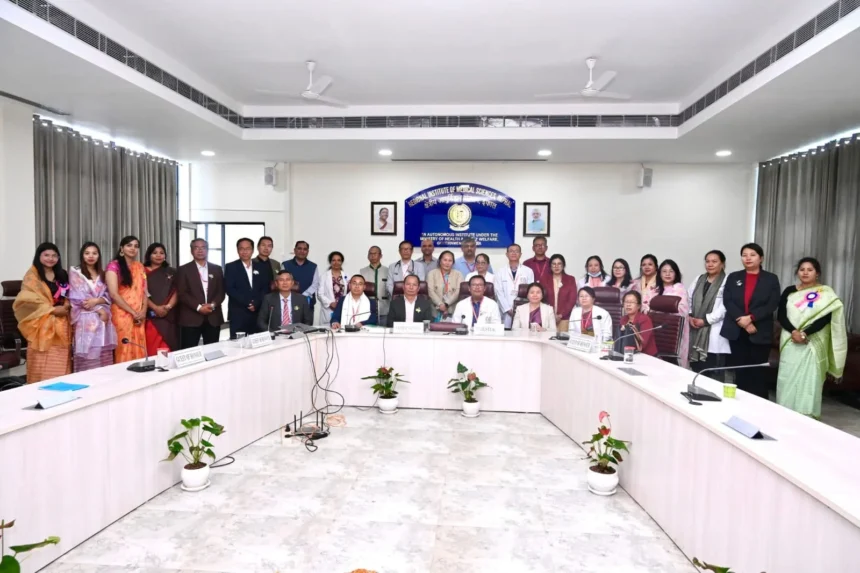
The Research Ethics Board of the Regional Institute of Medical Sciences (RIMS), Imphal, organised an Orientation and Sensitization Programme on Ethical Research Practices at Sushruta Hall on its campus. The initiative aimed to strengthen awareness and understanding of ethical standards in medical and academic research.
The programme brought together faculty members, researchers, and students to discuss responsible research conduct and regulatory compliance. Organisers designed the event to enhance institutional capacity in ethical review and promote best practices in studies involving human participants.
Read More: Delhi Woman Arrested for Racial Slurs in Malviya Nagar
Eminent Academicians Attend the Programme
Prof. S. Jibonkumar Singh, Dean of the School of Human & Environmental Sciences at Manipur University, attended the event as Chief Guest. Prof. N. Sanjib Singh, Medical Superintendent of RIMS Hospital, presided over the function.
Other distinguished guests included Prof. A.K. Joy Singh, Dean of the School of Medical Sciences, Manipur University; Dr. Shantibala Konjengbam, Professor and Head of the Department of Community Medicine, RIMS; and Prof. L. Rajesh Singh, Dean (Academics), RIMS. The presence of senior academicians highlighted the importance of ethical compliance in advancing quality research.
Speakers encouraged researchers to uphold transparency, accountability, and integrity in every stage of scientific investigation.
Expert Sessions Focus on Ethical Frameworks
During the programme, resource persons delivered detailed lectures on core aspects of ethical research. One session focused on the “Checklist for Ethical Review of Research Involving Human Participation.” The speaker explained how researchers must ensure participant safety, maintain scientific validity, and comply with national and institutional regulations.
Another session addressed “Bio-Cultural Competence and Ethical Conduct.” The lecture emphasised the need to respect socio-cultural contexts while conducting research and delivering healthcare services. Experts underlined that researchers must understand community sensitivities and local traditions to avoid ethical conflicts.
A separate presentation explored “Foundational Ethical Frameworks: Cardinal Principles.” The session highlighted autonomy, beneficence, non-maleficence, and justice as the pillars of ethical research. Speakers explained how these principles guide decision-making and protect the rights and dignity of research participants.
Mock Review Sessions Provide Practical Exposure
One of the key highlights of the programme was the conduct of mock ethical review sessions. Organisers designed these simulations to give participants hands-on experience in evaluating research proposals.
Participants reviewed sample study protocols, identified potential ethical concerns, and discussed documentation requirements. The exercise allowed young researchers to understand how ethics committees assess risk, consent procedures, and regulatory compliance before granting approval.
Faculty members noted that such practical exposure strengthens researchers’ confidence and improves the quality of submissions to institutional review boards.
Commitment to Ethical Integrity
Through this initiative, RIMS Imphal reaffirmed its commitment to maintaining high ethical standards and academic excellence. The institution has consistently promoted responsible research practices, particularly in studies involving human participants.
Participants expressed appreciation for the interactive format of the programme. Many stated that the sessions enhanced their understanding of ethical guidelines and regulatory procedures. They also emphasised the need for continued training to keep pace with evolving research norms.
By organising this orientation and sensitization programme, RIMS Imphal has taken a proactive step toward strengthening ethical governance in medical research. The event not only reinforced foundational principles but also encouraged a culture of accountability and integrity within the academic community.
Also Read: Tripura’s Indigenous Kali Khasa Rice Gains National Buyers – Borok Times