





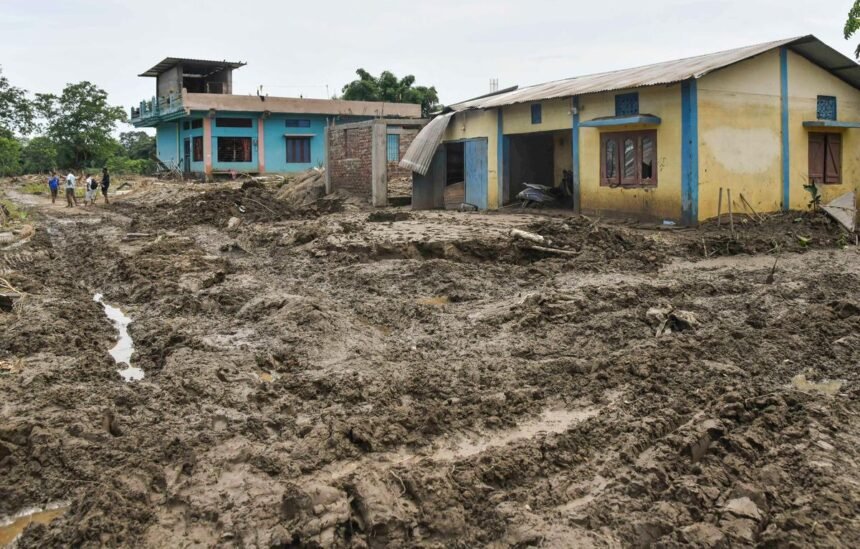
Assam Chief Minister Himanta Biswa Sarma has reportedly waived mandatory post-mortem requirements for certain flood-related deaths to reduce administrative delays for grieving families. The reported decision aims to simplify procedures during the ongoing flood emergency and allow families to complete necessary formalities more quickly.
The measure comes as Assam continues to manage widespread flooding, displacement, agricultural losses, and emergency relief operations. Moreover, reducing administrative requirements could help families access government assistance without facing prolonged procedural delays.
The reported waiver represents an effort to make disaster-response procedures more sensitive to the circumstances of affected families. However, the available information does not specify the exact categories of deaths covered by the waiver or the alternative verification process authorities will follow.
Assam Reviews Flood Mapping After Worst-Hit Districts
Post-Mortem Requirements Eased
The Assam government has reportedly waived mandatory post-mortem requirements for flood victims under the direction of Chief Minister Himanta Biswa Sarma.
Post-mortem procedures can form part of standard processes for establishing the circumstances surrounding a death. However, disaster situations can create difficult administrative conditions, particularly when authorities must process multiple cases while families face displacement and loss.
The reported decision seeks to simplify those procedures in eligible flood-related cases.
Families Could Face Fewer Delays
Bereaved families may need government documentation to access financial assistance and complete other administrative formalities.
Reducing procedural requirements could help authorities process cases more quickly. Furthermore, faster documentation may allow eligible families to receive government support without waiting through lengthy administrative processes.
The approach therefore focuses on reducing the burden during an emergency.
However, the available information does not provide a specific estimate of how much processing time the waiver could save.
Flood Emergency Increases Administrative Pressure
Assam continues to face significant disruption from flooding.
Large numbers of residents have reportedly experienced displacement, property damage, and agricultural losses. Additionally, district administrations must simultaneously manage relief camps, rescue operations, healthcare needs, and damage assessments.
These conditions can place substantial pressure on local administrative systems.
The reported waiver forms part of an effort to simplify one aspect of the emergency response.
Government Assistance Remains Important
Families affected by flood-related deaths may require immediate financial and administrative support.
The government has reportedly also moved toward faster ex-gratia payments through direct bank transfers. Moreover, simplifying documentation could complement efforts to accelerate financial assistance for eligible next of kin.
Such measures can help families manage immediate expenses during a difficult period.
However, the available information does not specify how many families will benefit from the reported waiver.
Verification Still Matters
Simplifying procedures does not remove the need for accurate identification.
Authorities need reliable information to establish the identity of victims and their relationship with eligible beneficiaries. Furthermore, officials must maintain accurate records to ensure that financial assistance reaches the correct families.
A streamlined system therefore still requires appropriate verification.
However, the precise verification mechanism under the reported policy has not been provided.
District Officials May Handle Cases
Disaster-related administrative processes often involve district-level authorities.
Officials may coordinate death records, beneficiary information, relief assistance, and other documentation. Additionally, local administrations can communicate directly with affected families and identify cases requiring urgent attention.
This coordination can help implement emergency policies more efficiently.
However, the available information does not identify the specific district-level procedures that will apply.
Decision Comes During Widespread Flooding
The reported policy comes as Assam manages severe flooding across several districts.
Rising rivers, submerged farmland, damaged homes, and large-scale displacement have increased the demands on emergency authorities. Moreover, administrative systems must continue functioning even when transportation and communication networks face disruption.
Simplifying procedures can therefore help reduce pressure on affected families and officials.
However, the overall scale of the administrative impact remains unclear.
Support for Grieving Families
Administrative procedures can become particularly difficult for families dealing with sudden loss.
Government efforts to reduce unnecessary delays can help families focus on immediate responsibilities while completing essential formalities. Furthermore, faster processing can improve access to compensation and other eligible assistance.
The reported waiver reflects this humanitarian consideration.
However, authorities have not provided details about additional support services available to bereaved families.
Disaster Policies May Need Flexibility
Large-scale emergencies can require authorities to adapt normal administrative procedures.
Flood conditions can make transportation, documentation, and communication more difficult than under ordinary circumstances. Additionally, emergency measures can help officials prioritise urgent cases while maintaining essential records.
Flexible administration can therefore support faster disaster response.
However, emergency exemptions must still operate within the applicable legal and administrative framework.
Financial Relief Could Move Faster
The reported post-mortem waiver may complement the government’s broader effort to speed up compensation.
Direct bank transfers can reduce the need for beneficiaries to navigate multiple administrative channels. Moreover, faster verification and documentation can help authorities process eligible compensation cases more efficiently.
The combination could reduce delays for affected families.
However, the available information does not confirm whether the two measures operate under a single integrated procedure.
Transparency Remains Necessary
Emergency measures require clear communication.
Authorities can explain which cases qualify for the waiver and what documents families must provide instead. Furthermore, transparent procedures can help prevent confusion among beneficiaries and officials.
Clear guidance can make implementation more consistent across districts.
However, the specific public instructions associated with the reported waiver have not been provided.
What Happens Next?
District administrations are expected to implement the reported procedural change for eligible flood-related cases.
Officials may issue additional guidance covering verification, documentation, and access to compensation. Moreover, authorities could update families about the revised process through district-level channels.
The effectiveness of the measure will depend on consistent implementation.
However, the available information does not provide a timeline for further administrative instructions.
Conclusion
The reported post-mortem waiver in Assam seeks to reduce bureaucratic delays for families dealing with flood-related deaths. Chief Minister Himanta Biswa Sarma has reportedly directed the easing of mandatory post-mortem requirements in eligible cases as part of the wider emergency response.
Moreover, simplifying documentation could complement faster ex-gratia payments and reduce administrative pressure on grieving families. At the same time, authorities must maintain appropriate identification and verification procedures to ensure accurate records and legitimate assistance.
Overall, the post-mortem waiver reflects an attempt to make disaster-related administrative procedures faster and more responsive during Assam’s continuing flood emergency.
FAQs
1. What has Assam reportedly changed?
The state has reportedly waived mandatory post-mortem requirements for certain flood-related deaths.
2. Why was the reported waiver introduced?
The reported objective is to reduce administrative delays for families dealing with flood-related deaths.
3. Who announced the reported measure?
Chief Minister Himanta Biswa Sarma reportedly directed the change.
4. Will authorities still verify victims and beneficiaries?
Authorities will still need accurate records and appropriate verification to process official documentation and financial assistance.
5. Does the waiver apply to every death?
The available information does not specify the exact categories of cases covered. Authorities would need to clarify the eligibility conditions.