





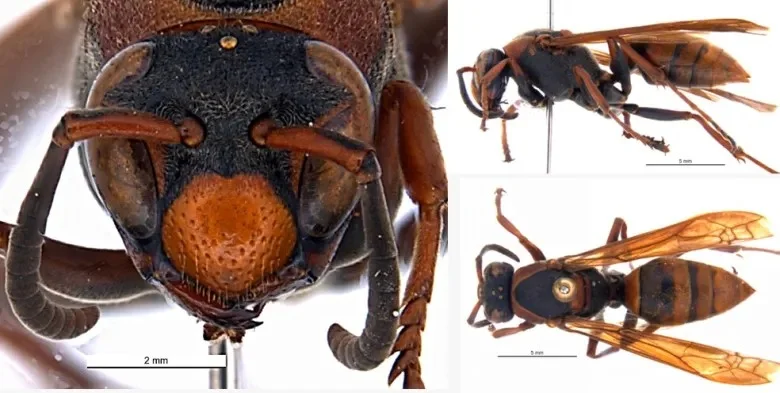
Researchers have recorded the potter wasp species Antepipona bhutanensis in India for the first time during a biodiversity survey in Tawang district. Previously known only from Bhutan, the discovery highlights ecological links across the eastern Himalayas. The finding forms part of a larger study that documented 19 species of vespid wasps in the region.
Scientists conducted surveys across multiple locations between 2019 and 2022. This discovery strengthens ongoing efforts to map insect diversity in Northeast India.
Read More: Manipur Plans Kharungpat Bird Sanctuary
Key Facts
- Species Discovered: Antepipona bhutanensis
- Location: Tawang district
- First Record in India: Yes
- Previous Range: Bhutan
- Total Species Documented: 19 vespid wasps
- Survey Period: 2019, 2021, 2022 (2020 skipped due to COVID-19)
- Habitats Studied: Forests, meadows, riverbanks, human-modified areas
First Record of Rare Wasp in India
Scientists have confirmed the presence of Antepipona bhutanensis in India for the first time. They identified the species during a biodiversity survey in Tawang district.
Earlier, researchers had recorded this potter wasp only in Bhutan. Therefore, its discovery in India expands its known geographical range. It also highlights faunal connections between neighboring Himalayan regions.
Extensive Biodiversity Survey Conducted
Researchers carried out detailed surveys across Jang, Lumla, and Panchen subdivisions in Tawang. They conducted fieldwork in 2019, 2021, and 2022, while they skipped 2020 due to COVID-19 restrictions.
Moreover, the team used multiple scientific methods such as sweep netting, pan trapping, and direct observation. These techniques helped them document insect species across varied environments.
As a result, the study identified 19 species of vespid wasps in the district.
Diverse Habitats Support Rich Insect Life
The research covered a wide range of habitats, including subtropical forests, alpine meadows, and riverbanks. Additionally, scientists examined human-modified landscapes to understand species adaptation.
This diversity of habitats supports a rich variety of insect life. Consequently, Tawang district has emerged as an important area for biodiversity research in the eastern Himalayas.
The discovery of new species records further strengthens its ecological importance.
About the Potter Wasp Species
Antepipona bhutanensis is a solitary wasp species. It typically inhabits warmer and lower-altitude regions compared to other high-altitude insects.
Furthermore, potter wasps are known for building mud nests and playing a role in controlling pest populations. Therefore, their presence contributes to maintaining ecological balance.
This new record adds valuable data to the scientific understanding of insect distribution.
Significance of the Discovery
The identification of this species in India contributes to ongoing biodiversity documentation efforts. It also provides insights into species migration and distribution patterns in the Himalayan region.
Additionally, such findings help researchers understand environmental changes and conservation needs. Therefore, the study supports broader ecological research and policy planning.
In conclusion, the discovery reinforces the importance of continued scientific surveys in remote regions.
Q&A Section
What was discovered in Arunachal Pradesh?
Researchers recorded the potter wasp Antepipona bhutanensis in India for the first time.
Where was the species found?
It was found in Tawang district.
Why is the discovery important?
It expands the known range of the species and highlights Himalayan biodiversity links.
How many wasp species were documented?
Researchers documented 19 species of vespid wasps.
What methods did researchers use?
They used sweep netting, pan trapping, and direct observation.
Location Context
Arunachal Pradesh, part of Northeast India, lies within the biodiversity-rich eastern Himalayas. Therefore, discoveries from regions like Tawang play a crucial role in understanding and conserving unique ecosystems.