




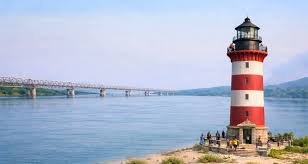
The Brahmaputra River Lighthouse Project marks a groundbreaking initiative as India introduces inland river lighthouses to improve navigation and safety. This innovative system aims to support river transport, enhance visibility, and strengthen infrastructure along one of the country’s most vital waterways.
Goalpara Industrial Damage Storm: Steel Factory Suffers Major Losses
India Introduces a First-of-Its-Kind Initiative
India has taken a major step toward modernizing inland waterways with the launch of a unique navigation system. The government has initiated the installation of lighthouses along the Brahmaputra River. As a result, the Brahmaputra River Lighthouse Project stands out as a pioneering effort in river infrastructure development.
This initiative reflects a shift toward safer and more efficient water transport. Moreover, it highlights the importance of leveraging technology to improve navigation in challenging river conditions.
Purpose of Inland River Lighthouses
The primary goal of the project is to enhance navigation safety for vessels operating on the Brahmaputra. River conditions often change due to currents, sedimentation, and weather. Therefore, clear navigation aids are essential for preventing accidents.
Lighthouses will provide visual guidance to boat operators, especially during low visibility conditions. Additionally, they will help vessels maintain safe routes and avoid hazardous areas.
Importance for River Transport
The Brahmaputra River plays a crucial role in regional connectivity and trade. By improving navigation, the project can boost transportation efficiency. Consequently, goods and passengers can move more smoothly across the region.
The Brahmaputra River Lighthouse Project also supports the development of inland waterways as a cost-effective transport option. This approach can reduce dependence on road and rail networks.
Technological and Infrastructure Advancements
The project incorporates modern technology to ensure effective operation. Engineers are designing lighthouses that can withstand varying river conditions. Furthermore, advanced lighting systems will improve visibility during night and adverse weather.
Authorities are also focusing on strategic placement of these structures. Proper positioning ensures maximum effectiveness and coverage along the river.
Benefits for Local Communities
The initiative offers several benefits for communities living along the Brahmaputra. Improved navigation can increase trade opportunities and economic activity. As a result, local businesses and transport operators can benefit from enhanced connectivity.
Additionally, safer waterways reduce risks for those who depend on river transport for daily activities. This improvement contributes to overall community well-being.
Environmental and Operational Considerations
While implementing the project, authorities must consider environmental factors. The Brahmaputra River has a dynamic ecosystem that requires careful planning. Therefore, construction and operation must minimize ecological impact.
Operational efficiency also depends on regular maintenance and monitoring. By addressing these aspects, the Brahmaputra River Lighthouse Project can achieve long-term success.
Future of Inland Waterway Development
This initiative sets a precedent for similar projects across India. Successful implementation can encourage expansion to other rivers. Consequently, inland waterways can play a larger role in national transportation.
The project also aligns with broader efforts to modernize infrastructure and promote sustainable transport solutions. By investing in such innovations, India can strengthen its logistics network.
FAQs
What is the Brahmaputra River Lighthouse Project?
It is an initiative to install inland river lighthouses to improve navigation and safety on the Brahmaputra River.
Why are lighthouses needed on rivers?
They provide visual guidance, especially in low visibility, and help prevent accidents.
How will this project benefit transport?
It will improve efficiency, reduce risks, and support smoother movement of goods and passengers.
Who will benefit from this initiative?
Boat operators, local communities, and businesses along the river will benefit.
Can this model be used elsewhere?
Yes, the project can inspire similar initiatives on other rivers across India.