
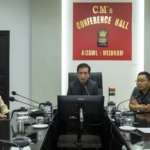




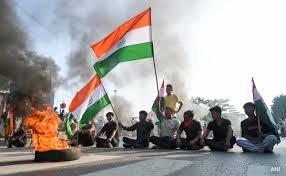
Tripura ministerial dispute relief has surfaced after a cabinet minister publicly contradicted the Chief Minister’s stance on distributing relief funds to post-poll violence victims, raising questions about coordination within the government.
A fresh controversy has emerged in Tripura as a cabinet minister reportedly contradicted the Chief Minister’s position on the distribution of relief funds for post-poll violence victims. This unexpected disagreement has drawn attention because it reflects internal differences within the government. Moreover, such public contradictions often raise concerns about policy clarity and administrative coordination.
Disagreement Between Minister and CM
The dispute became visible when the cabinet minister expressed a stance that differed from the Chief Minister’s earlier statement. This contradiction has sparked discussions about consistency in government communication. Furthermore, conflicting messages can create confusion among both officials and the public.
At the same time, the situation highlights the importance of unified leadership. When top leaders present differing views, it can affect confidence in governance. Therefore, resolving such disagreements quickly becomes essential.
Relief Funds for Post-Poll Violence Victims
The issue revolves around the allocation of relief funds for victims affected by post-poll violence. These funds aim to support individuals and families who have faced losses. Consequently, the distribution process must remain transparent and efficient.
Additionally, timely financial assistance can help victims recover and rebuild their lives. Therefore, any delay or confusion in fund allocation directly impacts those in need.
Political Implications of the Dispute
The disagreement has added a new dimension to the political landscape in Tripura. Opposition parties may use this situation to question the government’s unity and decision-making process. Meanwhile, the ruling administration must address the issue carefully to maintain credibility.
Moreover, internal disputes often attract public attention and media scrutiny. As a result, the government faces pressure to present a clear and consistent position.
Importance of Policy Clarity
Clear communication plays a crucial role in governance. When leaders deliver consistent messages, they build trust among citizens. However, contradictions can weaken that trust and create uncertainty.
Therefore, authorities must ensure that policies and decisions are communicated effectively. This approach helps avoid misunderstandings and ensures smooth implementation.
Administrative Challenges in Fund Distribution
Distributing relief funds involves multiple administrative steps. Officials must verify claims, allocate resources, and ensure fair distribution. Consequently, coordination between departments becomes essential.
In addition, clear guidelines help prevent disputes and ensure accountability. Without proper coordination, even well-intended policies can face challenges.
Public Reaction and Concerns
The public has shown concern over the disagreement, especially given the sensitive nature of relief measures. Citizens expect leaders to prioritize the welfare of affected individuals.
Moreover, social discussions have focused on the need for unity in addressing humanitarian issues. Therefore, the situation has gained attention beyond political circles.
Major Tipra Motha Reconciliation Update Signals Party Unity
Need for Internal Coordination
Strong internal coordination remains key to effective governance. Leaders must align their views and communicate decisions clearly. This approach ensures that policies reach people without confusion.
Furthermore, resolving differences internally can prevent public disputes. Therefore, maintaining coordination becomes a priority for the administration.
Possible Outcomes of the Dispute
The government may address the disagreement through clarification or internal discussions. Once leaders align their positions, the administration can move forward with implementing relief measures.
Additionally, the situation may lead to improved communication strategies within the government. Consequently, future decisions may reflect greater consistency.
Broader Impact on Governance
This development highlights the challenges of managing complex administrative issues. It also shows how internal differences can influence public perception.
However, effective resolution can strengthen governance by demonstrating accountability and responsiveness. Therefore, the outcome of this dispute will play an important role in shaping public trust.
FAQs
1. What is the Tripura ministerial dispute relief about?
It refers to a disagreement between a cabinet minister and the Chief Minister over relief fund distribution.
2. Why is the dispute significant?
It raises concerns about coordination and consistency within the government.
3. Who are affected by the issue?
Victims of post-poll violence who depend on relief funds for support.
4. What challenges exist in fund distribution?
Verification, allocation, and coordination among departments can create complexities.
5. How can the issue be resolved?
Clear communication and internal alignment can help resolve the disagreement.