

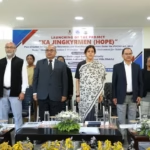
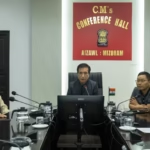


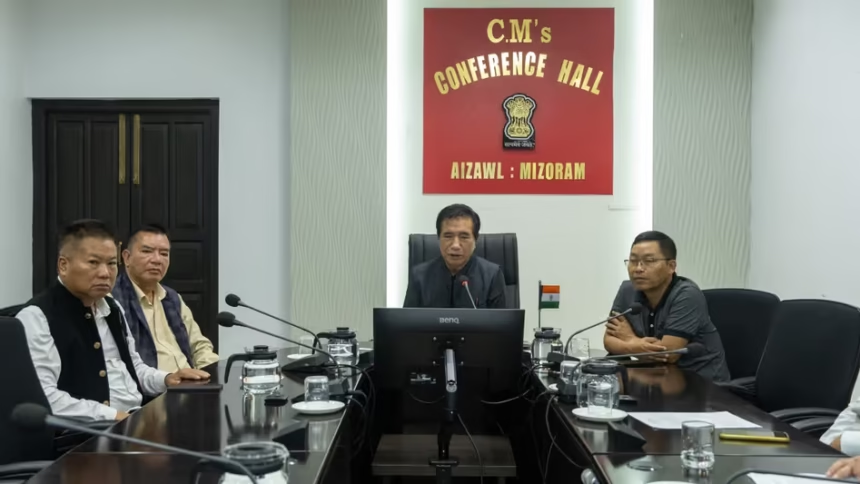
Aizawl, Mizoram, October 15: Mizoram Chief Minister Lalduhoma has launched four digital financial management systems to improve transparency, accountability and efficiency in the state’s public finance administration. The initiatives include the Mizoram Integrated Works Accounts System (MIWAS), e-Sanction, e-Budget and a 100 per cent Direct Benefit Transfer (DBT) system. Launched at the Chief Minister’s Office, these platforms aim to simplify government accounting, speed up budget preparation and strengthen expenditure monitoring.
The DBT system will also ensure that payments under selected government schemes reach beneficiaries’ bank accounts directly. The initiatives form part of Mizoram’s broader efforts to modernise financial administration and improve public service delivery.
Read More: Manipur Home Minister Calls for Dialogue and Peace
Key Facts About Mizoram’s Digital Finance Initiatives
- Location: Aizawl, Mizoram
- Chief Minister: Lalduhoma
- Launch date: October 15, 2026
- Number of initiatives: Four digital financial management systems
- Systems launched: MIWAS, e-Sanction, e-Budget and 100% DBT
- Funding reference: ₹350 crore received under Part IX of the SASCI scheme in the previous year
- Funding target: Around ₹650 crore for 2026–27
- Key objective: Improve transparency, accountability and efficiency in public spending
Four Digital Systems to Modernise Financial Administration
Chief Minister Lalduhoma launched the four initiatives to strengthen the state’s financial management infrastructure and improve oversight of public expenditure.
The platforms will digitise key administrative processes, reduce paperwork and help departments manage government funds more efficiently.
1. MIWAS to Improve Works Accounting
The Mizoram Integrated Works Accounts System (MIWAS) will streamline works-related accounting across six departments.
These departments include Public Works, Public Health Engineering, Power and Electricity, Irrigation and Water Resources, Environment, Forest and Climate Change, and Land Resources, Soil and Water Conservation.
The system aims to improve the reconciliation of expenditure records with the Accountant General. It will also support the proper submission of expenditure vouchers through the Treasury.
By improving accounting procedures, MIWAS is expected to strengthen financial monitoring and reduce discrepancies in government records.
2. e-Budget to Reduce Paperwork and Delays
The e-Budget module will allow government departments to prepare and submit budget proposals online through the Integrated Financial Management Information System (IFMIS).
The digital process is expected to reduce paperwork, minimise calculation errors and prevent delays during budget preparation.
It will also help departments handle budget-related information more efficiently and improve coordination with the state’s financial administration.
3. e-Sanction to Strengthen Spending Controls
The e-Sanction module will enable electronic processing of government expenditure approvals.
Under the system, proposals can move digitally from Drawing and Disbursing Officers and Heads of Departments to the relevant administrative departments and the Finance Department.
Officials said the platform is also designed to prevent expenditure beyond the available budget. This feature could strengthen financial discipline and improve oversight of public funds.
4. 100% DBT for Direct Payments
The 100 per cent Direct Benefit Transfer system will facilitate direct payments to beneficiaries’ bank accounts under selected state government schemes.
These include Thlai Thar Leina, Mizoram’s crop procurement initiative, the flagship Bana Kaih scheme and power subsidies.
Payments will be transferred after the Treasury clears the relevant bills. In addition, beneficiaries and officials will be able to track payment status through IFMIS.
The system aims to improve payment transparency and make it easier to monitor the delivery of government benefits.
Mizoram Targets Higher Capital Investment Assistance
During the launch, Lalduhoma highlighted the importance of digital financial management in ensuring transparency and the efficient use of public money.
He said Mizoram received ₹350 crore under Part IX of the Special Assistance for Capital Investment (SASCI) scheme in the previous year. The state is preparing to secure approximately ₹650 crore for 2026–27.
The chief minister also acknowledged the contributions of the Finance and Information and Communication Technology (ICT) departments, Interlace India Pvt Ltd and the Centre for Development of Advanced Computing (C-DAC) in strengthening Mizoram’s digital financial infrastructure.
Why the Digital Initiatives Matter for Mizoram
Mizoram’s mountainous terrain and dispersed settlements make efficient public administration and timely delivery of government services particularly important.
Digital financial systems can help departments coordinate expenditure, improve the tracking of public funds and make government payments more transparent.
The four initiatives are intended to support more efficient financial governance while strengthening accountability in the use of public resources across the state.
Questions and Answers
What digital systems did Mizoram launch?
The state launched MIWAS, e-Sanction, e-Budget and a 100 per cent DBT system.
Who launched the initiatives?
Mizoram Chief Minister Lalduhoma launched them on October 15, 2026.
What is the purpose of the e-Budget system?
It enables departments to submit budget proposals online, reducing paperwork, calculation errors and delays.
Which schemes will benefit from direct bank transfers?
The DBT system covers payments under schemes including Thlai Thar Leina, Bana Kaih and power subsidies.
How much funding is Mizoram targeting for 2026–27?
According to the chief minister, the state is preparing to secure around ₹650 crore under the SASCI scheme.
The launch marks another step in Mizoram’s efforts to digitise financial administration, improve expenditure monitoring and strengthen transparency in government operations.
Also Read: Tripura Arranges 400 MW Power for Durga Puja 2026