

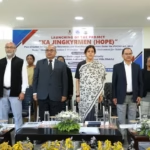
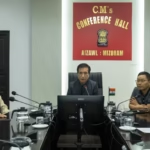

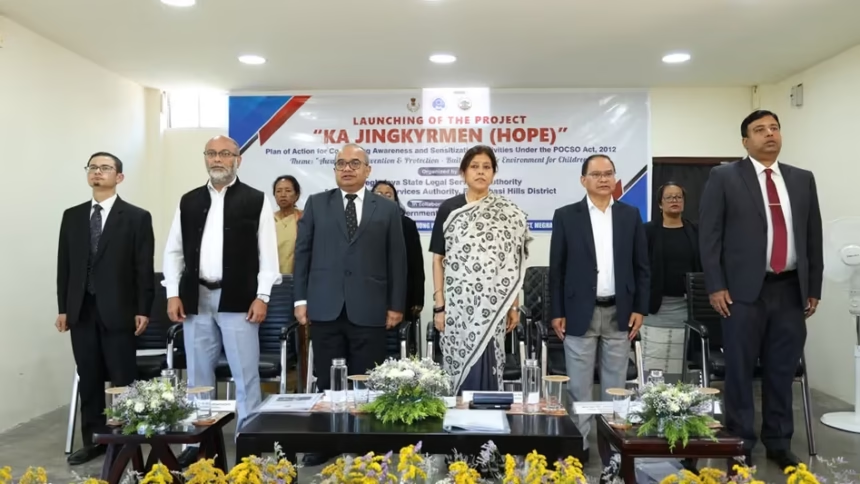
Shillong, Meghalaya: The Meghalaya State Legal Services Authority (MSLSA) and the District Legal Services Authority (DLSA), East Khasi Hills, have launched Ka Jingkyrmen, meaning “Hope,” to strengthen child protection. The initiative follows reports of 55 POCSO cases in Mawlai and Mawryngkneng blocks. It aims to prevent offences against children and improve awareness of their legal rights.
Moreover, the programme will promote personal safety, digital awareness and community participation. The Meghalaya government will work with legal authorities and local stakeholders to improve child safety and access to support services.
Read More: Mizoram CM Launches Four Digital Finance Systems
Key Facts About Ka Jingkyrmen
- Location: East Khasi Hills, Meghalaya
- Project: Ka Jingkyrmen (Hope)
- Reported cases: 29 in Mawlai Block and 26 in Mawryngkneng Block
- Lead organisations: MSLSA and DLSA, East Khasi Hills
- Key officials: Chief Justice Revati Mohite Dere and Justice H. S. Thangkhiew
- Legal framework: Protection of Children from Sexual Offences (POCSO) Act, 2012
- Main objective: Prevent child abuse and improve legal awareness
- Helplines: Legal Services – 15100; Cyber Crime – 1930; Police Emergency – 112
Meghalaya Launches New Child Protection Initiative
The Ka Jingkyrmen initiative aims to protect children through legal education and community involvement. It will also help vulnerable children understand their rights and access support.
Chief Justice of the High Court of Meghalaya Revati Mohite Dere, who serves as MSLSA’s Patron-in-Chief, explained why the authorities developed the programme.
She said judicial proceedings had highlighted cases involving adolescents in romantic relationships. Therefore, she stressed the need to educate young people about the legal consequences of sexual activity involving minors.
Under the POCSO Act, the law does not recognise consent from anyone below 18 as a defence to an offence covered by the Act.
The Chief Justice also warned that such cases can lead to serious consequences, including pregnancy, school dropouts, arrest and prosecution. As a result, she urged young people to prioritise education and pursue their ambitions.
55 POCSO Cases Highlight the Need for Awareness
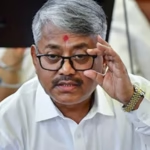
Commissioner and Secretary of the Social Welfare Department Pravin Bakshi highlighted the need for stronger preventive measures.
He cited 29 reported POCSO cases in Mawlai Block and 26 in Mawryngkneng Block. Together, these figures total 55 reported cases.
Consequently, the initiative will promote legal awareness and community sensitisation. It will also encourage government departments and local organisations to coordinate their child protection efforts.
Bakshi outlined several existing support measures. For example, Mission Vatsalya assists children facing difficult circumstances. Child Care Institutions also provide shelter, protection and rehabilitation to children who need help.
Furthermore, authorities have integrated the Child Helpline with the Emergency Response Support System (112) and the Women Helpline (181). This integration aims to improve access to assistance.
Project Focuses on Consent and Digital Safety
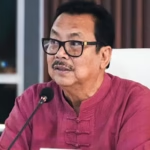
Justice H. S. Thangkhiew, a High Court judge and Executive Chairman of MSLSA, said the initiative follows the Chief Justice’s directions. He emphasised the need to reach vulnerable children and communities facing greater risks.
He also stressed the importance of using local languages during awareness programmes. In this way, children and community members can understand legal information more easily.
The initiative will cover several important topics:
- Children’s rights under the POCSO Act
- Good touch and bad touch
- Consent and personal safety
- Online risks and cybercrime
- Digital awareness and responsible internet use
- Access to legal aid and child protection services
Additionally, the programme will publicise key helpline numbers. Children and community members can use these services to seek assistance when necessary.
Government Departments and Communities Join Hands
The initiative will involve the Social Welfare, Health and Education departments. Police, district officials, teachers, students and Anganwadi workers will also participate.
In addition, para-legal volunteers and traditional village institutions will help spread awareness at the community level.
The project also aims to reduce school dropouts. To achieve this, it will connect children with guidance, education and support services.
Why Child Protection Matters in Meghalaya
Meghalaya plays an important role in Northeast India, where local communities and traditional village institutions influence everyday life. Therefore, community participation can strengthen child protection efforts.
Schools, families, government departments and legal authorities all have important roles to play. By working together, they can help children understand their rights and seek assistance when they face abuse or exploitation.
Ultimately, Ka Jingkyrmen aims to strengthen prevention, improve legal awareness and expand access to protection and rehabilitation services.
Questions and Answers
What is Ka Jingkyrmen?
It is a child protection initiative launched by MSLSA and DLSA, East Khasi Hills, in collaboration with the Meghalaya government.
Why did the authorities launch the project?
The initiative aims to prevent offences against children and improve awareness following reports of 55 POCSO cases in Mawlai and Mawryngkneng blocks.
What topics will the programme cover?
It will address children’s rights, consent, personal safety, digital risks and cybercrime.
Which helpline numbers can people contact?
People can call 15100 for legal services, 1930 for cybercrime assistance and 112 for police emergencies.
Who will participate in the initiative?
Government departments, police, teachers, students, Anganwadi workers, para-legal volunteers and traditional village institutions will support the programme.
Through Ka Jingkyrmen, Meghalaya’s legal services authorities and state government aim to build safer communities, improve awareness and help children access essential support.
Also Read: Nagaland’s New Rice Relief Scheme to Benefit 1.21 Lakh Households