

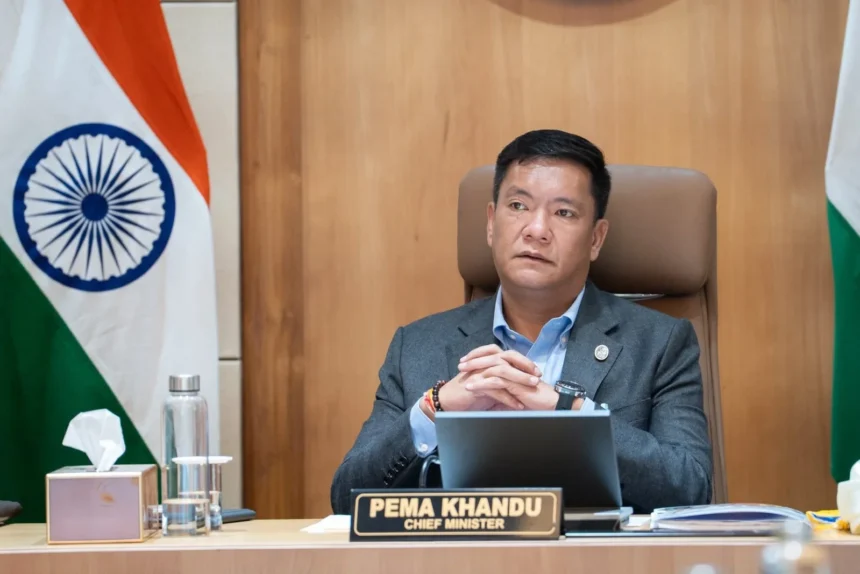
Pema Khandu stated that Arunachal Pradesh is emerging as a major hydropower hub while addressing the ICPP Growth Conference 2026 in New Delhi. He highlighted that improved connectivity and infrastructure have accelerated tourism, agriculture, and horticulture growth. Additionally, he noted that hydropower projects with nearly 19,000 MW capacity are under development, with a long-term target of 40,000 MW by 2047.
Meanwhile, governance reforms and education improvements continue to support the state’s development. Overall, he emphasized that the Northeast has transformed significantly over the past decade.
Read More: East Jaintia Hills Newborn Rescue
Key Facts
- Event: ICPP Growth Conference 2026
- Organizer: Isaac Centre for Public Policy
- Venue: Ashoka University, New Delhi
- Speaker: Pema Khandu, Chief Minister of Arunachal Pradesh
- Hydropower Capacity (Current Projects): लगभग 19,000 MW
- Hydropower Target: 40,000 MW by 2047
- Key Sectors: Tourism, agriculture, horticulture
- Policy Focus: National Education Policy 2020 implementation by 2030
Hydropower Expansion Drives Growth
Khandu emphasized that Arunachal Pradesh is steadily becoming a “powerhouse of hydroelectricity.” He explained that multiple hydropower projects are currently under development across the state. As a result, these projects aim to generate nearly 19,000 MW of electricity.
Furthermore, the state plans to scale up capacity to 40,000 MW by 2047. This ambitious goal aligns with India’s long-term development vision and energy needs.
Improved Connectivity Boosts Key Sectors
The chief minister highlighted that better road connectivity has transformed remote and border areas. Consequently, improved access has opened new opportunities for tourism and economic activity.
At the same time, agriculture and horticulture sectors have witnessed steady growth. Farmers now benefit from easier market access and improved logistics.
Cultural Diversity and Regional Transformation
Khandu pointed out that Arunachal Pradesh is home to 26 major tribes and over 100 sub-tribes. He noted that Hindi acts as a common link language across diverse communities.
Moreover, he stressed that the Northeast region has undergone a major transformation. Earlier, many viewed it through the lens of isolation and insurgency. However, sustained development efforts have changed this perception.
He credited Narendra Modi for bringing the region into the national development focus. Regular visits by Union ministers have also helped address local challenges more effectively.
Governance and Education Reforms
Khandu highlighted several governance reforms, especially in recruitment transparency. These steps aim to improve efficiency and public trust.
In addition, the state has started aligning its education system with the National Education Policy 2020. Authorities have rationalized over 600 non-viable schools to improve educational outcomes.
Although the move proved challenging, it remains essential for long-term improvement. The government targets full NEP implementation by 2030.
Focus on Sustainability and Community Participation
The chief minister reaffirmed the state’s commitment to environmental sustainability. He explained that Arunachal Pradesh follows structured strategies to balance development with conservation.
Additionally, local communities play a key role in protecting forests and biodiversity. National initiatives such as the Vibrant Villages Programme and highway expansion further strengthen connectivity.
As a result, these efforts help build resilient and self-reliant communities in border areas.
Location Context
Arunachal Pradesh holds strategic importance as India’s easternmost and northernmost state in the Northeast. Its vast natural resources, especially hydropower potential, make it crucial to India’s energy security and regional development.
Question–Answer Section
What did Pema Khandu announce?
He highlighted Arunachal Pradesh’s growing role as a hydropower hub and its development progress.
How much hydropower capacity is under development?
Projects with nearly 19,000 MW capacity are currently underway.
What is the long-term hydropower goal?
The state aims to achieve 40,000 MW capacity by 2047.
How has connectivity impacted the state?
Improved roads have boosted tourism, agriculture, and economic opportunities.
What reforms are underway in education?
The state is implementing the National Education Policy 2020 and aims for full rollout by 2030.