





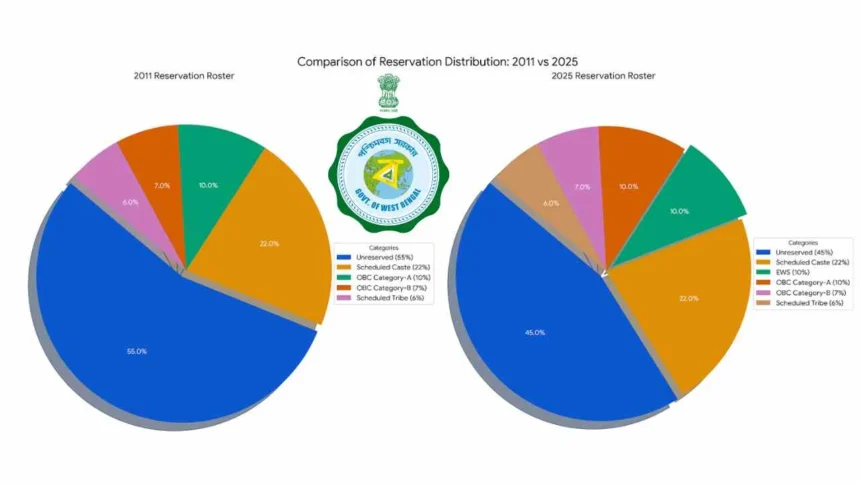
West Bengal service rules underwent significant modification after Nabanna issued an official notification revising recruitment-related provisions affecting government job seekers across the state. Meanwhile, the administrative decision immediately attracted widespread attention among competitive examination aspirants, unemployed youth groups, and recruitment observers monitoring public sector hiring policies in West Bengal. Officials stated that the revised framework aims to streamline recruitment procedures, improve eligibility clarity, and address concerns linked to earlier service regulation structures. Additionally, multiple state departments reportedly began reviewing operational guidelines following the release of the notification.
The development generated strong discussion because government employment remains highly competitive and politically significant in West Bengal. Furthermore, policy analysts noted that any revision involving service rules and recruitment frameworks directly impacts thousands of aspirants preparing for state-level examinations.
Meghalaya Begins Digital Census Field Operations
BJP Dominates Darjeeling Hills Electoral Battle
Nabanna Releases Official Recruitment Notification
The West Bengal government formally issued the revised notification through Nabanna, the state administrative headquarters. West Bengal service rules discussions therefore quickly expanded across educational, political, and employment-related circles.
Meanwhile, officials explained that the modifications involve procedural and eligibility-related changes connected to public service recruitment processes. Additionally, departments responsible for examinations and appointments reportedly started reviewing the updated framework for future implementation.
Authorities stated that the revised service rules seek to improve administrative efficiency and ensure greater procedural clarity for applicants participating in recruitment examinations. Furthermore, officials argued that regulatory modernization remains necessary as recruitment systems continue evolving across various government departments.
Earlier, aspirants and civil society groups repeatedly demanded reforms addressing recruitment delays, eligibility confusion, and procedural inconsistencies. Consequently, the latest notification attracted immediate public interest among candidates preparing for upcoming examinations.
At the same time, administrative departments began examining whether additional circulars and explanatory guidelines may be required for smooth implementation.
Job Aspirants Closely Monitor Policy Changes
Government job aspirants across West Bengal reacted quickly to the revised notification issued by Nabanna. West Bengal service rules changes therefore became a major topic among students, coaching centers, and competitive examination communities.
Meanwhile, several candidates expressed hope that the revised framework may simplify recruitment procedures and improve transparency during future hiring cycles. Additionally, educational consultants observed increasing public interest regarding the detailed implications of the amended regulations.
Many aspirants stated that recruitment-related uncertainty and delayed examinations previously created anxiety among candidates preparing for state service opportunities. Furthermore, some students urged authorities to release clearer examination calendars alongside regulatory reforms.
Employment analysts noted that public sector jobs remain highly attractive because of job stability, pension-related benefits, and social prestige. Consequently, even limited changes to service rules often trigger significant public attention and political discussion.
However, several aspirant groups also demanded faster recruitment timelines and timely publication of examination results beyond regulatory amendments alone.
Administrative Departments Begin Internal Review
State departments and recruitment agencies reportedly initiated internal assessments following the official notification. West Bengal service rules implementation therefore entered an important operational phase involving procedural coordination and legal review.
Meanwhile, officials indicated that departmental authorities may issue revised recruitment notices reflecting the updated service provisions in upcoming hiring cycles. Additionally, administrative teams reportedly started evaluating compatibility between existing recruitment procedures and the modified rules.
Legal experts observed that amendments involving public service regulations frequently require synchronized adjustments across multiple departments and commissions. Furthermore, recruitment agencies may need to revise examination manuals, eligibility documents, and administrative procedures accordingly.
Several governance analysts highlighted that procedural clarity remains essential for avoiding legal disputes and confusion during recruitment processes. Consequently, authorities are expected to prioritize consistent interpretation of the revised regulations.
At the same time, observers urged the government to communicate policy changes transparently to ensure candidates understand the revised framework correctly.
Political Debate Surrounding Employment Continues
The revised notification also triggered fresh political discussion regarding employment generation and recruitment transparency in West Bengal. West Bengal service rules developments therefore became linked with broader debates involving governance, unemployment, and administrative accountability.
Meanwhile, ruling party representatives defended the modifications and described them as part of ongoing efforts to modernize recruitment systems and improve public administration. Additionally, government supporters argued that updating service regulations remains necessary to address evolving recruitment challenges.
Opposition parties, however, questioned whether procedural changes alone would resolve long-standing concerns regarding vacancies, examination delays, and recruitment backlogs. Furthermore, several critics demanded greater transparency and accountability in future government hiring processes.
Political analysts observed that employment-related issues continue influencing public sentiment strongly, particularly among younger voters and urban aspirant communities. Consequently, recruitment reforms frequently become politically significant developments within the state.
At the same time, labor economists stressed that broader employment growth also depends heavily on private sector expansion and industrial investment beyond government jobs.
Recruitment Ecosystem May Experience Wider Impact
Experts believe the revised framework could influence the broader recruitment ecosystem across West Bengal. West Bengal service rules amendments therefore may affect examination preparation patterns, applicant participation, and administrative procedures in coming years.
Meanwhile, coaching institutes and educational organizations began assessing how the revised regulations could alter eligibility conditions and recruitment trends. Additionally, several analysts predicted increased participation in future examinations if aspirants perceive the system as more transparent and organized.
Public administration experts noted that modern recruitment frameworks often require digital integration, standardized procedures, and efficient grievance redressal mechanisms. Furthermore, improved rule clarity may help reduce procedural disputes and litigation involving recruitment processes.
Several civic organizations also recommended stronger communication strategies to ensure equal awareness among rural and economically disadvantaged applicants. Consequently, authorities may face increasing pressure to maintain accessible and inclusive recruitment systems.
At the same time, technology experts highlighted the importance of secure digital examination infrastructure and transparent result management in large-scale recruitment operations.
Public Expectations Focus on Transparency and Efficiency
The revised service notification generated strong public expectations regarding future recruitment practices in West Bengal. West Bengal service rules reforms therefore became closely associated with demands for transparency, fairness, and timely hiring.
Meanwhile, aspirants and civil society groups urged authorities to ensure that revised regulations lead to measurable improvements in examination scheduling and vacancy processing. Additionally, many candidates emphasized the importance of predictable recruitment cycles and clear communication from administrative agencies.
Several policy observers argued that trust in public recruitment systems depends heavily on transparency, consistency, and procedural fairness. Furthermore, unresolved delays and irregularities may continue affecting public confidence despite regulatory reforms.
Earlier, multiple states introduced changes to recruitment frameworks following criticism regarding examination management and administrative inefficiency. Consequently, the West Bengal government now faces expectations to ensure effective implementation of the revised rules.
At the same time, employment experts encouraged regular stakeholder consultation involving students, recruitment bodies, and legal specialists during future policy updates.
Conclusion
West Bengal service rules underwent important modifications after Nabanna issued an official notification revising recruitment-related provisions affecting government job seekers across the state. Meanwhile, aspirants, recruitment agencies, and political parties continued evaluating the implications of the updated framework on future examinations and hiring procedures. Administrative departments have already started reviewing operational adjustments linked to the revised regulations. Ultimately, the success of the reforms may depend on transparent implementation, efficient recruitment practices, and timely communication with job seekers.
FAQs
What did Nabanna announce?
Nabanna issued an official notification modifying recruitment-related West Bengal service rules.
Why are West Bengal service rules important?
The regulations directly affect government job recruitment procedures and eligibility conditions.
Who is affected by the revised notification?
Government job aspirants, recruitment agencies, and administrative departments are affected by the changes.
Why did the government revise the rules?
Officials stated that the changes aim to improve clarity and streamline recruitment procedures.
Did political parties react to the notification?
Yes, ruling and opposition parties expressed differing opinions regarding recruitment reforms and employment policies.
Could the revised rules affect future examinations?
Yes, experts believe the modifications may influence recruitment procedures and applicant participation in upcoming exams.